Most people in Sri Lanka think writing a book takes years, needs a publisher, and pays nothing until some distant future. That is the old model. Today, a Sri Lankan writer can publish a 20,000-word ebook on Amazon KDP over a weekend, price it at $4.99, and start earning royalties within 72 hours of upload. No publisher. No printing costs. No waiting.
This guide covers exactly how selling books online works from Sri Lanka, which platforms actually pay Sri Lankan authors, what you realistically earn at each stage, and the specific scams targeting writers in this space.
What Is Selling Books Online?
Selling books online means publishing written content as digital files (ebooks) or physical books (through print-on-demand) and selling them through platforms like Amazon Kindle, Gumroad, Kobo, or your own website. You write the book once and earn royalties every time someone buys a copy. You do not need a traditional publisher, a printing press, or a warehouse.
In Sri Lanka, this method works because most platforms pay royalties in USD, which converts favourably to LKR. To illustrate the arithmetic (not a projected typical outcome): an ebook priced at $9.99 earning 100 downloads per month at the 70% royalty rate on Amazon KDP is roughly $700 per month gross — before delivery-cost deductions, before Amazon’s US withholding (10% under the Sri Lanka tax treaty), and before your Sri Lankan tax obligations. A 100-downloads-per-month baseline is well above what most beginner titles achieve; see the earnings section below for the honest ranges.
The three main formats are ebooks (digital files sold directly), print-on-demand books (physically printed and shipped only when someone orders), and audiobooks (recorded narrations sold on platforms like ACX). For Sri Lankan authors starting out, ebooks are the easiest entry point because they require zero upfront investment.
How Much Can You Earn Selling Books Online in Sri Lanka?
Sri Lankan authors selling books online typically earn LKR 5,000 to LKR 20,000 per month in their first six months with one or two books published. Authors with a catalog of five or more books and consistent marketing can earn LKR 40,000 to LKR 120,000 per month. Established self-publishers with 15 or more titles across multiple niches can earn LKR 200,000 to LKR 400,000 per month, with some high-performers reaching beyond that.
Beginner Earnings (Months 1 to 6)
A beginner publishing their first ebook on Amazon KDP should expect low initial sales. Most new titles earn between LKR 3,000 and LKR 15,000 per month in the first three months. This assumes:
- One ebook priced at $2.99 to $4.99
- Basic keyword optimization done on the title and description
- No marketing budget beyond free methods
- A niche with moderate demand (business, self-help, finance, or how-to guides)
Do not expect passive income from a single ebook in month one. That is not how self-publishing works. Volume and catalog size drive consistent income.
Intermediate Earnings (Months 6 to 18)
Authors who publish consistently, three to five books per year in a focused niche, and learn Amazon’s keyword system can reach LKR 40,000 to LKR 100,000 per month. At this stage, the catalog works as a system. Each book cross-promotes the others. Series perform better than standalone titles because readers who finish book one often buy book two immediately.
Expert Earnings (18 Months and Beyond)
Full-time self-publishers in Sri Lanka with 15 or more titles, email lists, and multiple platform distribution can earn LKR 200,000 to LKR 500,000 per month. These figures require treating self-publishing as a business, not a hobby. That means consistent output, professional covers, strong product descriptions, and regular keyword research.
Income in LKR Table
| Level | Books Published | Monthly Income (LKR) | Monthly Income (USD) |
|---|---|---|---|
| Beginner | 1 to 3 | LKR 5,000 to 20,000 | $15 to $65 |
| Intermediate | 4 to 10 | LKR 40,000 to 100,000 | $130 to $330 |
| Expert | 11 or more | LKR 200,000 to 500,000 | $650 to $1,650 |
Note: Exchange rate used is approximately 1 USD = 305 LKR. Actual earnings depend on book quality, niche, marketing, and platform performance.
How Does Selling Books Online Work?
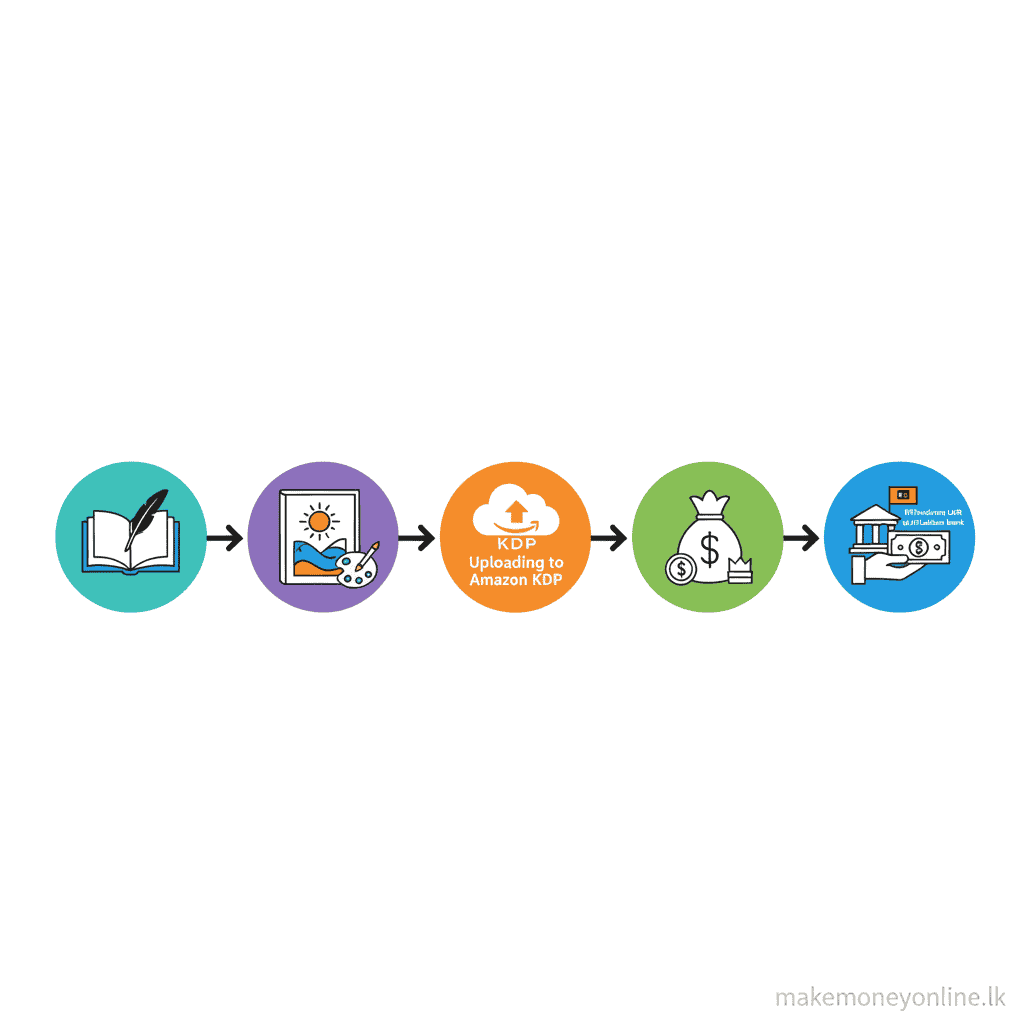
Self-publishing follows a clear process. Here is how it works from start to income.
Step 1: Choose Your Book Topic and Format
Pick a topic you know well or can research thoroughly. Non-fiction performs better than fiction for new authors on Amazon KDP because you can target specific search queries. Good non-fiction niches for Sri Lankan authors include personal finance, technology guides, business, language learning, cooking, and local travel.
Fiction works too, but it requires a larger catalog and genre-specific knowledge. Romance, mystery, and fantasy are the top-selling fiction genres on Kindle. If you write fiction, plan for a series from the start.
Step 2: Write the Book
A typical ebook ranges from 10,000 to 50,000 words. Non-fiction guides can be as short as 8,000 words if the content is dense and actionable. Longer is not always better. A focused 15,000-word guide on a specific problem often outsells a 60,000-word general book on the same topic.
You can write using any software. Google Docs works fine. You do not need to buy special writing software to start.
Step 3: Format and Design the Cover
Formatting means preparing the manuscript for digital reading. The file must look correct on all Kindle devices and reading apps. Most authors use free tools like Reedsy Book Editor or Kindle Create for this step.
Cover design matters more than most writers expect. On Amazon, your book thumbnail is the size of a postage stamp in search results. A professional-looking cover increases click-through rates and sales. You can hire a cover designer on Fiverr for $10 to $30 or use Canva to create a passable cover yourself.
Step 4: Publish on Platforms
Amazon KDP is the starting point for most self-publishers. The upload process takes 30 to 60 minutes. You set your price, choose your royalty rate (35% or 70% depending on price), and submit for review. Amazon usually approves books within 24 to 72 hours.
After KDP, distribute to other platforms through an aggregator like Draft2Digital, which automatically sends your book to Kobo, Barnes and Noble, Apple Books, and more.
Step 5: Receive Royalties
Amazon KDP pays royalties approximately 60 days after the end of the month in which you earn them. For Sri Lankan authors, the payment options are wire transfer (requires your Sri Lankan bank details) or a paper check. Wire transfer has a $25 fee per payment, so it is worth accumulating at least $100 before requesting a payout. Payoneer also works as an intermediary for some payment routes.
What Skills Do You Need to Sell Books Online?
You need four core skills: writing, research, basic formatting, and cover design or the budget to hire it out. You do not need all of these to be expert-level on day one. You develop them as you publish.
Writing ability: Your English needs to be clear and correct. It does not need to be literary or beautiful. Non-fiction buyers want clarity, not style. If English is not your strongest language, you can write in Sinhala or Tamil and sell to that audience on platforms like Pothi.com, or hire a proofreader for your English manuscripts.
Research skills: Non-fiction authors need to research their topics accurately. You can write from personal experience, which is faster, but any factual claims need to be correct. Readers leave one-star reviews for factual errors, and those reviews hurt sales permanently.
Basic formatting knowledge: You need to know how to structure a document for ebook conversion. This is a two-hour learning curve, not a months-long skill. Kindle Create and Reedsy Book Editor do most of the work automatically.
Marketing awareness: You need to understand how Amazon’s search system works. Books rank based on keywords in the title, subtitle, and backend keyword fields. Learning to find low-competition keywords that readers actually search for is the difference between a book that sells 3 copies per month and one that sells 30.
What you do not need: A literature degree, a publisher, a literary agent, or money to invest upfront. You can publish your first ebook on Amazon KDP for zero rupees in direct cost.
How to Get Started Selling Books in Sri Lanka
Starting costs nothing except time. Here is the exact sequence.
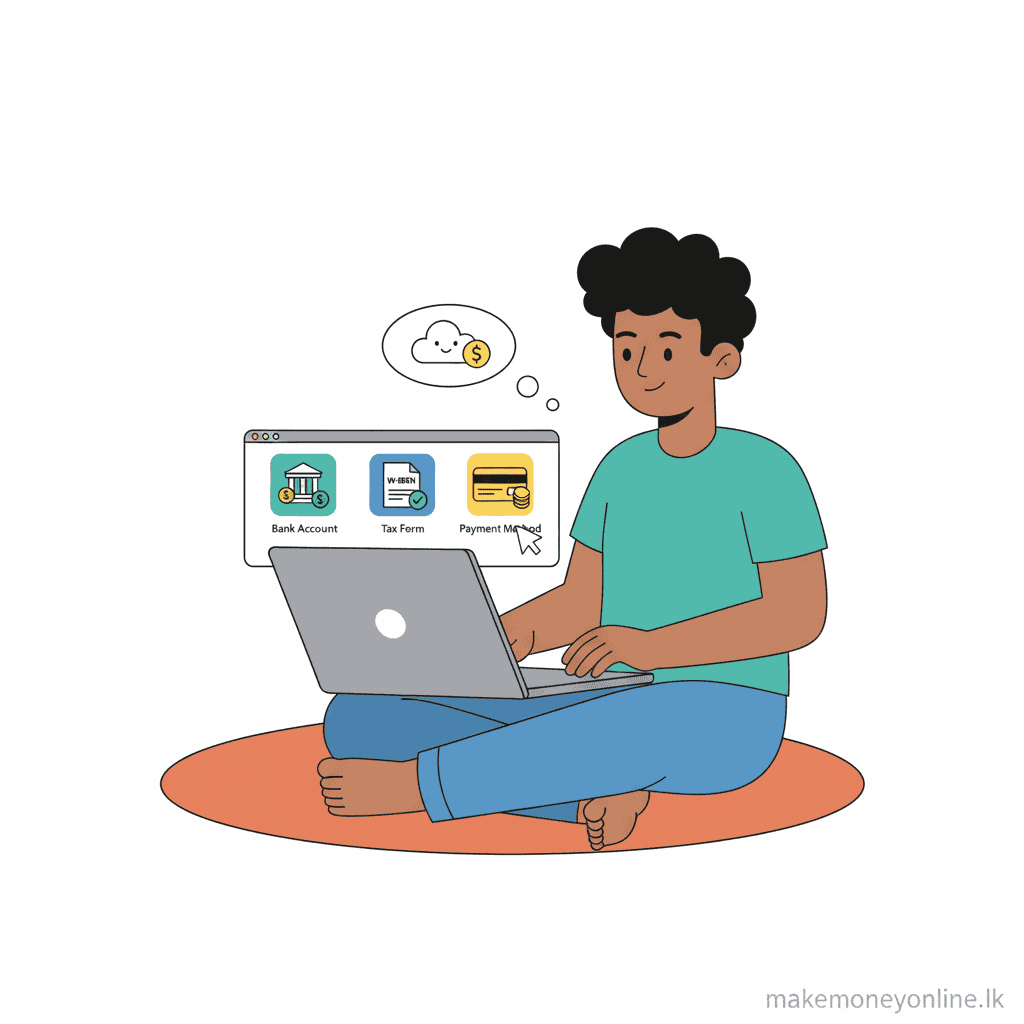
Step 1: Set up a KDP account. Go to kdp.amazon.com and click “Sign up.” You can use your existing Amazon account. During setup, you will need to provide your bank details for royalty payments. For Sri Lankan authors, select “Wire Transfer” under payment method. You will need your bank account number and the SWIFT code for your bank (Commercial Bank SWIFT: CCEYLKLX, Sampath Bank: BSAMLKLX, BOC: BCEYLKLX).
Step 2: Set up your tax information. KDP requires you to complete a tax interview. As a Sri Lankan (non-US person), you fill out the W-8BEN form. This is a standard US tax form for non-US earners; it certifies you are a Sri Lankan tax resident. Completing it correctly means Amazon withholds 10% on your US royalties, not 30%. Sri Lanka has a US tax treaty and its treaty rate for royalties is 10% — NOT 0% as some third-party guides misstate. If you skip the tax interview or complete it incorrectly, Amazon defaults to withholding 30%. Reference: US–Sri Lanka tax treaty summary; Kindlepreneur: 30% withholding walkthrough.
Step 3: Decide on your first book topic. For your first book, pick a topic you already know well. Writing from existing knowledge is faster and more confident. Your first book will not be perfect. The goal is to publish it, learn the process, and improve with the next one.
Step 4: Write a short non-fiction guide. Aim for 10,000 to 20,000 words. This is roughly 40 to 80 pages. At a comfortable writing pace of 500 to 1,000 words per hour, you can complete this in 20 to 40 hours of focused writing time.
Step 5: Format your manuscript. Download Kindle Create from Amazon’s website (it is free). Import your Word or Google Doc file. Preview how it looks on Kindle. Make corrections. Export the KPF file for upload.
Step 6: Design or commission a cover. Use Canva (free) and start with a book cover template. Keep the design simple. Bold title text, clear imagery, and your author name are enough. Or hire a designer on Fiverr for $10 to $20.
Step 7: Upload to KDP. Log into KDP, click “Create a new Kindle ebook,” and fill in the details: title, subtitle, description, keywords (7 keyword phrases), categories (choose 2), and price. Upload your manuscript and cover. Submit for review.
Step 8: Set up distribution on Draft2Digital. Create a free account at draft2digital.com. Upload the same book to reach Kobo, Apple Books, and Barnes and Noble. Draft2Digital takes 10% of royalties for distribution, which is worth it for the additional reach.
Step 9: Track sales and royalties. KDP’s dashboard shows daily sales data. Check it weekly, not daily. Obsessing over daily numbers is distracting. Focus on writing the next book.
How to Learn Self-Publishing and Book Writing
The best free resource for learning Amazon KDP is the KDP Help Center at kdp.amazon.com/help. It covers everything from formatting to tax setup with official accuracy. Read it before asking questions on forums.
Free resources:
- KDP Help Center (kdp.amazon.com/help): Official documentation for every step of the publishing process
- YouTube: Search “Amazon KDP tutorial 2025” for current video walkthroughs. Channels like Self-Publishing School and Kindlepreneur have free beginner series.
- Kindlepreneur (kindlepreneur.com): Dave Chesson’s blog is the most detailed free resource on KDP keyword research and book marketing. Read his category selection guide before publishing your first book.
- r/selfpublish on Reddit: Active community where authors share real earnings data, answer questions, and discuss what works
- Draft2Digital blog: Covers wide distribution strategy and formatting tips
Paid courses worth considering:
- Self-Publishing School: USD 600 to USD 1,000 (LKR 183,000 to LKR 305,000). Expensive but comprehensive. Only worth it if you are committed to publishing five or more books per year.
- Mark Dawson’s Ads for Authors: USD 500 (LKR 152,500). Focuses specifically on Facebook and Amazon advertising for books. Useful after you have at least three titles published.
Start with free resources. Most successful self-publishers on KDP learned entirely from free content online. Paid courses accelerate the process but are not required.
Pros of Selling Books Online
Passive income with high leverage. You write a book once and it earns royalties indefinitely. A book published three years ago can still earn LKR 10,000 per month today if it ranks well. The earning is not tied to active work hours the way freelancing is.
Low startup cost. Publishing an ebook on Amazon KDP costs zero rupees. You can start without investing any money. The only cost is your time.
USD earnings convert well to LKR. Even modest USD royalties translate to meaningful LKR income. A book earning $50 per month is LKR 15,250. That is enough to cover basic expenses for some families and grows as your catalog grows.
No physical inventory. You never handle shipping, store books, or deal with unsold stock. Every book is printed on demand or delivered digitally. There is no financial risk from unsold copies.
Build long-term assets. Each published book is a permanent asset. Unlike hourly freelancing where income stops when you stop working, your book catalog earns even when you are sleeping, traveling, or building your next project.
Write in any niche you know. You do not need formal credentials to write about a topic. Personal experience, research, and clear writing are enough. A Sri Lankan who has spent five years in the IT industry can write a beginner’s guide to software careers in Sri Lanka. That guide does not exist on Amazon yet.
Global audience. Your books sell to buyers in the US, UK, Canada, Australia, and 100 other countries. You are not limited to Sri Lankan buyers.
Cons of Selling Books Online
Income takes months to build. A single ebook rarely earns significant income immediately. Most new titles get fewer than 10 downloads in the first month. Building a meaningful income stream typically requires 3 to 5 books and 6 to 12 months of consistent effort. Anyone promising quick results is misleading you.
Amazon controls your livelihood. If Amazon changes its algorithms, removes your book for a policy violation, or suspends your account, your income can disappear overnight. This happens. Authors with thousands of reviews have had accounts banned for reasons as minor as a disputed review or a competitor filing a false report. Diversifying across platforms reduces this risk but does not eliminate it.
Cover and formatting quality matter more than writing quality. A well-written book with a bad cover sells fewer copies than a mediocre book with a professional cover. The marketplace is visual. This surprises many authors who focus entirely on their writing.
Royalty payments can be slow and have fees. KDP pays 60 days after month end. Wire transfers have a $25 fee per payment. If you earn $60 in a month, you effectively keep $35 after the wire fee. You need to accumulate royalties before withdrawing to make it financially sensible.
High competition in popular niches. Subjects like weight loss, productivity, and wealth creation have thousands of competing titles on Amazon. A new author entering these spaces without significant marketing investment or a very specific angle will struggle to get visibility.
Research and accuracy demands. Writing a non-fiction book requires thorough, accurate research. Publishing incorrect information damages your author reputation and invites negative reviews that hurt sales permanently.
Best Platforms for Selling Books in Sri Lanka
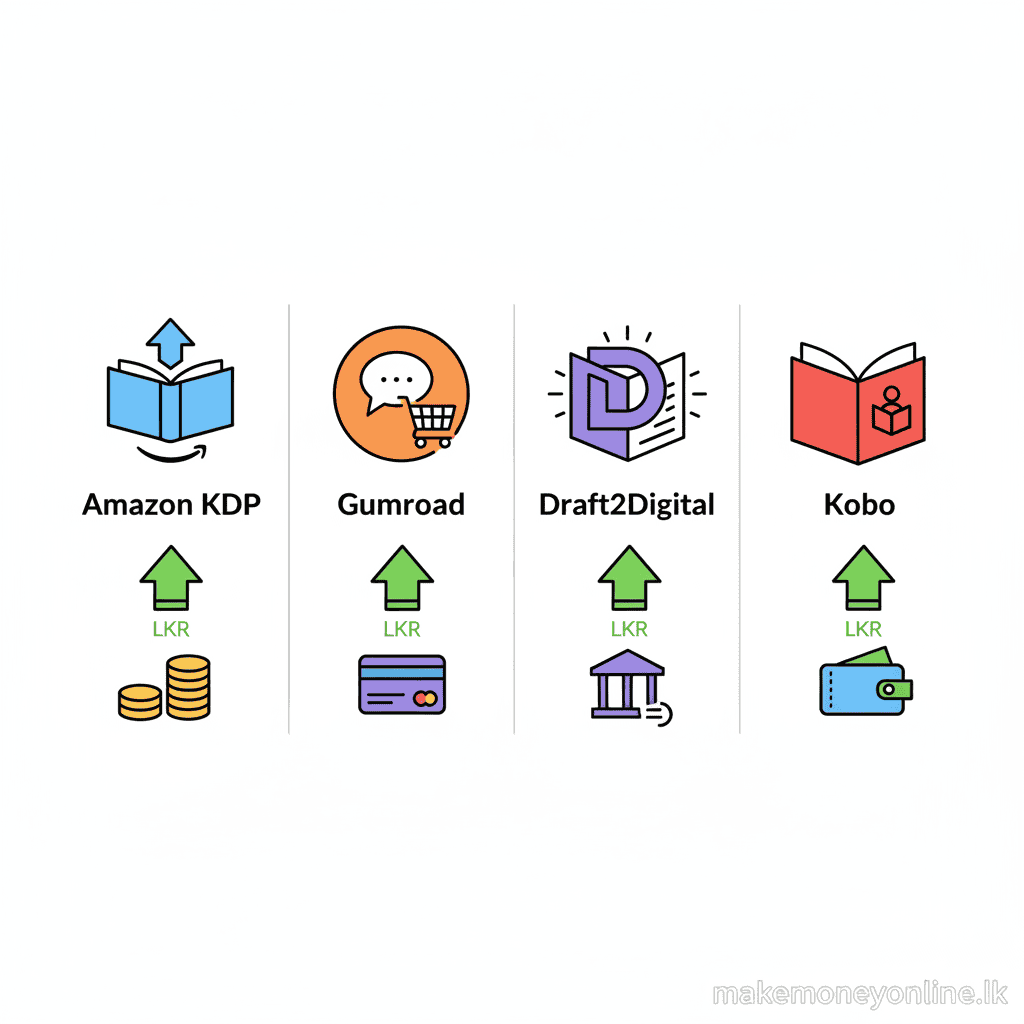
Amazon Kindle Direct Publishing (KDP)
Amazon KDP is the starting point for every self-publisher. It is the largest ebook marketplace in the world, and most Sri Lankan authors earn the majority of their book income here.
- Royalty rate (verified 2026-09-01): 70% for books priced $2.99 to $12.99 on Amazon.com — the upper cap expanded from $9.99 to $12.99 effective 7 July 2026 (Amazon’s own KDP royalty page). 35% for books priced below $2.99 or above $12.99. Territory-specific caps vary — verify current thresholds on Amazon’s page before pricing.
- Delivery-cost deduction: the 70% royalty option deducts a per-download delivery cost based on file size (Amazon’s language: “Delivery costs still apply to the 70% royalty option”). This is not a factor at the 35% royalty option. Larger, image-heavy files are hit harder.
- Payment for Sri Lanka: Wire transfer or check. Wire transfer requires your Sri Lankan bank details and SWIFT code.
- Minimum payout threshold: $100 for wire transfer.
- Payment timing: 60 days after the end of the earning month.
- Does it accept Sri Lankan authors: Yes. Sri Lanka is not on any restricted country list for KDP.
- Tax withholding (verified 2026-09-01): Complete the W-8BEN tax interview to claim Sri Lanka’s US treaty rate — 10% for royalties, NOT 0%. Skipping or misfiling the interview triggers the 30% default withholding.
Gumroad
Gumroad is a direct-sales platform where you sell ebooks directly to buyers. You keep 90% of revenue after their 10% transaction fee.
- Why use it: No monthly fee, instant payouts, and supports Payoneer withdrawals which work well for Sri Lanka
- Payment for Sri Lanka: Payoneer is supported. You can receive USD into your Payoneer account and then transfer to your Sri Lankan bank.
- Best for: Building a direct audience, selling to your own email list, or selling companion workbooks and templates alongside your ebook
Draft2Digital
Draft2Digital is a free aggregator that distributes your book to Kobo, Apple Books, Barnes and Noble, Scribd, and more. They take 10% of royalties for this service.
- Payment for Sri Lanka: Pays via PayPal, Payoneer, or direct deposit. Payoneer is the recommended route for Sri Lanka.
- Why use it: One upload reaches seven major retailers without managing separate accounts
- Best for: Wide distribution alongside your Amazon KDP presence
Kobo Writing Life
Kobo is the second largest ebook retailer globally after Amazon. You can publish directly through their writing platform at kobo.com/writinglife.
- Royalty rate: 70% for books priced $2.99 to $12.99
- Payment for Sri Lanka: PayPal or bank transfer. PayPal has limited receiving functionality in Sri Lanka, so check the current status or use Draft2Digital to access Kobo’s marketplace instead.
Payhip
Payhip lets you sell ebooks directly from your own store or social media. It charges 5% per transaction on the free plan.
- Payment for Sri Lanka: PayPal and Stripe. PayPal receiving has restrictions in Sri Lanka, and Stripe is not available for Sri Lankan sellers. Check before setting up.
- Best for: Selling to an existing audience on social media or a personal blog
Free Tools for Selling Books Online
Kindle Create (free from Amazon): The official tool for formatting your manuscript for Kindle. Import a Word or Google Doc file and it handles most formatting automatically. Download at kdp.amazon.com/en_US/help/topic/G202131110.
Google Docs (free): Write your entire book in Google Docs. It is cloud-based, accessible from any device, supports exports to Word format for Kindle Create, and never loses your work.
Reedsy Book Editor (free at reedsy.com): A clean, distraction-free writing environment specifically built for book authors. Exports to EPUB and PDF formats correctly formatted for ebook platforms.
Canva (free plan): For designing book covers. Use the “Book Cover” template under the “Docs” section. The free plan has enough templates and images for a professional-looking cover.
Publisher Rocket (keyword research tool): This is normally a paid tool, but the free version of Publisher Rocket at kdp.amazon.com/en_US/help/topic/G200652690 shows you basic category information. Use this alongside the free Amazon search bar autocomplete for keyword ideas.
KDSpy (browser extension, limited free use): Shows keyword data and estimated sales for books directly in Amazon search results. The free version gives limited lookups but is useful for initial research.
Hemingway Editor (hemingwayapp.com, free browser version): Paste your writing into Hemingway Editor to check for overly complex sentences, passive voice, and readability. Aim for Grade 7 to 9 reading level for non-fiction.
Draft2Digital (free to use, 10% royalty share): After finishing your KDP setup, Draft2Digital distributes to all other major platforms for free. You only pay when you earn.
Paid Tools for Selling Books Online
Publisher Rocket (one-time payment, approximately USD 99 or LKR 30,200): The most useful paid tool for KDP authors. Shows you exactly how many times a keyword is searched on Amazon, how much the top-ranking books earn per month, and how competitive each keyword is. Worth buying after your first book earns back its cost.
Scrivener (one-time payment, approximately USD 59 or LKR 18,000 for desktop): Professional writing software with better organization than Google Docs for long projects. Has folders for chapters, research notes, character sheets, and draft versions. Not necessary for a first book, but useful for authors writing five or more books per year.
ProWritingAid (annual subscription, approximately USD 79 per year or LKR 24,100): A grammar and style checker that goes deeper than Grammarly. Identifies repeated words, overused sentence structures, and pacing issues. Useful for non-native English writers to polish their prose before publishing.
Atticus (one-time payment, approximately USD 147 or LKR 44,800): All-in-one book writing and formatting tool. Replaces both Scrivener and Kindle Create. Formats for print and ebook simultaneously. Useful for authors producing books in multiple formats.
99Designs or Fiverr for professional covers (USD 15 to USD 150 or LKR 4,600 to LKR 45,750): A professionally designed cover from a skilled designer is the single highest-return investment for most self-publishers. A cover that costs USD 30 (LKR 9,150) and doubles your click-through rate on Amazon pays for itself with a few extra sales. Search Fiverr for “book cover design” and filter by ratings above 4.8.
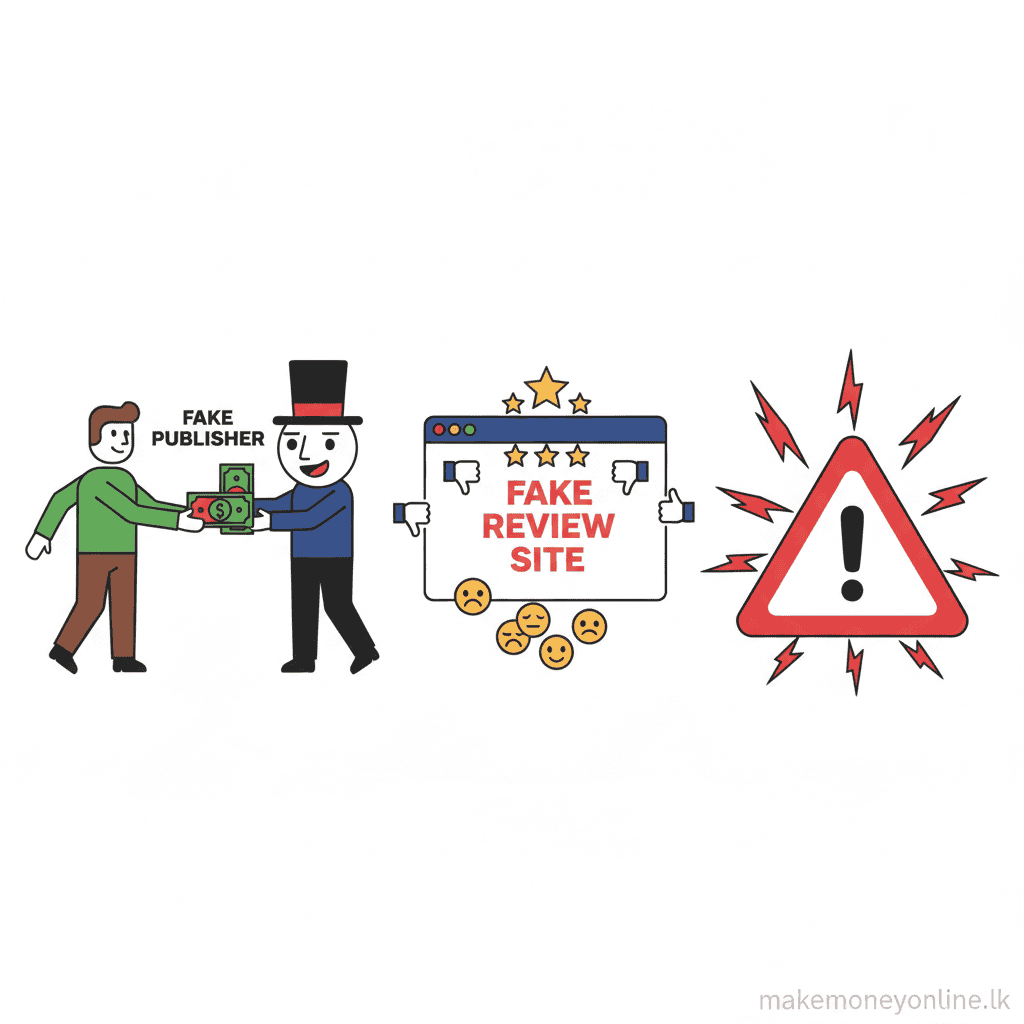
Scam Alerts: Book Publishing Red Flags in Sri Lanka
The self-publishing space has specific scams targeting aspiring authors. Knowing these before you start protects your money and time.
Vanity Publishers Charging Upfront Fees
A real publisher pays you to publish your book. A vanity publisher charges you for the privilege of publishing it. If any company contacts you after you express interest in publishing and asks you to pay USD 500 to USD 5,000 for “editing packages,” “marketing campaigns,” or “distribution deals,” it is a vanity publisher. These companies take your money, do minimal work, and your book ends up as a listing that sells zero copies.
You do not need to pay anyone to publish your book. Amazon KDP, Draft2Digital, Gumroad, and Kobo are all free to publish on.
Fake Review Services
Buying Amazon reviews violates KDP’s terms of service. Services that offer “100 real reviews for $99” are selling fake reviews from sockpuppet accounts. Amazon’s review detection system has improved significantly. Authors caught buying reviews face permanent account bans, all books removed, and all earned royalties forfeited.
If you see services advertising packages of reviews for sale, avoid them entirely.
“Ghostwriting” Scams Targeting Sri Lankan Authors
Some scam operations advertise “earn LKR 50,000 per month writing ebooks for us” and require a “registration fee” or “training fee” before you can start. This is a scam. Real ghostwriting clients do not ask you to pay them before they pay you.
If someone offers you a ghostwriting contract and asks for payment upfront, report it and move on.
Book Promotion Services With No Track Record
Dozens of websites advertise “book promotion packages” that claim to blast your book to thousands of readers for USD 50 to USD 200. Most of these services send your book to inactive email lists or social media accounts with no real engagement. The result is zero sales despite paid promotion.
Only use promotion services with verifiable track records. Established services like BookBub (bookbub.com) have transparent submission processes and documented results. Avoid unknown services with generic websites and no author testimonials.
Predatory Contracts from Traditional Publishers
If a traditional publisher approaches you unsolicited (particularly after you self-publish and gain some traction), read any contract extremely carefully before signing. Some small or vanity publishers offer traditional-looking contracts that grant them permanent or lengthy exclusive rights to your book in exchange for a small advance. Getting your rights back from a bad contract can take years and legal costs.
If you receive a traditional publishing offer, do not sign without understanding every clause. A quick consultation with a lawyer familiar with intellectual property is worth the cost before signing away your work.
Platform “Optimization” Services
Services claiming they can get your book to rank on Amazon’s bestseller list for a fee usually use short-term gaming tactics that result in your account being flagged. Amazon can see exactly where your sales come from. Artificial sales spikes from promotion manipulation result in category removals and account reviews.
Learn keyword optimization yourself using free resources from Kindlepreneur. It takes a few hours and is more reliable than any paid ranking service.
Final Verdict: Is Selling Books Online Worth It for Sri Lankans?
Selling books online is one of the most realistic long-term passive income methods for Sri Lankans, and one of the most misunderstood.
It is not a quick income method. Publishing one ebook and expecting LKR 30,000 per month from it is an unrealistic expectation. The income from a single book is typically modest. The income from ten well-optimized books in a focused niche is where this method becomes genuinely meaningful.
It is also not a method that requires creative genius or perfect English. Non-fiction guides, how-to books, and reference materials sell consistently on Amazon. A Sri Lankan professional with real knowledge in any field, technology, finance, healthcare, education, local culture, or business, has subject matter that is genuinely underrepresented on global ebook platforms. That is a competitive advantage.
This method is well-suited for you if:
- You enjoy writing and can produce 1,000 to 2,000 words per day with focus
- You are willing to commit to publishing at least three to five books before evaluating results
- You have knowledge in a specific area that would benefit readers
- You want a passive income stream that builds over years, not weeks
- You can wait 60 to 90 days for your first royalty payment without financial pressure
This method may not suit you if:
- You need income within the next 30 days (look at freelance writing in Sri Lanka for faster returns)
- You dislike writing and find it exhausting rather than engaging
- You want to publish one book and stop
- You are not willing to learn basic keyword research and cover design principles
If you are building toward long-term income and have the patience for it, self-publishing rewards consistency in a way that few other online methods do. Start with one book on a topic you know well, learn the process, and treat the second and third books as improvements on the first. The catalog builds itself over time.
For further reading on related earning methods that pair well with book publishing, see the guide on selling digital products in Sri Lanka and the overview of creating online courses, both of which share the same knowledge-to-income model.
Related Ways to Earn Money Online in Sri Lanka
- Blogging — Start a book review blog for affiliate income
- Reselling Goods — Expand book selling into general online reselling
- Creating Online Courses — Turn book knowledge into online courses
- Freelance Writing — Write book reviews and literary content
Looking for more ways to earn? Browse our complete guide to making money online in Sri Lanka with 63 online income methods reviewed for legitimacy, skill and time requirements, and payment access from Sri Lanka. See our methodology for how each method is assessed.