Sri Lanka has one of the strongest craft traditions in the region. Batik fabric, lacework, wooden carvings, resin jewelry, handmade candles, and ceramic pieces made in Sri Lanka have buyers in Colombo, London, and Sydney. The question is not whether people want handmade Sri Lankan products. The question is whether you can connect your products with buyers who will pay fair prices for them.
This guide covers the realistic income from selling handmade crafts in Sri Lanka, which product types command the best margins, where to sell (online and in-person), and how to build a craft business that earns consistently rather than occasionally.
What Is the Handmade Crafts Business?
Selling handmade crafts means creating physical products by hand and selling them to buyers at a price that covers your materials, time, and a profit margin. Unlike reselling or dropshipping, every item you sell was made by you.
The craft categories with the strongest commercial demand from both local and international buyers in Sri Lanka include:
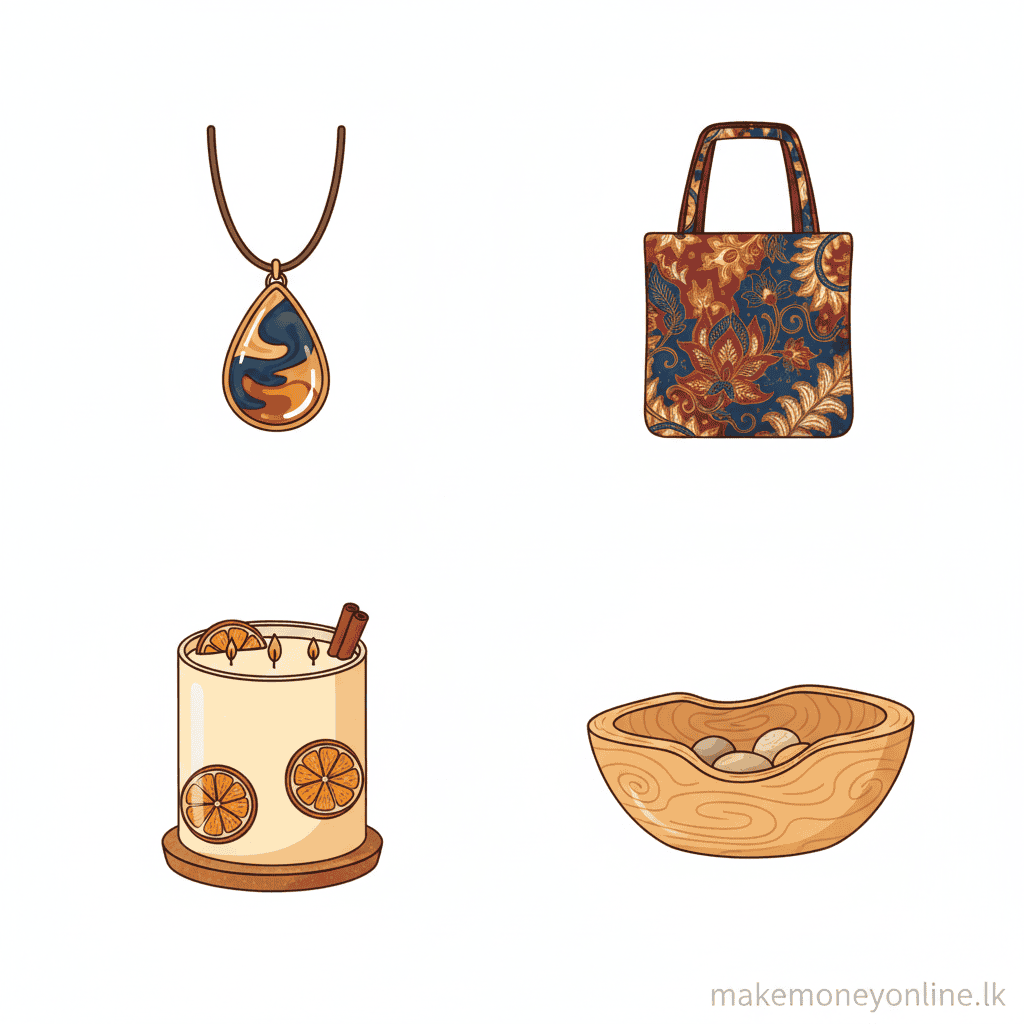
Resin art and jewelry: Resin pendants, earrings, coasters, trays, and keychains. Sri Lankan resin artists sell on Etsy to international buyers and through Instagram shops to local buyers. Resin materials are available from Colombo craft suppliers.
Batik and fabric crafts: Traditional Sri Lankan batik fabric items: tote bags, cushion covers, wall hangings, sarongs, and garments. Strong international demand from buyers seeking authentic Sri Lankan textiles.
Handmade candles and soaps: Soy candles, beeswax candles, and cold-process soaps. Growing local market. Ingredients available domestically. Suitable for Instagram selling and local market stalls.
Handmade jewelry: Beaded necklaces, wire-wrapped pendants, macrame jewelry, and polymer clay pieces. Low material cost, relatively fast production, good margin.
Wooden crafts: Carved wooden bowls, figurines, home decor, and kitchen items. Sri Lanka has strong woodworking traditions. Higher production time but commands higher prices.
Crochet and knit items: Baby blankets, tote bags, hats, and home decor items. Materials available domestically. Good local and diaspora market.
Handmade ceramics: Functional and decorative pottery. Requires kiln access but commands premium prices. Growing market among local interior design enthusiasts.
How Much Can You Earn from Handmade Crafts in Sri Lanka?
Income depends on product category, production speed, pricing discipline, and which markets you access.
Handmade Craft Income Benchmarks
| Craft Type | Material Cost (per item) | Selling Price | Profit per Item | Monthly Potential (30 items) |
|---|---|---|---|---|
| Resin jewelry | LKR 150 to LKR 400 | LKR 800 to LKR 2,500 | LKR 500 to LKR 1,800 | LKR 15,000 to LKR 54,000 |
| Handmade candles | LKR 300 to LKR 600 | LKR 1,200 to LKR 3,000 | LKR 700 to LKR 2,000 | LKR 21,000 to LKR 60,000 |
| Batik tote bags | LKR 400 to LKR 800 | LKR 1,500 to LKR 4,000 | LKR 900 to LKR 2,500 | LKR 27,000 to LKR 75,000 |
| Crochet items | LKR 200 to LKR 500 | LKR 800 to LKR 3,000 | LKR 500 to LKR 2,000 | LKR 15,000 to LKR 60,000 |
| Wooden crafts | LKR 500 to LKR 2,000 | LKR 2,000 to LKR 8,000 | LKR 1,200 to LKR 5,000 | LKR 36,000 to LKR 150,000 |
A crafter making and selling 30 resin jewelry items per month at an average LKR 1,200 profit per item earns LKR 36,000 per month. Selling additional product types, accessing Etsy (international prices) alongside local markets, and raising prices as your reputation grows can reach LKR 80,000 to LKR 150,000 per month within 12 to 18 months.
How Does the Handmade Crafts Business Work?
Step 1: Choose your product niche. Start with one or two product types. Trying to make everything delays mastery of any single product. A focused product range also creates a more compelling brand identity.
Step 2: Source materials. Colombo’s Pettah market and Maradana area have wholesale craft supply shops. Online through Daraz.lk for specific materials. For international sellers, AliExpress ships craft supplies but with longer lead times.
Step 3: Make, photograph, and price your products. Product photography is critical for online sales. Natural light, a clean background, and multiple angles showing detail. Price at: materials + time at a fair hourly rate + profit margin. A common mistake is pricing only for materials, which makes crafting unsustainable.
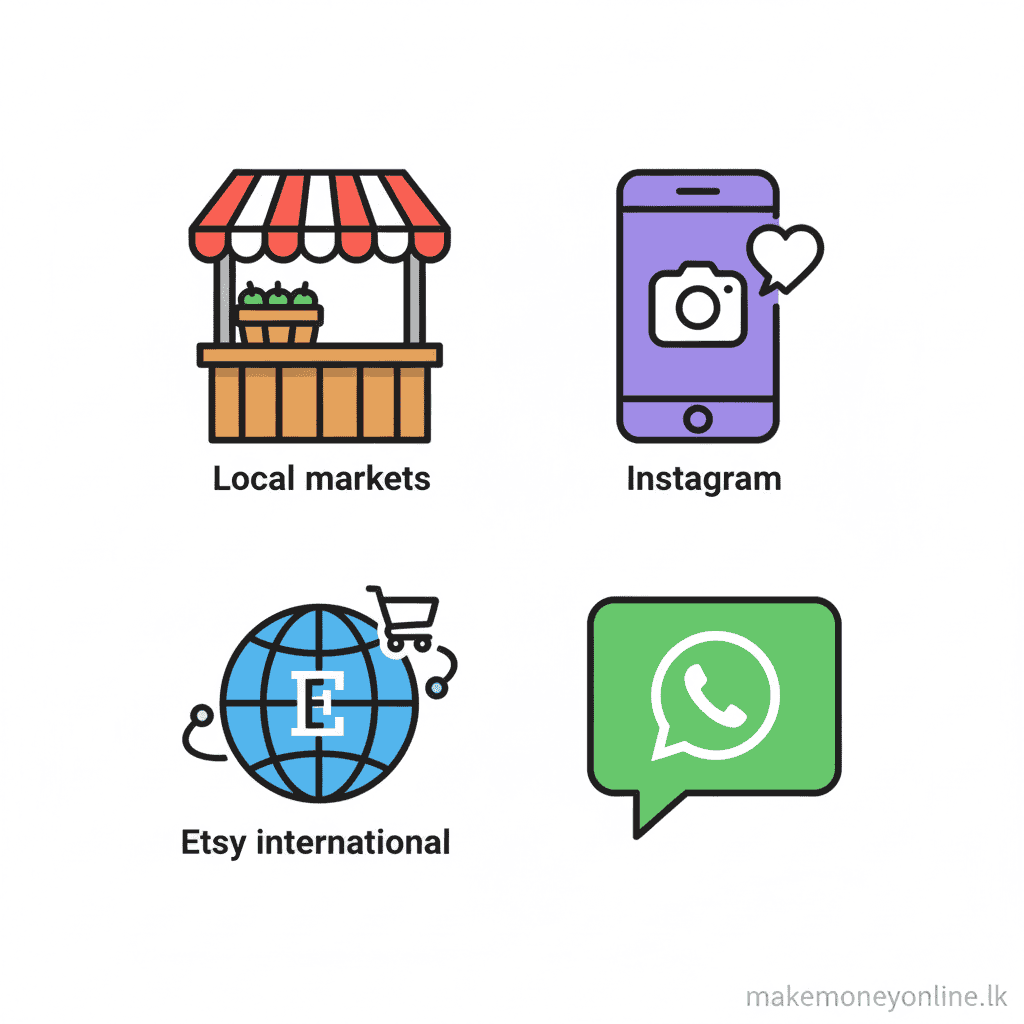
Step 4: Open your selling channels. For local sales: Instagram shop, WhatsApp Business, Facebook page, and local market stalls. For international sales: Etsy.
Step 5: Build your online presence. Post behind-the-scenes content on Instagram showing your making process. This builds the trust and authenticity that converts followers into buyers. Reels demonstrating your craft attract organic discovery on Instagram.
Step 6: Manage orders and shipping. For local orders: courier services (Grab, PickMe delivery, Sri Lanka Post, or private couriers). For Etsy international orders: Sri Lanka Post EMS (registered airmail) or DHL/FedEx for faster delivery.
Step 7: Receive payment. Local: bank transfer, cash on delivery. International via Etsy: Payoneer (Etsy pays Sri Lankan sellers via Payoneer), then to your local bank account.
What Skills Do You Need for a Handmade Crafts Business?
Craft skill in your chosen medium: The ability to produce consistent, quality products reliably. This is learned through practice. Quality consistency matters more than speed initially.
Product photography: The ability to photograph your products attractively. Natural daylight is your best tool. A plain fabric background (white, grey, or linen) and multiple angles showing texture and detail.
Social media content creation: Instagram and Facebook are the primary marketing channels for handmade craft sellers in Sri Lanka. Short video showing your making process outperforms static product photos in organic reach.
Pricing for profit: Understanding how to price products to cover material costs, your time, platform fees, and profit. Many craft sellers undercharge because they feel their time is not worth charging for. A fair hourly rate for skilled hand production is LKR 500 to LKR 1,500 per hour depending on skill level and product demand.
Inventory and order management: Tracking what materials you have, what is in production, what has been ordered, and what is ready to ship. Basic spreadsheet management prevents overselling and delayed deliveries.
Etsy SEO (if selling internationally): Understanding how buyers search for handmade products on Etsy and optimizing your listing titles and tags for those search terms. The difference between “handmade necklace” and “Sri Lankan batik pendant necklace sterling silver” in Etsy search results is significant.
How to Get Started Selling Handmade Crafts
Step 1: Make 10 to 20 items of your core product. Have a meaningful stock before opening any channel. Listing one item and running out immediately damages your seller reputation.
Step 2: Photograph everything properly. Every item needs at least three photos: front, side/back, and detail. Good photography at this stage removes the biggest barrier to online sales.
Step 3: Open an Instagram shop. Instagram is the dominant channel for handmade craft discovery in Sri Lanka. Post consistently. Use relevant hashtags. Show your process, not just finished products.
Step 4: Join local craft markets. Regular craft markets in Colombo (Good Market, etc.) give you direct buyer feedback, cash sales, and the ability to test price points before committing to online-only selling.
Step 5: Open an Etsy shop for international buyers. Etsy has genuine demand for Sri Lankan-made products. List your products with clear descriptions, accurate dimensions, and material details. International buyers pay significantly more than local buyers for the same products.
Step 6: Build a WhatsApp Business presence. A WhatsApp Business account with a product catalogue allows buyers to browse and order directly. Sri Lankan buyers commonly prefer WhatsApp for local purchases.
How to Learn Craft Business Skills
Free resources:
- YouTube: Search your specific craft (resin jewelry tutorial, batik fabric tutorial, soy candle making tutorial) for technique instruction. The making skills are extensively documented on YouTube.
- Etsy Seller Handbook (etsy.com/seller-handbook): Official guides on Etsy SEO, photography, pricing, and shop setup specifically for handmade sellers.
- Instagram Creators account (business.instagram.com): Free guides on content strategy, Reels creation, and building a following for product-based businesses.
Paid learning:
- Udemy craft business courses (USD 15 to USD 30 or LKR 4,575 to LKR 9,150): Courses covering Etsy shop optimization, product photography, and craft business pricing.
- Gold City Ventures (from USD 47 or LKR 14,335): Focused on Etsy product businesses including physical handmade goods. Covers SEO, photography, and scaling.
Pros of Selling Handmade Crafts
High margin products once priced correctly. Material costs for most handmade craft categories are 20 to 40% of the selling price when priced appropriately for the skill and time invested. The margin supports sustainable business growth.
Sri Lankan heritage adds authentic value. Batik, lacework, wooden carvings, and traditional textile designs have genuine international demand from buyers who value authentic cultural craft. This is a competitive advantage no generic product seller can replicate.
Low startup cost. Most craft businesses start with LKR 5,000 to LKR 20,000 in materials and basic equipment. The initial investment is low relative to the potential return.
Builds a personal brand. Handmade craft sellers develop recognizable styles and loyal buyer communities over time. Repeat buyers are the foundation of a sustainable craft business.
Etsy provides global market access. International buyers on Etsy pay in USD at prices that are significantly higher than the Sri Lankan market for the same products. A batik tote bag that sells locally for LKR 1,500 sells on Etsy to an international buyer for $15 to $25 (LKR 4,575 to LKR 7,625).
Cons of Selling Handmade Crafts
Income is limited by production time. Unlike digital products, each handmade item requires time to make. Your income ceiling is constrained by how many items you can physically produce per month. Scaling requires either raising prices or hiring help.
Physical product logistics. Packaging, shipping, managing returns, and handling damaged items in transit are overhead that digital product sellers avoid entirely. International shipping costs reduce Etsy margins.
Inconsistent material supply. Craft material prices fluctuate, and specific materials may become unavailable locally. Sri Lankan craft suppliers are not always consistent. Maintaining buffer stock of key materials prevents production interruptions.
Photography and presentation investment. Poor product photography kills online sales. Investing time in photography quality, staging, and editing is non-negotiable for Etsy success.
Pricing pressure from low-quality competitors. Some sellers price handmade items at near-cost, devaluing the category and making it difficult for quality producers to charge fair prices. Focusing on quality, presentation, and storytelling differentiates your products from race-to-the-bottom competitors.

Scam Alerts: Handmade Craft Red Flags
Fake Wholesale Buyers
Scammers contact craft sellers (often via Instagram DM or email) claiming to represent retail chains, gift shops, or export companies interested in placing large wholesale orders. They place a large order, send a payment screenshot, then ask you to ship the goods before the funds clear. The payment is fake. Never ship goods without verified payment in your bank account.
Craft Fair Organizer Fraud
Fraudulent “craft fair” organizers collect vendor fees from multiple sellers, then cancel the event without refunding. Before paying vendor fees, research the organizer, verify previous events were held, and check for reviews from previous vendors. Established markets like Good Market in Colombo have verifiable track records.
\”Export Company\” Commission Schemes
Schemes where you pay an upfront registration fee to have your products listed with an “export company” that promises to find international buyers for you are almost always fraudulent or ineffective. Legitimate export intermediaries earn a commission on successful sales. They do not charge upfront fees to craft sellers.
Fake Etsy Payment Notifications
Scammers send emails mimicking Etsy payment notifications claiming a buyer has paid and instructing you to ship before Etsy releases funds. Etsy’s payment system holds funds before release, but the timing is managed through your Etsy seller account, not via email instructions. Verify all payment and shipping instructions through your official Etsy seller dashboard, never via email links.
Final Verdict: Is Selling Handmade Crafts Worth It for Sri Lankans?
Selling handmade crafts is a viable income method for Sri Lankan makers who have genuine craft skill, are willing to invest in product presentation, and take a disciplined approach to pricing. It is not passive income: every sale requires production time. But for those who enjoy the making process and want to build an income around it, the combination of local market opportunities and Etsy’s international reach creates real potential.
This method suits you well if:
- You make a craft product that people genuinely want to buy
- You are willing to invest in photography and an online presence
- You can price your products to account for materials, time, and profit rather than just material cost
- You want to build a creative business that reflects your skills
This method may not suit you if:
- You want digital or location-independent income only
- You cannot manage the physical production and logistics involved
- You are unwilling to invest in the marketing and presentation required for online selling
For related product-based income methods, see the guide on reselling goods in Sri Lanka and the overview of selling digital art for product income approaches that require different production methods.