Sri Lankan traditional art has buyers in Colombo, London, New York, and Tokyo who are actively searching for it. Batik paintings, Kandyan-style murals, lacquerwork, temple art reproductions, and traditional mask carvings carry cultural authenticity that no mass-produced print can replicate. That authenticity is commercial value.
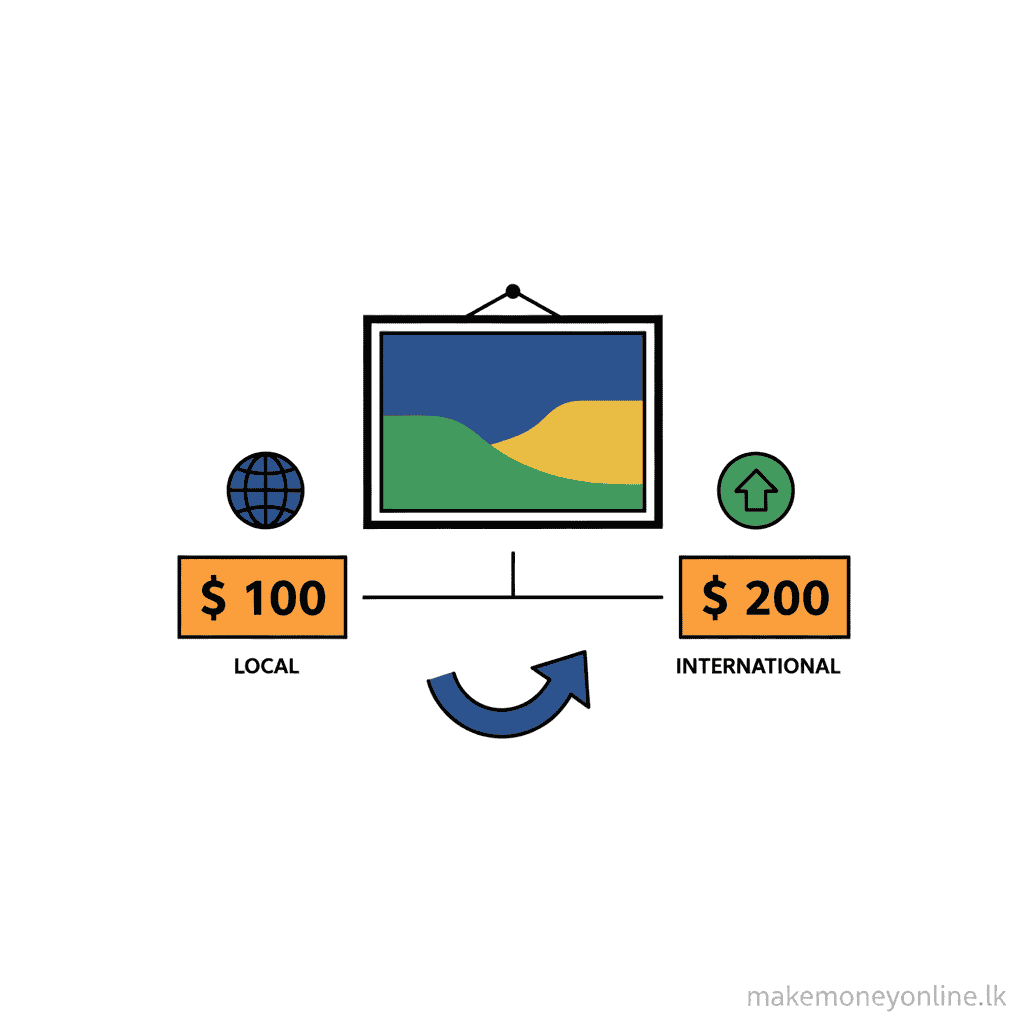
The challenge for Sri Lankan artists is not the quality of their work. It is connecting with the buyers who will pay what the work is genuinely worth. A batik painting that sells for LKR 2,500 at a local market might sell for $60 to $150 on Etsy to a buyer in Germany or Australia. The same work. A different market. The gap between local pricing and international pricing for authentic Sri Lankan traditional art is one of the largest income opportunities in this entire guide.
This article covers how to price traditional art correctly, which platforms connect Sri Lankan artists with international buyers, and how to build a sustainable art income that compounds over time.
What Is Selling Traditional Art?
Selling traditional art means creating original artworks in traditional Sri Lankan styles and selling them directly to buyers through online platforms, galleries, craft markets, and export channels.
Traditional Sri Lankan art encompasses several distinct disciplines with international commercial demand:
Batik art: Traditional wax-resist dyeing technique applied to fabric and stretched canvas. Batik paintings depicting Sri Lankan landscapes, wildlife (elephants, leopards, peacocks), traditional figures, and abstract patterns have strong international collector interest. Batik on canvas commands higher prices than batik on fabric items.
Kandyan painting style: Traditional painting derived from the Kandyan period, featuring stylized figures, geometric patterns, Buddhist iconography, and decorative compositions. Used in murals, framed paintings, and decorative panels.
Lacquerwork (Laksha Kama): Traditional craft involving lacquer application to wooden objects: spinning tops, vessels, boxes, and decorative items. Distinctive patterns in red, black, and yellow.
Mask carving: Traditional carved wooden masks from the Ambalangoda region, including Kolam masks, Sanni masks, and Raksha masks. Both functional ritual masks and decorative reproductions.
Traditional miniature paintings: Detailed miniature paintings in traditional styles, depicting historical scenes, flora, fauna, and cultural subjects.
Kolam and traditional textile art: Traditional textile patterns applied to garments, wall hangings, and decorative panels.
Each category has its own market and pricing dynamics. Batik paintings and mask carvings tend to have the broadest international market awareness.
How Much Can You Earn from Selling Traditional Art in Sri Lanka?
Income depends on the art form, the quality of individual pieces, which channels you sell through, and whether you target the local or international market.
Traditional Art Income Benchmarks
| Art Type | Local Price Range | Etsy/International Price | Monthly Potential (10 pieces) |
|---|---|---|---|
| Batik painting (A3 size) | LKR 2,000 to LKR 5,000 | $40 to $120 (LKR 12,200 to LKR 36,600) | LKR 122,000 to LKR 366,000 |
| Batik painting (A1/large) | LKR 5,000 to LKR 15,000 | $80 to $250 (LKR 24,400 to LKR 76,250) | LKR 244,000 to LKR 762,500 |
| Traditional mask (small) | LKR 1,500 to LKR 4,000 | $30 to $80 (LKR 9,150 to LKR 24,400) | LKR 91,500 to LKR 244,000 |
| Lacquerwork piece | LKR 1,000 to LKR 3,000 | $20 to $60 (LKR 6,100 to LKR 18,300) | LKR 61,000 to LKR 183,000 |
| Kandyan style painting | LKR 3,000 to LKR 10,000 | $60 to $200 (LKR 18,300 to LKR 61,000) | LKR 183,000 to LKR 610,000 |
USD → LKR conversion notice. USD-to-LKR figures on this page use a reference rate of approximately LKR 305 per USD, last reviewed 2026-09-01. Actual conversion depends on your provider’s spread and the current market rate. See our methodology. An artist producing and selling 10 medium-sized batik paintings per month at an average international price of $80 each earns $800 (LKR 244,000) before shipping and platform fees. Producing at higher volume with multiple smaller pieces alongside occasional large statement pieces can reach LKR 80,000 to LKR 200,000 per month within 12 to 18 months of building an online presence.
How Does Selling Traditional Art Work?
Step 1: Create a body of work. Build a portfolio of 15 to 25 finished pieces before opening any selling channel. Having meaningful stock prevents the situation of running out immediately after your first few sales, which disrupts momentum.
Step 2: Photograph everything professionally. Art photography requires even lighting, accurate color reproduction, and shots that show scale. Natural diffused daylight produces the best results without specialist equipment. Photograph each piece front-on and at a 45-degree angle to show texture.
Step 3: Open an Etsy shop targeting international buyers. List your pieces with detailed descriptions: materials used, dimensions in centimeters and inches, production technique, and the cultural context of the art form. International buyers pay significantly more than local buyers for the same authentic work.
Step 4: Set up an Instagram presence. Instagram is the primary discovery platform for art buyers. Post consistently: finished pieces, work-in-progress photos, process videos showing your technique. Process content (time-lapse videos of batik wax application, carving in progress) performs exceptionally well organically.
Step 5: Approach local galleries and craft exporters. Colombo galleries and art spaces carry traditional Sri Lankan work on consignment. Export companies working with hotel chains, airlines, and international retailers purchase traditional Sri Lankan art for resale.
Step 6: Participate in craft markets and art fairs. Regular events like Good Market in Colombo provide direct buyer feedback, cash sales, and the opportunity to build a local collector base.
Step 7: Manage international shipping. Sri Lanka Post EMS provides trackable international shipping. DHL and FedEx are faster but more expensive. Factor shipping costs into your international pricing. Artwork requires careful packaging: cardboard backing, protective wrapping, and sturdy outer boxes.
Step 8: Receive payment. Local: cash and bank transfer. International via Etsy: Sri Lanka is not on Etsy’s Payoneer-eligible list — Payoneer is not an option for direct Sri Lankan Etsy sellers. Sri Lankans who use Etsy do so through a US LLC (Stripe Atlas) or a personal bank account in an Etsy-Payments-supported country. See our payment methods guide.
What Skills Do You Need to Sell Traditional Art?
Mastery of your chosen art form: The ability to produce consistent, high-quality work in your specialization. Quality consistency matters more than speed. A collector who buys a batik painting and is impressed by the quality becomes a repeat buyer and source of referrals.
Product photography: The ability to photograph your artwork attractively and accurately. Natural daylight, a neutral background (white or grey wall or fabric), and a consistent setup for all your product photos creates a professional visual identity.
Etsy SEO: Understanding how international buyers search for traditional Sri Lankan art on Etsy. A listing titled “Sri Lankan Batik Elephant Painting Original Art Signed” with relevant tags performs dramatically better than “Batik Painting” alone. Research which specific search terms buyers use in your category.
Pricing discipline: Understanding how to price your work to cover materials, time at a fair rate, platform fees (6.5% Etsy transaction fee), payment processing, and shipping. Many artists undercharge because they compare their prices to low-quality mass-produced alternatives. The correct comparison is to other original handmade artworks of similar quality.
Instagram content creation: Posting consistently and understanding what content generates discovery. Process videos and behind-the-scenes content outperform static product posts. Short Reels showing your technique attract organic viewers who become followers and buyers.
Packaging and shipping knowledge: Knowing how to package flat artwork and three-dimensional pieces safely for international shipping. A damaged piece is a refund request. Good packaging is an investment in your reputation.
How to Get Started Selling Traditional Art
Step 1: Produce your first 15 to 20 pieces. Focus on two or three sizes that are practical to produce and to ship internationally (A4, A3, and A2 are practical sizes for batik paintings). Consistency of quality matters more than variety of subject matter initially.
Step 2: Photograph every piece with consistent setup. Establish a photography area with good natural light and a plain background. Photograph front, angle, and detail shots for each piece. Add a scale reference (a ruler or a known object) in at least one photo.
Step 3: Open an Etsy shop. Research your category on Etsy before writing your first listing. Look at what the top-selling traditional art listings describe in their titles, tags, and descriptions. Use specific, searchable terms: style, materials, subject matter, dimensions, and country of origin.
Step 4: Build an Instagram presence. Start posting before your Etsy shop opens. Document your production process. Authentic process content builds an audience before you have pieces for sale.
Step 5: Price for the international market, not the local one. The international art buyer’s reference point is not the local craft market. It is other original artwork they have found online. Research comparable work on Etsy by other original artists from around the world to calibrate your pricing.
Step 6: Reach out to Sri Lankan export companies and galleries. Companies that supply hotels, airlines, and international gift shops with Sri Lankan decorative items are potential bulk buyers. Gallery consignment builds local sales alongside international Etsy sales.
Pros of Selling Traditional Art
Authentic cultural value commands international premiums. A buyer in Amsterdam looking for authentic batik artwork has no local equivalent to purchase. Authentic Sri Lankan work carries cultural provenance that mass-produced prints cannot replicate. This drives willingness to pay at international price points.
Multiple revenue streams from one skill. The same traditional art skill generates income through Etsy sales, local gallery consignment, craft market stalls, commission work (buyers requesting specific subjects or sizes), corporate bulk orders (hotels, airlines), and teaching workshops. Each channel adds to total income without requiring a new skill set.
Commissions create predictable income. Once buyers discover your work, commission requests follow. A buyer who purchased a batik elephant painting may return to commission a piece with specific dimensions, colors, or subject matter to match their home decor. Commission pricing commands premium rates above your standard listed prices.
Work-in-progress content drives organic discovery. The traditional art process is visually compelling. Time-lapse videos of batik wax application, carving in progress, or painting development generate organic reach on Instagram and TikTok without requiring advertising spend.
Low material costs relative to selling price. Most traditional art materials (batik wax, fabric, paints, wood for carving) are available in Sri Lanka at accessible prices. The primary input is skilled time, not expensive materials. This creates favorable profit margins at appropriate price points.
Cons of Selling Traditional Art
Production speed limits income ceiling. Each original piece requires significant time. A complex batik painting may take 8 to 20 hours to produce. Unlike digital products, originals cannot be duplicated. Scaling income requires either raising prices, producing faster, or adding print reproductions of popular originals.
International shipping is complex and costly. Properly packaging and shipping original art internationally is time-consuming, requires careful materials, and shipping costs reduce margins. Some buyers balk at international shipping costs added to the purchase price. Including shipping in the listed price can improve conversion but requires accurate cost calculation.
Art buyers are emotionally driven and unpredictable. What sells varies week to week and is difficult to predict. Subject matter, color palette, size, and style all affect buyer behavior in ways that cannot be fully systematized. Some pieces sell in 24 hours. Others sit unsold for months.
Building Etsy momentum takes time. Etsy’s search algorithm rewards shops with sales history and positive reviews. A new shop with no reviews competes against established sellers who have accumulated hundreds. Building the sales history required for meaningful organic Etsy traffic typically takes 6 to 12 months.
Local pricing expectations can be discouraging. Sri Lankan buyers often expect prices that do not reflect the true value of skilled hand production. An artist who prices correctly for the international market may face local buyers who consider the work overpriced. The solution is to focus on international sales channels rather than adjusting prices down for the local market.
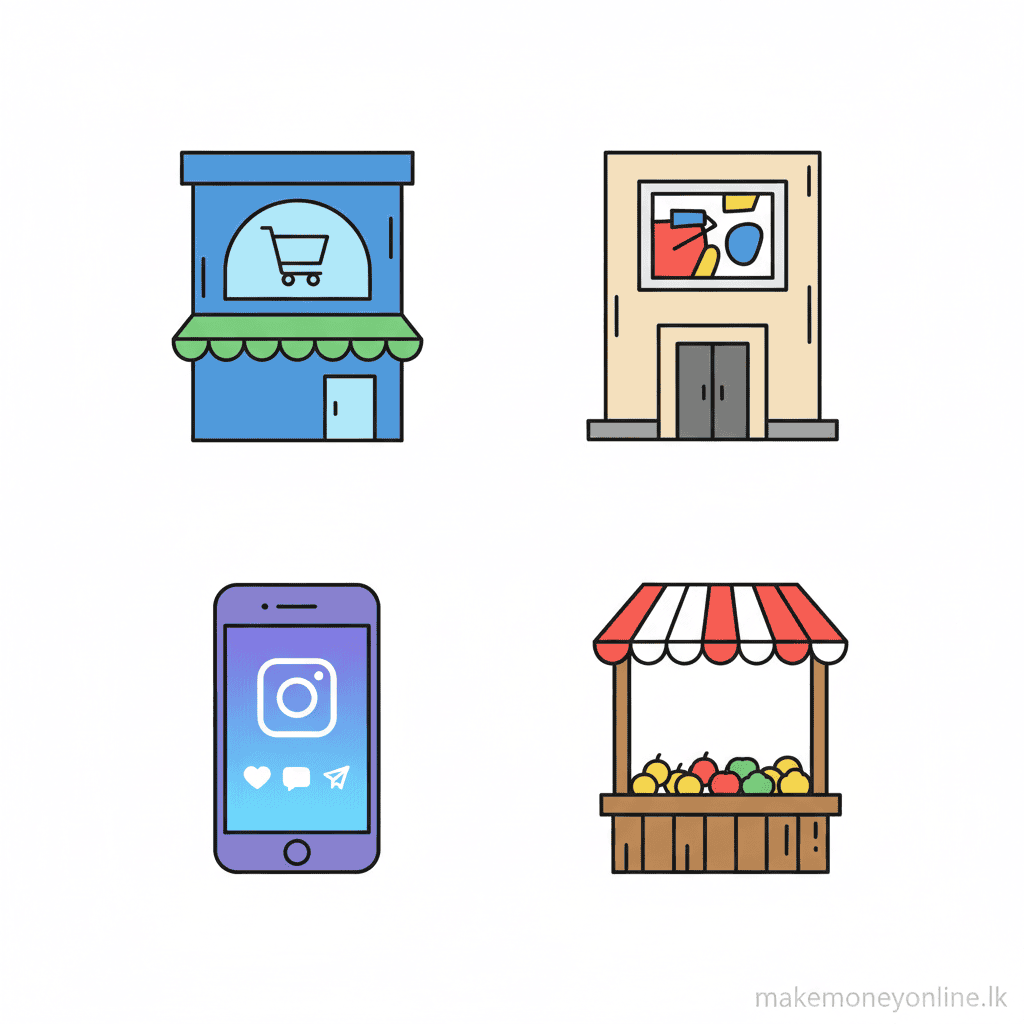
Best Platforms for Selling Traditional Art
Etsy — not directly accessible for Sri Lankan sellers
The global marketplace for handmade, vintage, and artisan goods. Etsy has genuine collector demand for authentic traditional art from around the world. International buyers search for “Sri Lankan art,” “batik painting original,” and related terms regularly. But Sri Lanka is on neither Etsy Payments’ eligible-country list nor Etsy’s Payoneer-eligible-country list (verified against Etsy’s own countries-eligible-for-Etsy-Payments help article, 2026-09-02). Sri Lankan artists who list on Etsy do so through a US LLC (Stripe Atlas) or a personal bank account in an eligible country.
- Fees (if you’re set up via an eligible country): $0.20 per listing + 6.5% transaction fee + payment processing (~3% + $0.25) + optional 12–15% offsite ads fee. Effective total roughly 9.5% + $0.45 on a typical sale before offsite ads.
- Payment for Sri Lanka: not directly supported (see caveat above).
- Best for: international buyers of original paintings and traditional crafts — for artists willing to set up an eligible-country account first.
Instagram (Direct Sales)
Many Sri Lankan artists earn directly through Instagram DMs, WhatsApp, and bank transfers from local and diaspora buyers. No platform fees. Requires building a following.
- Cost: Free
- Payment: Direct bank transfer, cash
- Best for: Local buyers, diaspora customers, building brand identity
Local Galleries (Colombo)
Consignment arrangements with Colombo galleries expose your work to local collectors, tourists, and corporate buyers. Galleries typically take 30 to 50% commission.
- Commission: 30 to 50%
- Payment: Periodic settlements from gallery
- Best for: High-value original pieces, building local collector relationships
Good Market and Craft Fairs
Regular craft and artisan markets in Colombo provide direct buyer contact, cash sales, and real-time feedback on which pieces attract interest and at what price points.
- Cost: Vendor fee per event (varies)
- Payment: Cash and bank transfer
- Best for: Testing price points, building local buyer relationships
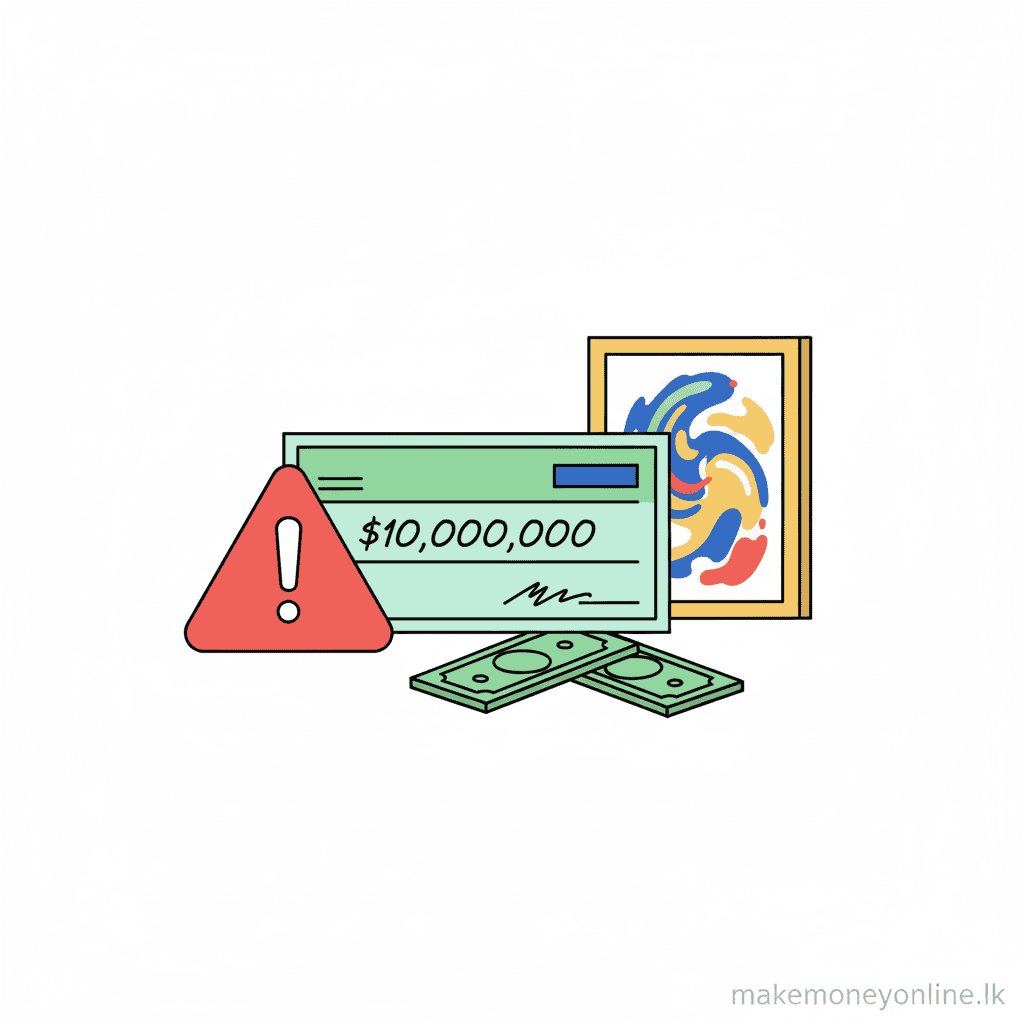
Scam Alerts: Traditional Art Red Flags
Overpayment Check Scams Targeting Artists
A common scam targeting art sellers on Etsy and Instagram: a buyer contacts you, agrees to purchase a piece at your price, then “accidentally” sends a check or payment for significantly more than the agreed amount. They ask you to refund the difference via bank transfer or gift cards while they “sort out the error.” The original payment is fraudulent. The refund is real. You lose the refund amount. Never issue refunds via bank transfer or cash transfer for overpayments. On Etsy, all transactions occur through Etsy’s payment system. Any buyer directing you to accept payment outside of Etsy is attempting to bypass the platform’s buyer/seller protection.
“Gallery Representation” Upfront Fee Schemes
Fraudulent “gallery” representatives contact artists via social media or email claiming to have seen their work and wanting to represent them. They request an “administration fee,” “exhibition fee,” or “shipping and handling advance” to include your work in their gallery or export catalogue. Legitimate galleries earn commission on sales. They do not charge artists upfront fees to display work.
Fake Art Export Buyers Requesting Advance Shipping Costs
Scammers posing as international buyers or export brokers contact artists claiming to have received bulk orders from corporate clients in the US or Europe. They request that you ship a large quantity of pieces before payment, or ask you to pay international shipping advance costs that they will “reimburse.” Payment never arrives. Never ship artwork without verified, cleared payment in your account.
Low-Ball “Bulk” Buyers Disappearing After Receiving Samples
A variant of the above: a “buyer” requests free samples to assess quality before placing a large order. They receive the samples and disappear. Any request for free artwork samples from an unknown party should be declined. If a buyer genuinely wants to assess your quality, they can purchase a single piece through an established platform.
Final Verdict: Is Selling Traditional Art Worth It for Sri Lankans?
Selling traditional art is one of the most culturally authentic income methods available to Sri Lankan artists. The combination of genuine international demand for authentic Sri Lankan art, the significant pricing gap between local and international markets, and the multiple revenue channels available (Etsy, galleries, commissions, corporate sales) creates real income potential for artists who invest in professional presentation and international market access.
The income is not passive and not fast. Building an Etsy presence with meaningful traffic takes months. Reaching LKR 80,000 to LKR 150,000 per month requires consistent production, excellent photography, and deliberate platform building.
This method suits you well if:
- You produce traditional Sri Lankan art at a consistent quality level
- You are willing to invest in professional photography and an Etsy presence
- You want to price your work for its genuine value rather than the local market floor
- You are patient enough to build an international buyer base over 12 to 18 months
This method may not suit you if:
- Your art is not yet at a quality level that competes with international alternatives on Etsy
- You need income within 60 days and cannot invest in building an online presence
- You are unwilling to manage international shipping logistics
For related creative income methods, see the guide on handmade crafts in Sri Lanka and the overview of selling digital art for income approaches that use artistic skills in different formats.

Related Ways to Earn Money Online in Sri Lanka
- Selling Digital Art — Digitize traditional art for online sales
- Handmade Crafts — Sell art alongside handmade craft items
- Shopify Store — Build an online gallery store for your art
- YouTube Channel — Create art process videos for YouTube income
Looking for more ways to earn? Browse our complete guide to making money online in Sri Lanka with 63 online income methods reviewed for legitimacy, skill and time requirements, and payment access from Sri Lanka. See our methodology for how each method is assessed.