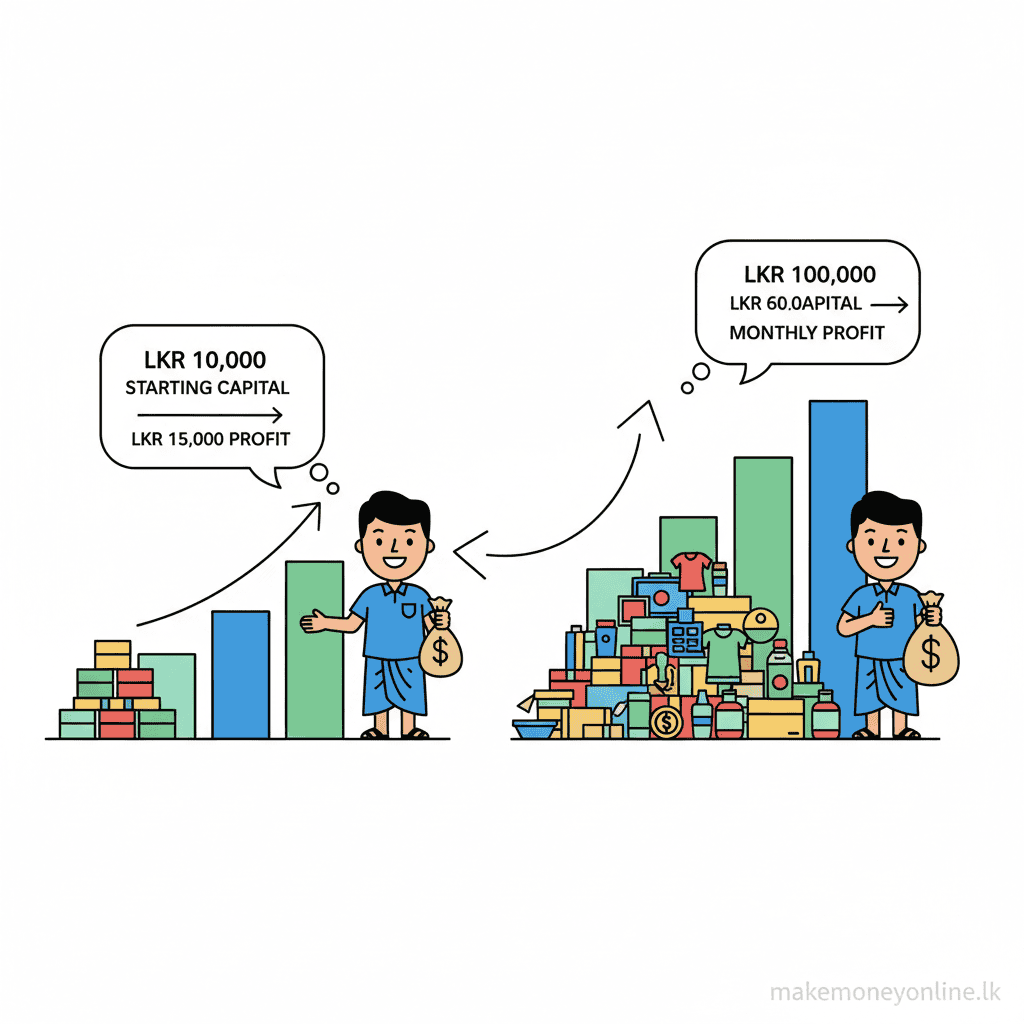
Reselling goods is one of the oldest income methods in the world. Buy low, sell at a profit, repeat. What has changed is the accessibility of online platforms that connect sellers with buyers across Sri Lanka without requiring a physical shop, expensive inventory, or formal business registration.
Sri Lankan resellers using ikman.lk, Facebook Marketplace, and WhatsApp groups are building genuine monthly incomes of LKR 30,000 to LKR 150,000 by sourcing underpriced products and selling them to buyers willing to pay fair market value. The business model is simple, the barrier to entry is low, and the ceiling is limited primarily by sourcing skill and the amount of capital you can put to work.
This guide covers the most profitable reselling categories in Sri Lanka, how to source products effectively, which platforms work, and how to avoid the common mistakes that kill profit margins.
What Is Reselling Goods?
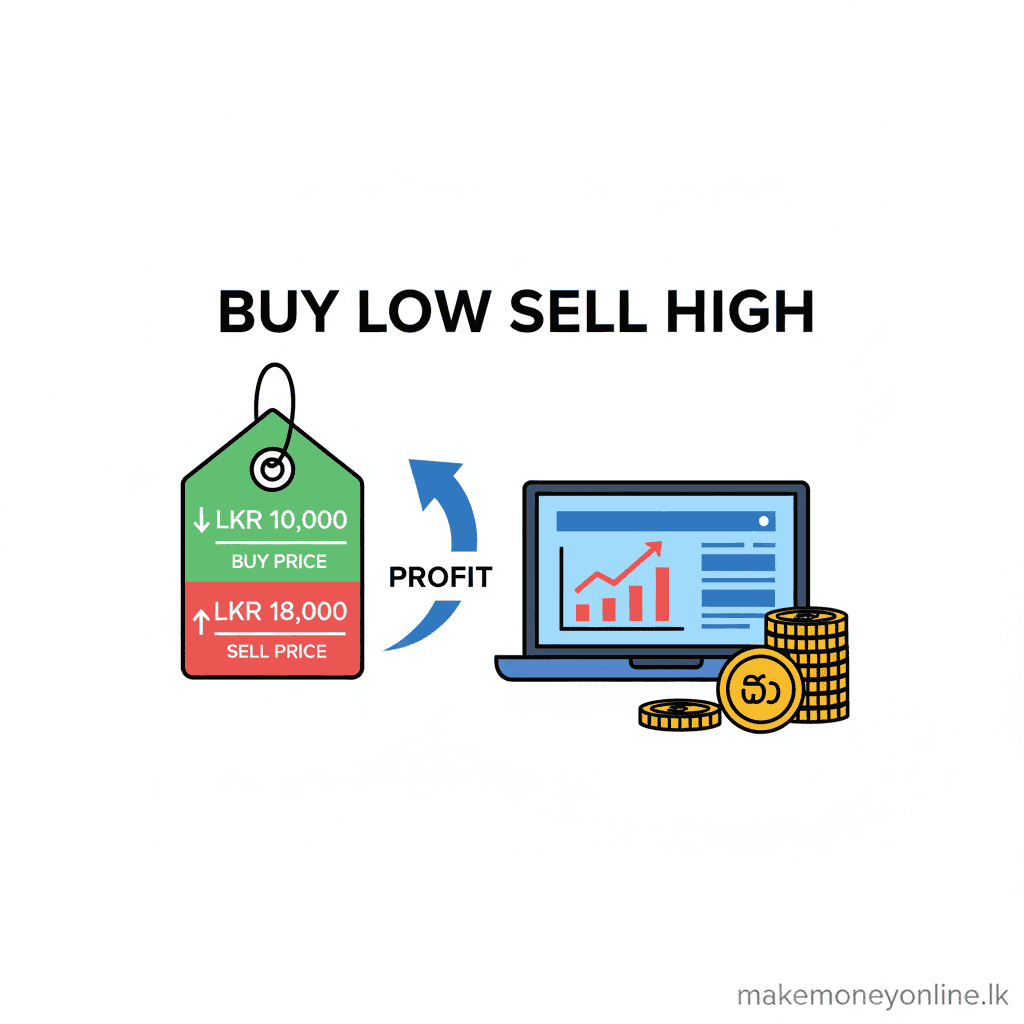
Reselling means purchasing products at a price below their market value and selling them for profit. The difference between your purchase price and selling price, minus any platform fees and transaction costs, is your profit.
Reselling works through several models:
Arbitrage: Buy from one market (physical market, surplus sale, clearance stock) and sell in another where the item commands a higher price (online platform, different geographic area).
Product flipping: Buy used items in good or refurbishable condition, clean or repair them, and sell at a higher price than you paid. Furniture, electronics, and vehicles are common flip categories.
Wholesale to retail: Buy in bulk from importers or wholesale suppliers and sell individual units at retail prices. This requires more upfront capital but generates consistent volume-based profit.
Import arbitrage: Buy products from international suppliers (AliExpress, Alibaba) and sell in Sri Lanka where the same product is either unavailable or significantly more expensive. Requires understanding of Sri Lanka’s import duties and shipping timelines.
How Much Can You Earn from Reselling Goods in Sri Lanka?
Earnings depend on the category, sourcing skill, and how much capital you deploy.
Reselling Profit Benchmarks (Sri Lanka)
| Category | Typical Buy Price | Typical Sell Price | Profit per Item | Monthly Potential |
|---|---|---|---|---|
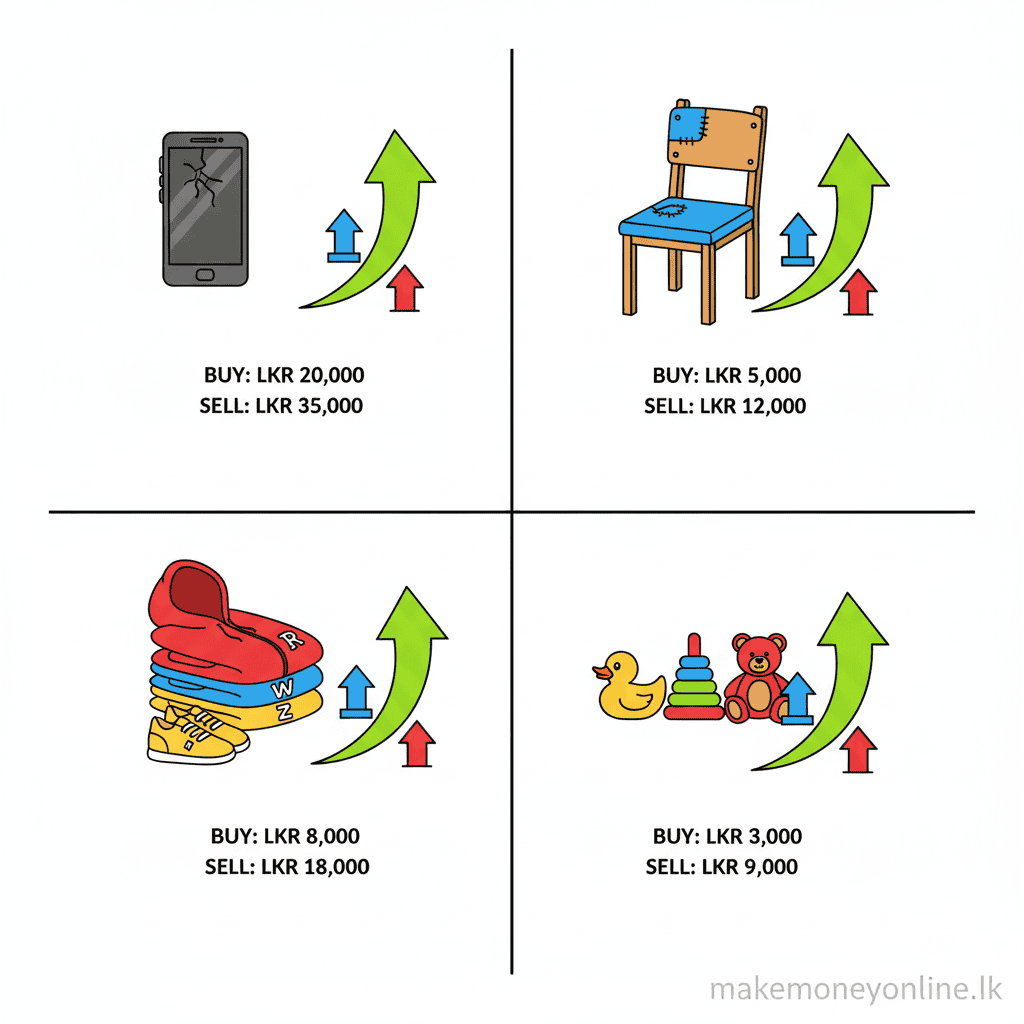
| Electronics (used phones, laptops) | LKR 15,000 to LKR 60,000 | LKR 22,000 to LKR 85,000 | LKR 5,000 to LKR 20,000 | LKR 50,000 to LKR 150,000 |
| Furniture (refurbished) | LKR 5,000 to LKR 30,000 | LKR 10,000 to LKR 60,000 | LKR 3,000 to LKR 20,000 | LKR 30,000 to LKR 100,000 |
| Branded clothing (vintage/second-hand) | LKR 500 to LKR 3,000 | LKR 1,500 to LKR 8,000 | LKR 500 to LKR 4,000 | LKR 25,000 to LKR 80,000 |
| Baby and children’s items | LKR 1,000 to LKR 8,000 | LKR 2,500 to LKR 15,000 | LKR 1,000 to LKR 6,000 | LKR 20,000 to LKR 60,000 |
| Home appliances (refurbished) | LKR 5,000 to LKR 25,000 | LKR 9,000 to LKR 40,000 | LKR 2,000 to LKR 12,000 | LKR 30,000 to LKR 80,000 |
A reseller moving five used smartphones per month at an average profit of LKR 8,000 per phone earns LKR 40,000 per month. Adding furniture flipping (two pieces at LKR 15,000 average profit each) brings total to LKR 70,000 per month.
How Does Reselling Work in Sri Lanka?
Step 1: Identify your category. Choose one or two categories to start. Electronics and furniture have high profit per item but require category knowledge. Clothing and baby items have lower per-item profit but faster turnover. Start with a category you already understand.
Step 2: Source products below market value. Sources include:
- ikman.lk “urgent sale” listings: Sellers who need cash fast often price below market value. Search filtered by low price and contact quickly.
- Facebook Marketplace groups: Estate sales, moving sales, and urgent sales are frequently posted in local buy-sell groups.
- Physical markets: Pettah, Manning Market, and regional towns’ wholesale areas have below-retail pricing on many categories.
- Sinhala-language Facebook groups: Sri Lanka’s most active local buy-sell groups (search your city + buy and sell in Sinhala) often have deals that are missed by buyers focused only on English platforms.
Step 3: Assess condition and clean/repair as needed. For electronics, test before buying. For furniture, assess repair cost before purchasing. Factor cleaning, minor repairs, and photography into your total cost.
Step 4: List at market price or slightly below. Take clear photographs in natural light. Write a detailed description including condition, specifications, and any included accessories. Price based on what comparable items sell for on ikman.lk, not just what you paid.
Step 5: Negotiate and transact safely. Meet in public places for high-value transactions. For smaller items, use cash on delivery. For higher-value transactions with known buyers, bank transfer with proof of payment before release is standard.
Step 6: Scale what works. Identify which categories produce the best profit-to-time ratio and reinvest profits into sourcing more inventory in those categories.
What Skills Do You Need for Reselling?
Category knowledge: Understanding what a used iPhone SE 2022 should actually sell for in Colombo, or what a teak furniture set in good condition is worth, is the core skill. This knowledge is acquired by spending time on ikman.lk and Facebook Marketplace studying how similar items are priced.
Negotiation: Buying effectively requires negotiating purchase prices down from asking price. Selling effectively means holding your price when lowball offers arrive. Polite, confident negotiation is a learnable business skill.
Photography: Good product photography significantly improves listing click-through and sale conversion. Natural daylight, a clean background, and multiple angles matter more than an expensive camera.
Basic product assessment: For electronics: testing before buying. For furniture: spotting structural damage versus cosmetic damage. For clothing: identifying genuine branded items versus counterfeits. This knowledge reduces expensive sourcing mistakes.
Cash flow management: Reselling ties up capital in inventory. Managing how much you invest per item, how quickly items sell, and maintaining enough working capital to continue sourcing is a business discipline that determines your growth rate.
How to Get Started Reselling Goods in Sri Lanka
Step 1: Start with LKR 10,000 to LKR 30,000 in working capital. Do not over-invest before you understand your category. Start small, make your first five transactions, and learn from any pricing or sourcing mistakes before scaling.
Step 2: Open accounts on ikman.lk and Facebook. ikman.lk requires basic registration. Listings are free for standard categories. Facebook Marketplace requires a Facebook account. Join local buy-sell Facebook groups in your area.
Step 3: Spend one week researching your category before buying. Track what items are listed at and what they eventually sell for. The difference between asking price and sold price is your research baseline.
Step 4: Make your first purchase from a trusted source. Your first purchase should be a category you know well, from a seller you can verify, at a price clearly below market. Test or inspect the item thoroughly before paying.
Step 5: List immediately. The faster you turn inventory, the better your return on capital. List the day you acquire the item, not a week later.
Step 6: Reinvest profits, not personal income. Treat early reselling profits as working capital to expand inventory, not as personal spending money. Growing your working capital from LKR 20,000 to LKR 60,000 triples your potential monthly turnover.
How to Learn Reselling
Free resources:
- Spend time on ikman.lk: Your primary education is studying sold listings and active listings in your category. Price trends, demand indicators, and common item conditions are all visible on the platform.
- Facebook reselling groups: Sri Lankan resellers share sourcing tips, pricing strategies, and category-specific knowledge in local buy-sell groups. Observe and learn before participating.
- YouTube: Search “product flipping guide” and “reselling business tips” for general reselling frameworks. Adapt the strategies to Sri Lankan market conditions.
Pros of Reselling Goods
Low barrier to entry. You can start with LKR 10,000 to LKR 20,000 and scale from there. No technical skills, no formal training, and no business registration are required to start.
Profitable niche opportunities exist. Sri Lanka has significant price inefficiencies between different buyer and seller markets. Buyers who want convenience pay more than sellers who need quick cash. Resellers capture that difference.
Fast feedback loop. Unlike content creation or freelancing where results take months, reselling gives immediate feedback. You know within days whether an item is priced correctly and whether your sourcing was profitable.
Compound growth with reinvestment. Reinvesting profits grows your working capital. A reseller who starts with LKR 20,000 and achieves a 30% monthly return on capital has LKR 43,000 after three months, LKR 93,000 after six months, and LKR 200,000+ after nine months of consistent reinvestment.
Flexible time commitment. Reselling is compatible with other work or study. You can source and list on weekends and evenings while managing inquiries and transactions around other commitments.
Cons of Reselling Goods
Capital is tied up in inventory. Money spent on inventory that has not sold is not earning you a return. Slow-moving inventory is a real risk, especially in categories where you misjudged demand.
Logistics for physical goods. Unlike digital products, physical goods require storage space, transport to buyers (or arrangements for buyers to collect), and packaging for shipped items. This is overhead that digital methods avoid entirely.
Price competition from other resellers. Popular categories attract many resellers, compressing margins. Differentiating through better product quality, faster communication, and more accurate descriptions is necessary in competitive categories.
Counterfeit and fraud risk on the buying side. Purchasing what you believe to be genuine branded goods and discovering they are counterfeit, or purchasing electronics that fail shortly after purchase, reduces profitability. Testing before buying and dealing with verifiable sellers reduces this risk.
Scaling requires more capital. Moving from LKR 30,000 to LKR 100,000+ per month requires proportionally more working capital tied up in inventory at any given time.
Best Platforms for Reselling Goods in Sri Lanka
ikman.lk
Sri Lanka’s largest classifieds marketplace for buying and selling goods. High organic traffic, well-established trust among Sri Lankan buyers.
- Listing fees: Free for most categories; premium promoted listings available
- Best categories: Electronics, vehicles, furniture, appliances, property
- Tips: Use clear photos, write complete descriptions, respond quickly to inquiries
Facebook Marketplace and Groups
Strong for local community buying and selling. Particularly effective for lower-value items and for reaching buyers in specific geographic areas.
- Listing fees: Free
- Best categories: Clothing, household goods, baby items, smaller furniture
- Tips: Join local buy-sell groups, post in area-specific groups for faster local sales
WhatsApp Groups
Many Sri Lankan resellers operate through WhatsApp broadcast lists and groups. Once you have an established buyer base, WhatsApp allows direct, fast transactions without platform fees.
- Listing fees: Free
- Best for: Established sellers with repeat buyer relationships
Daraz.lk
Sri Lanka’s largest e-commerce marketplace. Resellers can list new or refurbished goods as Daraz merchants. Reaches the full Daraz buyer base but requires formal merchant registration and is best suited for consistent inventory rather than one-off reselling.
- Commission: Varies by category (5 to 15%)
- Best for: Resellers who have consistent, repeatable inventory in specific product categories
Scam Alerts: Reselling Red Flags
Fake Payment Screenshots
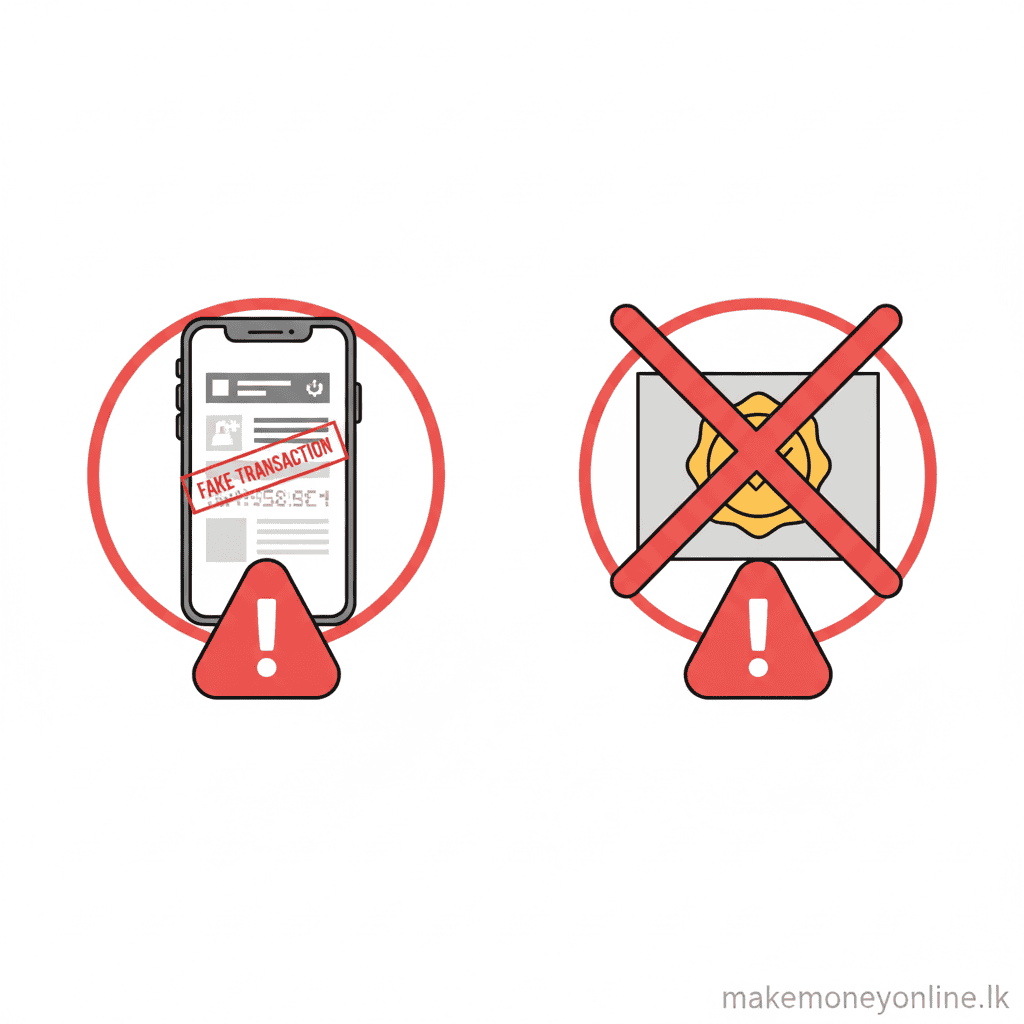
A common scam when selling: a buyer claims to have transferred payment and sends a WhatsApp screenshot of a successful bank transfer, but the money never actually arrives. Always verify payment directly in your bank app or internet banking before releasing any goods. Never accept a screenshot as proof of payment.
Counterfeit Branded Goods
Purchasing supposedly genuine branded electronics, clothing, or accessories at prices well below market value and discovering they are counterfeits eliminates your profit and may leave you with unsellable inventory. For expensive purchases, buy from sellers you can verify or trade with established platforms where sellers have ratings.
“Too Urgent” Sellers Pushing Fast Decisions
Sellers who create extreme urgency (“take it today or I’m selling it to someone else tonight”) and do not allow adequate time for inspection or verification are red flags. Legitimate sellers may be motivated but will allow a reasonable inspection. Pressure tactics often indicate a hidden problem with the item.
Daraz and ikman.lk Phishing Messages
Scammers send messages claiming to be ikman.lk or Daraz “payment processing” teams, asking you to click a link and enter your bank details to receive payment for your listing. These are phishing attacks. Legitimate platforms never ask for your banking credentials via message or link. All payments on legitimate platforms are processed through official platform interfaces only.
Final Verdict: Is Reselling Goods Worth It for Sri Lankans?
Reselling goods is a highly accessible income method for Sri Lankans who are willing to develop category knowledge, manage inventory, and build reliable buyer relationships. It does not require digital skills, is scalable with capital reinvestment, and can be started immediately with minimal upfront investment.
The honest limitations are that income is not passive (it requires active sourcing and selling), capital grows slowly without reinvestment, and competitive categories have thin margins. But for Sri Lankans who enjoy buying and selling, understand value in their chosen category, and are disciplined about reinvesting profits, reselling can grow into a LKR 100,000+ per month business within 12 to 18 months.
This method suits you well if:
- You have an eye for value in a specific product category
- You have LKR 10,000 to LKR 30,000 to start as working capital
- You are comfortable with face-to-face or online transactions in Sri Lanka
- You want income that scales with effort and capital investment
This method may not suit you if:
- You prefer digital, location-independent work
- You do not have storage space for physical inventory
- You are unwilling to actively source, list, and manage transactions regularly
For related income methods see the guide on vintage clothing in Sri Lanka and the overview of handmade crafts for complementary product-based income approaches.