
SaaS (Software as a Service) is the highest-ceiling income method in this guide and also the most difficult. Building a software product that people pay a monthly subscription for is a fundamentally different challenge from freelancing. You are not trading your time for money. You are building an asset that generates revenue whether you are working or not.
The Sri Lankan developers who have built profitable SaaS products did not stumble into it. They identified a specific problem that a specific group of people would pay to solve, built a focused solution, and marketed it relentlessly before it was popular to do so. The income ceiling is genuinely high. A SaaS product with 200 paying customers at $29 per month generates $5,800 per month (LKR 1,769,000) in recurring revenue. With 1,000 customers, that becomes $29,000 per month. These are not hypothetical numbers. They are what small, bootstrapped SaaS products earn every month.
This guide covers how SaaS income works, what types of SaaS products succeed, the realistic timeline from idea to revenue, and the honest failures that kill most SaaS attempts.
What Is SaaS Development?
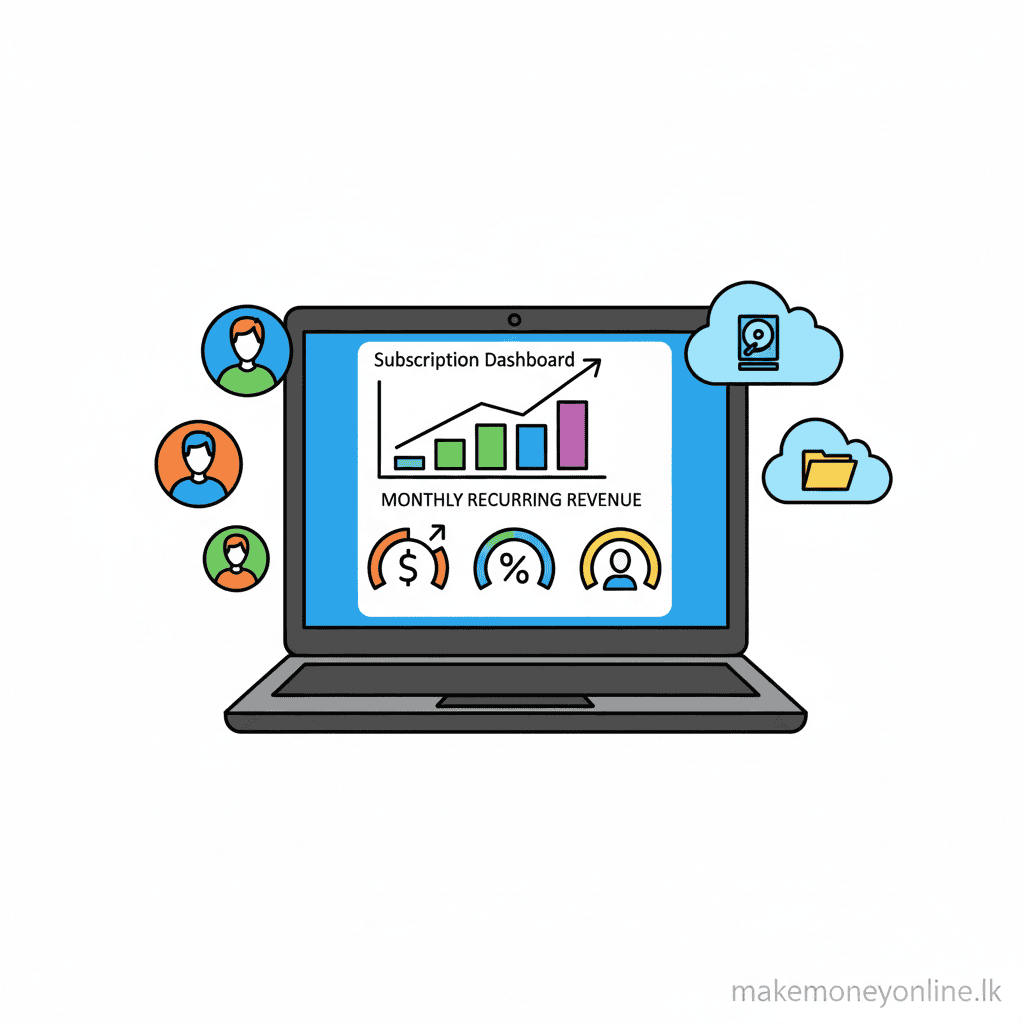
SaaS (Software as a Service) means building a web-based software product that customers access via a subscription. Instead of selling software once, you charge customers monthly or annually for continued access. The subscription model creates recurring revenue that grows as you add customers and decreases when customers cancel (churn).
SaaS products range from simple one-feature tools to complex enterprise platforms. The most successful bootstrapped SaaS products from independent developers are typically focused, single-purpose tools that solve one specific problem extremely well.
Common SaaS categories with opportunities for independent developers:
Productivity and workflow tools: Task management, project tracking, note-taking, team communication, and automation tools for specific industries or workflows.
Marketing tools: Email marketing platforms, social media scheduling, SEO tools, analytics dashboards, and conversion optimization software.
Business operations tools: Invoicing, accounting, scheduling, booking systems, HR tools, and CRM software for specific industries (restaurants, salons, law firms).
Developer tools: Code review, testing, deployment, monitoring, and documentation tools.
Niche industry software: Software built specifically for a narrow vertical: veterinary clinics, yoga studios, pest control companies, wedding planners. The narrower the target market, the less competition and the easier the marketing.
AI-powered tools: SaaS products built around API access to language models (GPT-4, Claude) that solve specific content creation, data processing, or decision-support problems for businesses.
How Much Can You Earn from SaaS Development?
SaaS Revenue Benchmarks (Monthly Recurring Revenue)
| Customer Count | Price per Month | MRR (USD) | LKR Equivalent |
|---|---|---|---|
| 50 customers | $19 | $950 | LKR 289,750 |
| 100 customers | $29 | $2,900 | LKR 884,500 |
| 500 customers | $29 | $14,500 | LKR 4,422,500 |
| 1,000 customers | $49 | $49,000 | LKR 14,945,000 |
Exchange rate: 1 USD = approximately 305 LKR.
Reaching 50 paying customers at $19/month from a bootstrapped SaaS is a genuine 6 to 18 month target for a focused, well-marketed product. Many SaaS products never reach 50 paying customers. The difference is usually marketing, not product quality.
Development costs for a Sri Lankan developer are lower than for developers in Western countries. Building the initial version of a focused SaaS product takes 1 to 3 months of evenings and weekends. Infrastructure costs using modern cloud services (Vercel, Railway, Supabase) can be kept under $50 per month until revenue justifies scaling.
How Does SaaS Revenue Work?
Step 1: Identify a specific problem. The most important step. Talk to 20 to 30 potential customers before writing a line of code. Identify problems they are currently paying to solve (which means they are willing to pay) or spending significant time on (which means they would pay to save that time).
Step 2: Build a Minimum Viable Product (MVP). Build only the core feature that solves the identified problem. An MVP is not a half-finished product. It is a complete solution to a specific problem with no extra features. The goal is to put something in customers’ hands within 4 to 8 weeks.
Step 3: Find your first 10 paying customers. The first customers will not come from SEO or paid ads. They come from direct outreach: forums, communities, social media, and personal networks where your target customers spend time. Offer early access at a discount in exchange for honest feedback.
Step 4: Set up subscription billing. Stripe is the standard payment processor for SaaS. Sri Lankan developers typically use a US LLC or international business entity to access Stripe, or use alternatives like Paddle (which handles tax compliance and works without a US entity). Monthly subscriptions are billed automatically.
Step 5: Retain customers. Churn (customers cancelling) is the primary threat to SaaS revenue growth. Keeping customers active by solving their problem consistently is more important than acquiring new customers. A product with 2% monthly churn loses 24% of its customers per year. A product with 0.5% churn loses 6%.
Step 6: Grow revenue through customer acquisition. SEO, content marketing, paid advertising, partnerships, and product-led growth (free tier or free trial) are the primary acquisition channels for small SaaS products.
Step 7: Receive payment. Stripe payouts to a Wise or US bank account, then transfer to your Sri Lankan Commercial Bank, Sampath, BOC, HNB, or People’s Bank account.
What Skills Do You Need for SaaS Development?
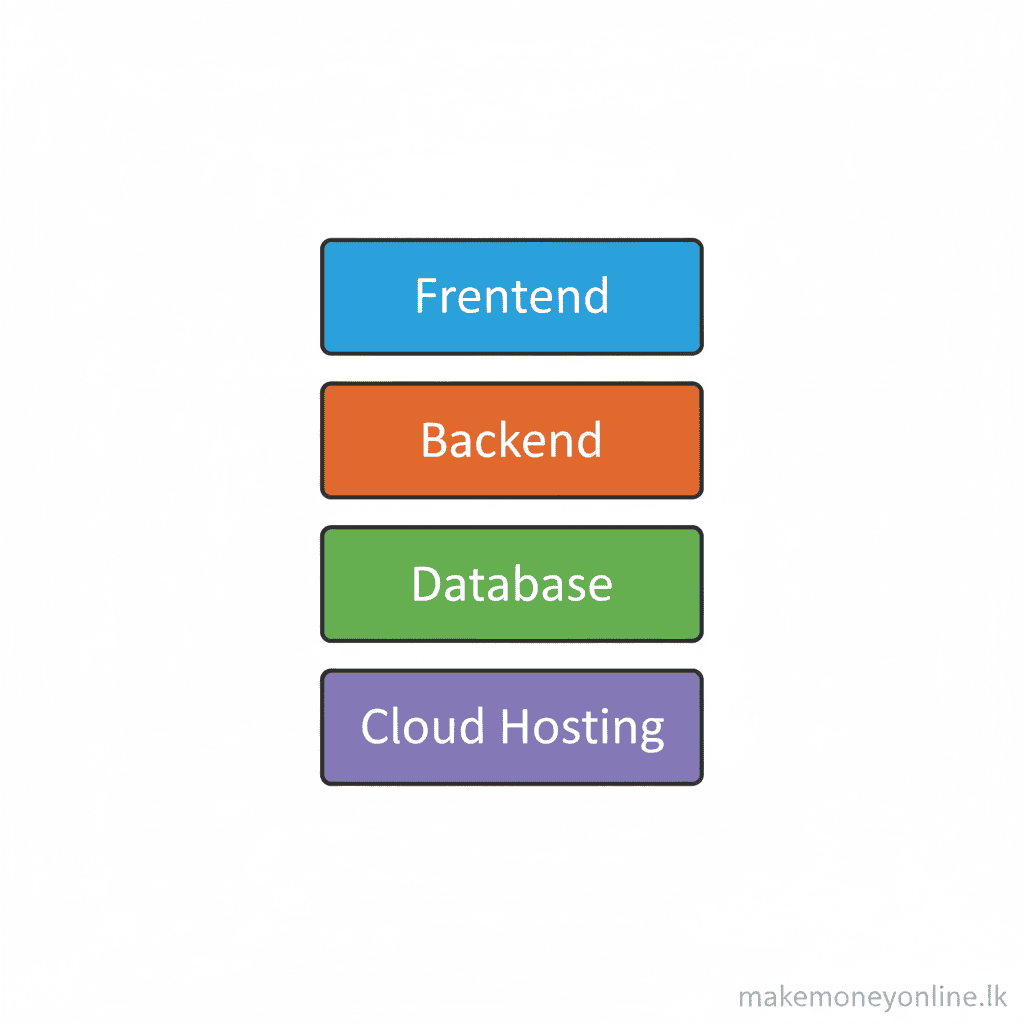
Full-stack web development: The ability to build and deploy a web application. Frontend (React, Vue, or plain HTML/CSS/JavaScript) and backend (Node.js, Python/Django, Ruby on Rails, or Laravel). The specific stack matters less than the ability to build and ship a working product.
Database design: Understanding how to structure data efficiently. PostgreSQL (via Supabase or Neon) is the most common choice for SaaS products. Efficient database design prevents performance problems as your user base grows.
Authentication and authorization: Implementing secure user accounts, subscription gating (paid users see different features than free users), and multi-tenant architecture (each customer’s data is isolated from others). Auth libraries like Clerk, Auth0, or Supabase Auth simplify this significantly.
Billing integration: Integrating Stripe or Paddle for subscription billing. Understanding how webhooks work (Stripe sending events to your server when payments succeed, fail, or subscriptions change). This is critical infrastructure.
Deployment and hosting: Getting your application onto the internet reliably. Vercel or Netlify for frontend. Railway, Render, or Fly.io for backend. Supabase or PlanetScale for database. Modern platforms have reduced the infrastructure knowledge required substantially.
Product thinking: Understanding what features to build and what to ignore. The ability to say no to feature requests that do not serve the core problem. SaaS products that try to do everything for everyone die from complexity.
Marketing and distribution: Writing landing page copy that converts. Understanding SEO for SaaS. Building a waitlist before launch. Most developer-built SaaS products fail not because the product is bad but because the developer does not know how to market it.
How to Get Started with SaaS Development
Step 1: Pick a problem you have personal experience with. The best SaaS ideas come from problems you encounter professionally or personally. If you have worked in an industry and noticed software gaps, that is your starting point. Scratch your own itch.
Step 2: Validate before building. Create a simple landing page describing the product and collect email addresses from interested people. Offer pre-launch pricing. If 50 people give you their email address and 5 pre-pay, you have validation. If no one signs up, the problem may not be painful enough.
Step 3: Choose a focused tech stack and stick with it. React + Node.js, Next.js + PostgreSQL, Laravel + MySQL, or Django + PostgreSQL are all proven stacks for SaaS. Do not switch stacks mid-build. Pick one, build the MVP, and ship.
Step 4: Build in public. Share your progress on Twitter/X, LinkedIn, and relevant communities (Indie Hackers, Product Hunt, Reddit’s r/SaaS). Building in public generates an audience before launch and creates early customer interest.
Step 5: Launch on Product Hunt. Product Hunt is a community where new products are launched and discussed. A successful Product Hunt launch can drive hundreds of signups in a single day. Prepare a compelling product description, screenshots, and a launch day promotion strategy.
Step 6: Focus relentlessly on customer retention. Once you have paying customers, talk to them regularly. Understand why they stay, why some cancel, and what additional problems they need solved. Product roadmap decisions should be driven by customer conversations.
How to Learn SaaS Development
Free resources:
- Indie Hackers (indiehackers.com): Community and interview series featuring bootstrapped SaaS founders. Realistic income numbers and business strategies from real independent developers.
- MicroConf YouTube channel: Content specifically for bootstrapped SaaS founders on product strategy, marketing, and pricing.
- Stripe documentation (stripe.com/docs): Comprehensive guides for implementing subscription billing. The Stripe documentation is excellent.
Paid learning:
- Zero to Sold by Arvid Kahl (USD 29 or LKR 8,845): The definitive guide to building a bootstrapped SaaS business from idea to exit. Practical and honest.
- SaaS Playbook by Rob Walling (USD 25 or LKR 7,625): Framework for building a bootstrap-friendly SaaS by one of the most respected figures in the bootstrapped SaaS community.
Pros of SaaS Development
Recurring revenue is the most valuable income model. A freelancer who earns LKR 200,000 one month earns LKR 0 if they take a week off. A SaaS product with 100 paying customers generates LKR 884,500 per month whether you work or not. Monthly recurring revenue is the most durable income structure available.
Exchange rate advantage is extreme. Earning USD subscription revenue while maintaining a Sri Lankan cost base creates an extraordinary margin. A product generating $5,000 per month costs $50 to $100 per month to operate. The remaining $4,900+ (LKR 1,494,500) is profit.
Acquirable as an asset. SaaS businesses sell for 2 to 5x annual recurring revenue on marketplaces like Acquire.com and MicroAcquire. A SaaS generating $3,000/month ARR ($36,000/year) can be sold for $72,000 to $180,000 (LKR 21,960,000 to LKR 54,900,000). Building a SaaS creates an asset, not just income.
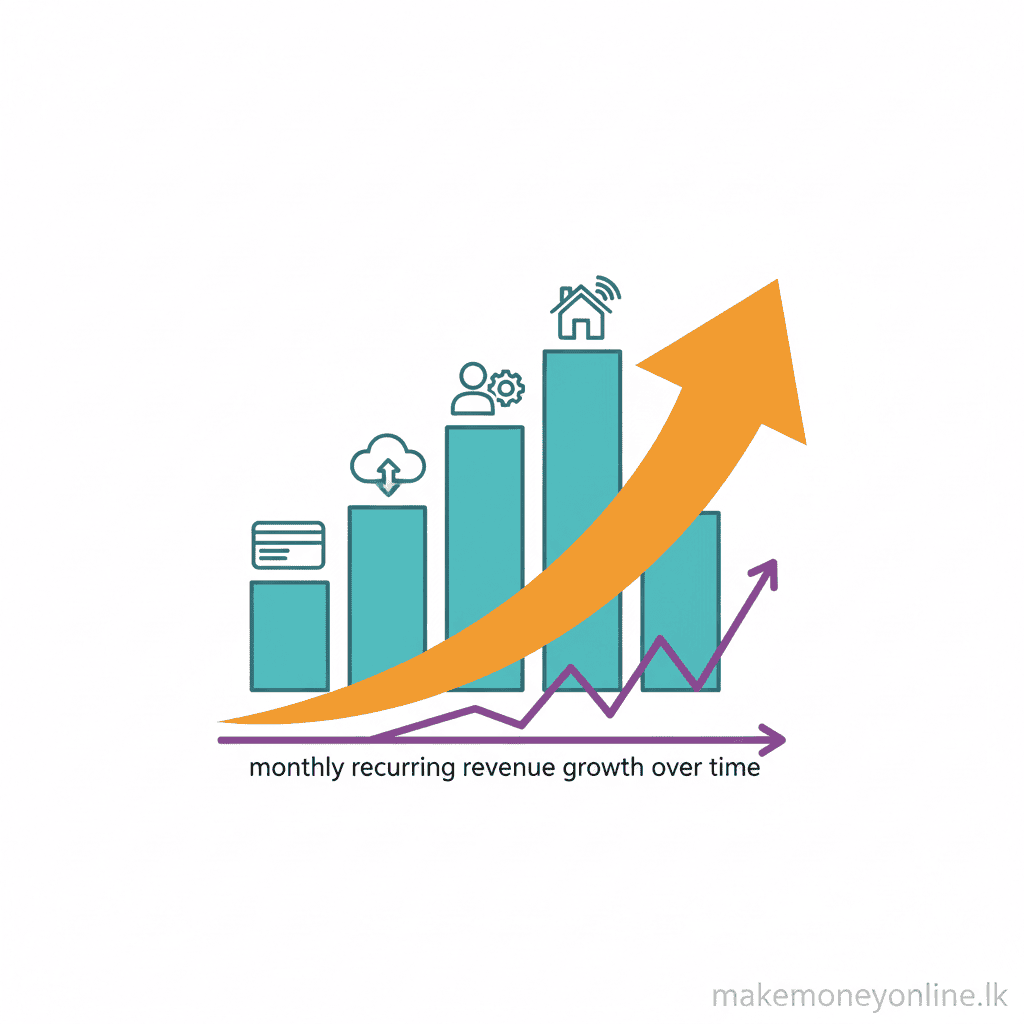
Compounding growth. Each new customer adds to MRR. Unlike project-based freelance work where you finish and start again, SaaS revenue compounds as long as churn is controlled.
Leverage from automation. A well-built SaaS handles customer onboarding, billing, and basic support automatically. The marginal cost of serving an additional customer is near zero once the product is built.
Cons of SaaS Development
Most SaaS products fail. The majority of SaaS products launched by independent developers never reach 50 paying customers. Building a product is the easy part. Finding customers who will pay for it is the hard part. The failure rate is high and the path to success requires sustained effort over 12 to 24 months minimum.
Significant upfront time investment with zero guaranteed income. Building a SaaS MVP while working a day job requires 3 to 6 months of evenings and weekends. There is no client paying you during this period. You are investing your time in an asset that may or may not succeed.
Customer support is unavoidable. Paying customers expect support when something breaks or they cannot figure out how to use a feature. As a solo founder, you are the support team. Customer support interrupts focused development work.
Churn is a constant threat. Customers cancel. Even a great product has churn. Managing churn requires ongoing product improvement, proactive customer success, and continuous value delivery.
Payment infrastructure is complex for Sri Lankans. Stripe is not directly available for Sri Lankan-registered businesses. Operating internationally requires either a US LLC, a Wise Business account, or a Paddle integration. This adds friction to getting started and ongoing administrative overhead.
Platforms and Tools for SaaS Development
Stripe / Paddle: Subscription billing. Stripe requires a non-Sri Lankan business entity. Paddle handles merchant-of-record and tax compliance globally without requiring a local entity.
Supabase: Open-source Firebase alternative providing PostgreSQL database, authentication, and storage. Free tier is generous for early-stage products.
Vercel / Railway: Deployment platforms. Vercel for Next.js frontend. Railway for backend APIs and servers.
Intercom / Crisp: In-app customer messaging and support chat. Essential for understanding why customers are churning.
Baremetrics / ChartMogul: SaaS analytics tracking MRR, churn, LTV, and subscriber counts. Connects to Stripe to show revenue metrics automatically.
Product Hunt: Launch platform for new products. A successful launch drives early customers and press coverage.
Indie Hackers: Community for bootstrapped SaaS founders. Milestone posts, feedback requests, and revenue milestones build an audience alongside your product.

Honest Warnings: SaaS Red Flags
Building Without Validation
The most common SaaS failure pattern: a developer builds a product for 6 months, launches to silence, and discovers no one wants it. Validation before building is not optional. If you cannot find 10 people willing to pay for your product before it exists, you do not have a product. You have a hobby.
Solving Problems That Are Not Painful Enough
A problem people complain about and a problem people will pay money to solve are different things. People complain about many things. People pay for solutions to problems that are costing them time, money, or significant frustration. Validate that your target customers are actively spending money on workarounds or tools that partially solve their problem.
Overbuilding the Product, Underbuilding the Marketing
Developers are comfortable writing code. They are uncomfortable writing landing page copy, reaching out to strangers, and asking for money. This discomfort leads to endless product refinement as a way of avoiding marketing. A product with 100 features and no customers earns nothing. A product with 3 features and 50 paying customers earns MRR.
Pricing Too Low
First-time SaaS founders often price at $5 to $9 per month, believing it will make customer acquisition easier. Low pricing creates a high volume of low-quality customers, enormous support overhead, and margins that do not survive churn. Pricing at $19 to $49 per month for a genuine business tool is appropriate. Customers paying $49 per month take the product seriously and churn less than customers paying $5.
Final Verdict: Is SaaS Development Worth It for Sri Lankans?
SaaS development is the highest-risk, highest-reward income method in this guide. The vast majority of SaaS products fail. The ones that succeed create genuinely life-changing recurring income that operates independently of the founder’s time.
It suits a very specific type of person: a developer who can identify a real problem, build a focused solution, and market it persistently through rejection and slow early growth. The combination of recurring revenue, exchange rate leverage, and asset value makes it worth the attempt for those who fit the profile.
This method suits you well if:
- You have full-stack web development skills
- You have identified a specific problem in a market where people are already spending money on imperfect solutions
- You are willing to invest 6 to 18 months before expecting significant revenue
- You understand that marketing and distribution are as important as the product itself
This method may not suit you if:
- You need income within 3 to 6 months
- You have no prior web development experience
- You are not willing to do the customer development and marketing work alongside the technical work
For related tech-based income methods, see the guide on web development in Sri Lanka as a faster path to income from development skills, and the overview of mobile app development for a related product-building approach.