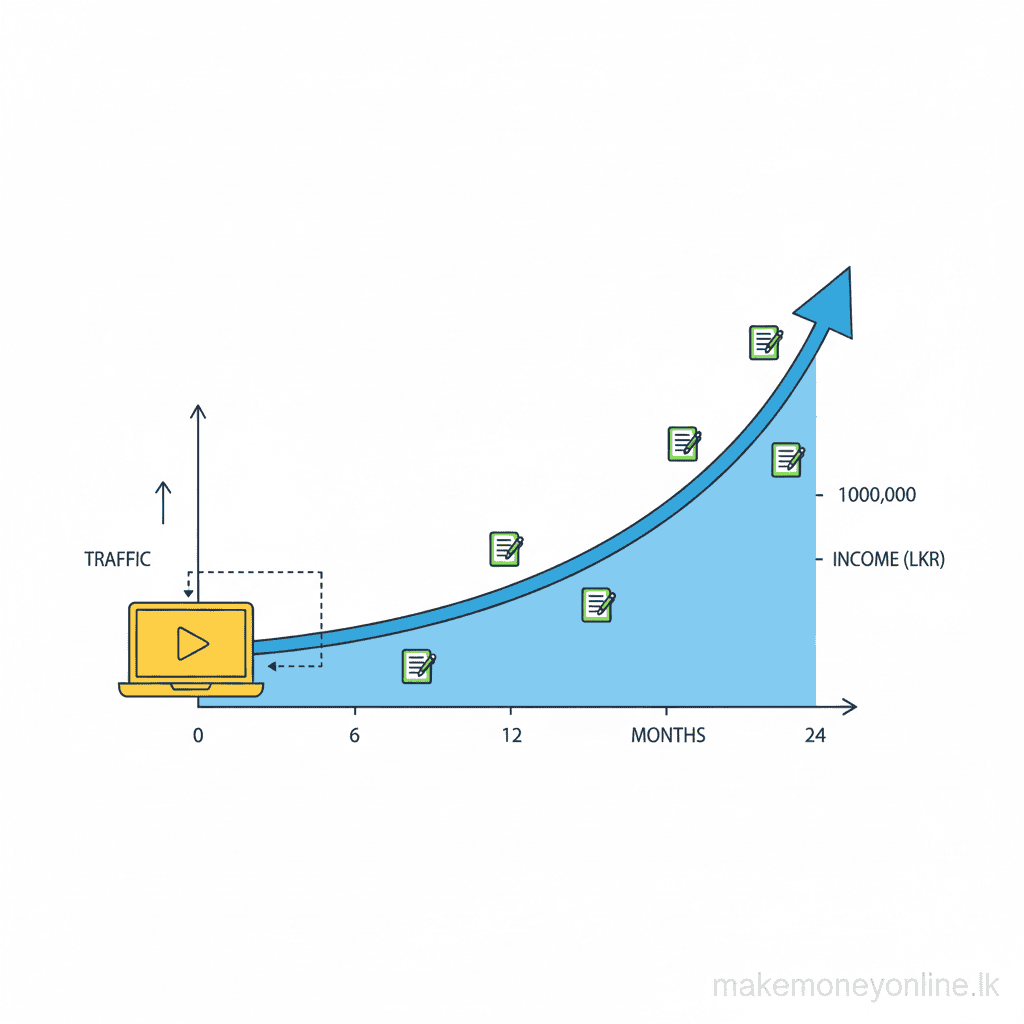
Most Sri Lankan bloggers who fail give up too early. They write five posts, check their traffic, see twenty visitors per month, and conclude blogging does not work. They were not wrong about the method. They were wrong about the timeline.
Blogging is an SEO-driven content business. It takes six to twelve months before Google begins ranking new content consistently. The blogs that succeed are the ones that keep publishing through that initial silence, knowing that each article compounds on the ones before it. A blog with 80 high-quality SEO-optimized articles earns exponentially more than a blog with 8 articles, even if the individual article quality is identical.
Sri Lankan bloggers have a genuine advantage in certain niches: local travel, Sri Lankan food, personal finance for Sri Lanka, local tech reviews, and content written for the Sri Lankan diaspora. These niches have real international search volume with low competition from established large publishers.
This guide covers the realistic income, which niche and monetization strategies work best for Sri Lankan bloggers, and the technical setup required to start.
What Is Blogging as a Business?
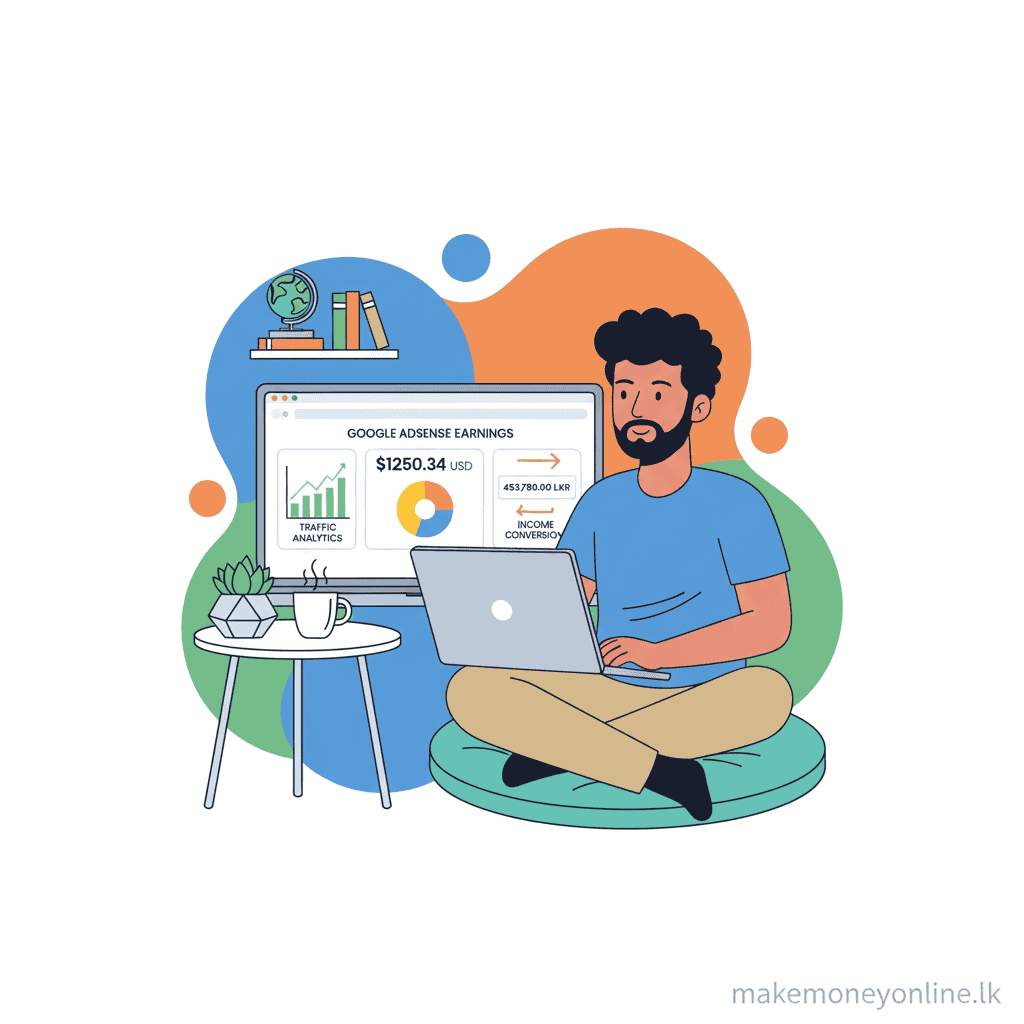
Blogging as an income method means publishing written content on a self-hosted website, driving organic traffic through SEO, and monetizing that traffic through advertising, affiliate links, sponsored content, or digital product sales.
The key distinction is between hobby blogging and business blogging. Hobby blogging publishes whatever interests the writer. Business blogging publishes content that people are actively searching for, in niches where monetization is viable. Both can coexist in the same blog, but the income comes from the business approach.
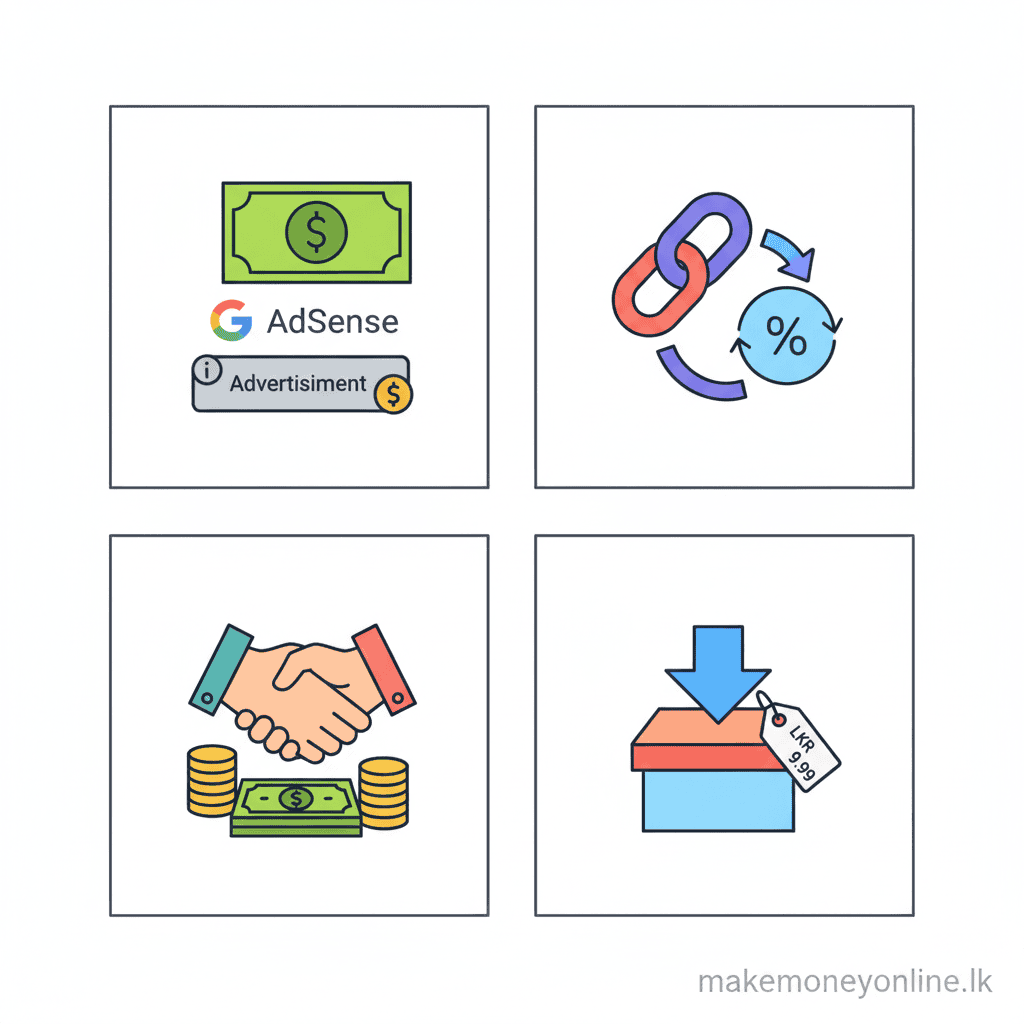
Sri Lankan bloggers primarily monetize through:
Google AdSense / Ezoic / Mediavine: Display advertising that pays per thousand impressions (RPM) or per click. Sri Lankan blogs targeting international English audiences earn $5 to $25 RPM. Blogs targeting primarily Sri Lankan audiences earn $1 to $3 RPM due to lower advertising rates in the South Asian market.
Affiliate marketing: Earning commission by recommending products or services. A Sri Lankan travel blog recommending booking platforms, gear, or accommodation earns 5 to 15% per referral. Finance blogs recommending credit cards or investment platforms earn significantly more per conversion.
Sponsored content: Brands pay you to write articles featuring their products or services. Rates vary from LKR 5,000 per post for small local blogs to LKR 50,000+ per post for established blogs with 50,000+ monthly visitors.
Digital products: Selling your own e-books, guides, templates, or courses to your audience. Higher margin than affiliate commissions, requires an established trust relationship with readers.
How Much Can You Earn from Blogging in Sri Lanka?
Blog Income Benchmarks by Traffic
| Monthly Traffic | AdSense Income (USD) | LKR Equivalent | Affiliate Potential |
|---|---|---|---|
| 1,000 sessions | $5 to $25 | LKR 1,525 to LKR 7,625 | Minimal |
| 10,000 sessions | $50 to $250 | LKR 15,250 to LKR 76,250 | LKR 10,000 to LKR 50,000 |
| 50,000 sessions | $250 to $1,250 | LKR 76,250 to LKR 381,250 | LKR 50,000 to LKR 200,000 |
| 100,000 sessions | $500 to $2,500 | LKR 152,500 to LKR 762,500 | LKR 100,000 to LKR 500,000 |
Exchange rate: 1 USD = approximately 305 LKR.
A Sri Lankan travel blog reaching 30,000 monthly sessions from international visitors earns approximately $200 to $600 per month from AdSense combined with $200 to $400 per month from booking affiliate commissions, totalling $400 to $1,000 per month (LKR 122,000 to LKR 305,000). This is achievable with 18 to 24 months of consistent publishing.
How Does Blogging Work?
Step 1: Choose a niche. Niche selection determines your competition level, monetization potential, and content direction. The best niches have: meaningful search volume, monetization options (advertisers or affiliate programs), and a realistic chance of ranking with a new site (KD under 20 for most target keywords).
Step 2: Set up your blog. Self-hosted WordPress on a reliable hosting provider is the standard for monetizable blogs. Hosted platforms like Blogger.com limit monetization options and portability.
Step 3: Research keywords. Identify the specific questions and topics your target audience searches for using tools like Google Search Console, Ahrefs, and free tools like Google’s autocomplete and “People Also Ask” features.
Step 4: Publish content regularly. Two to four articles per month is the minimum for steady growth. Four to eight articles per month accelerates it. Each article should target a specific keyword phrase and answer the search intent behind it comprehensively.
Step 5: Build backlinks. Links from other websites signal to Google that your content is authoritative. Guest posting on related blogs, being featured in resource roundups, and creating link-worthy data or guides are the most sustainable link-building approaches.
Step 6: Apply to monetization programs. Google AdSense accepts new sites. Ezoic (better RPM than AdSense) requires 10,000 monthly page views. Mediavine (highest RPM) requires 50,000 monthly sessions. Affiliate programs have varying requirements.
Step 7: Receive income. AdSense pays to your Sri Lankan bank account via Google’s payment system (wire transfer or Western Union). Affiliate networks pay via Payoneer, bank wire, or PayPal. All methods work from Sri Lanka.
What Skills Do You Need for Blogging?
SEO fundamentals: Understanding how Google ranks content, what makes a keyword worth targeting, how to structure articles for both readers and search engines, and how to build authority over time. This is learnable from free resources.
Writing ability: Blog posts need to be clear, useful, and readable. You do not need literary talent. You need the ability to explain a topic clearly, answer reader questions directly, and maintain a consistent voice.
Basic WordPress management: Installing themes and plugins, writing and formatting posts, understanding the difference between categories and tags, managing media. This is learnable in a day for a basic setup.
Keyword research: Identifying which topics have enough search volume to drive traffic and low enough competition for a new site to rank. This determines your content plan entirely.
Patience and consistency: The most important “skill” in blogging is the discipline to keep publishing through the first 6 to 12 months when traffic is minimal. Bloggers who succeed are those who maintain publishing momentum before they see results.
How to Get Started Blogging in Sri Lanka
Step 1: Choose your niche. Research niches you have genuine knowledge about that also have viable monetization. Sri Lankan travel, personal finance for Sri Lankans, local food, tech and software reviews, parenting, and career development are all strong starting points with real search volume.
Step 2: Buy a domain and hosting. A.com domain costs approximately LKR 3,000 to LKR 4,000 per year. Reliable WordPress hosting costs LKR 5,000 to LKR 15,000 per year for entry-level plans. SiteGround, Kinsta, and Cloudflare Pages (for static sites) are common options. Hostinger offers affordable plans that work well for new Sri Lankan bloggers.
Step 3: Install WordPress. Most hosting providers offer one-click WordPress installation. Use a lightweight, SEO-optimized theme. GeneratePress (free version is excellent) or Astra are highly recommended over premium themes that slow page loading.
Step 4: Install essential plugins. SEOPress (for SEO meta management), WP Rocket or Litespeed Cache (for page speed), Smush or Imagify (for image compression), and Wordfence (for security) are the core plugin set.
Step 5: Research and plan your first 20 articles. Before writing a single post, use Google autocomplete, Ahrefs Free Keyword Generator, and manual SERP research to identify 20 keyword targets with clear search intent. A content plan prevents the common mistake of writing about interesting topics with no search volume.
Step 6: Publish two to four articles per month consistently. Each article should be 1,500 to 3,000 words for informational content. Comprehensive, specific articles that fully answer a question outrank short, thin content.
Step 7: Set up Google Search Console. Free tool from Google. Submit your sitemap. Monitor which queries drive impressions. Use the data to understand which content is gaining traction and which topics need better coverage.
How to Learn Blogging for Income
Free resources:
- Ahrefs Blog (ahrefs.com/blog): The single best free resource for learning SEO for bloggers. Covers keyword research, link building, content strategy, and technical SEO at beginner to advanced levels.
- Google Search Central (developers.google.com/search): Official Google documentation on how search works, what Google rewards, and how to optimize content for search.
- Income School YouTube channel: Practical, honest guidance specifically for niche bloggers aiming for AdSense and affiliate income. One of the most respected free resources in this space.
Paid learning:
- Project 24 by Income School (USD 449 per year or LKR 137,000): The most comprehensive paid course for building an income-generating blog from scratch. Covers niche selection, content strategy, SEO, and monetization with a realistic 24-month roadmap.
- Udemy blogging and SEO courses (USD 15 to USD 30 or LKR 4,575 to LKR 9,150 during sales): More affordable entry-point courses covering WordPress setup, SEO basics, and affiliate marketing for bloggers.
Pros of Blogging
Compound growth. Each article adds to your site’s topical authority. A blog with 100 relevant articles ranks better than a blog with 20 articles on the same niche. Traffic compounds over time as each new article contributes to overall site authority.
Diversified income streams. A single blog can earn from AdSense, multiple affiliate programs, sponsored content, and digital product sales simultaneously. This diversification protects income if any one stream fluctuates.
Asset that appreciates. Established, income-generating blogs are bought and sold on platforms like Flippa and Empire Flippers at 30 to 40x monthly income multiples. A blog earning LKR 100,000 per month has a sale value of LKR 3,000,000 to LKR 4,000,000.
Location and time independence. A blog generates income 24 hours a day. You manage it on your schedule from anywhere with internet access.
Positions you as an authority. Sri Lankan bloggers who consistently publish expert content in their niche build professional credibility that opens consulting, speaking, and brand partnership opportunities beyond direct blog income.
Cons of Blogging
Long time to income. Most bloggers see minimal income for the first 6 to 12 months. Building to meaningful traffic requires consistent publishing and patience that many beginners underestimate.
Google algorithm dependency. Significant Google algorithm updates have wiped out the traffic of established blogs overnight. Diversifying traffic sources (social media, email list, YouTube) reduces but does not eliminate this risk.
Content becomes outdated. Posts published in 2022 may need significant updates by 2026. Maintaining content quality across a large blog requires ongoing time investment even after initial publication.
Technical overhead. Self-hosted WordPress requires managing hosting, plugins, security, and performance. While this is manageable, it is more technical overhead than platforms like Medium or Substack.
AI content saturation is increasing. Google has taken action against low-quality AI-generated content at scale. High-quality, experience-based content from genuine human authors is increasingly important for ranking differentiation.
Best Setup and Tools for Blogging in Sri Lanka
Hosting
Hostinger (from approximately USD 2.99/month or LKR 912) is the most affordable reliable hosting option for new Sri Lankan bloggers. SiteGround (from USD 3.99/month or LKR 1,217) offers better performance at a higher price. Both support WordPress one-click installation and accept credit cards from Sri Lankan banks.
CMS
WordPress.org (free) is the standard. Approximately 43% of all websites run on WordPress. The plugin ecosystem, theme flexibility, and monetization options are unmatched.
SEO Plugin
SEOPress (free and Pro versions) for SEO meta management, XML sitemap generation, and content analysis. The Pro version (USD 49/year or LKR 14,945) is worth it for serious bloggers.
Ad Networks
- Google AdSense (adsense.google.com): Entry point. No minimum traffic. Lower RPM than alternatives.
- Ezoic: Better RPM. Requires 10,000+ monthly page views.
- Mediavine: Best RPM for content blogs. Requires 50,000+ monthly sessions and approval.
Scam Alerts: Blogging Red Flags
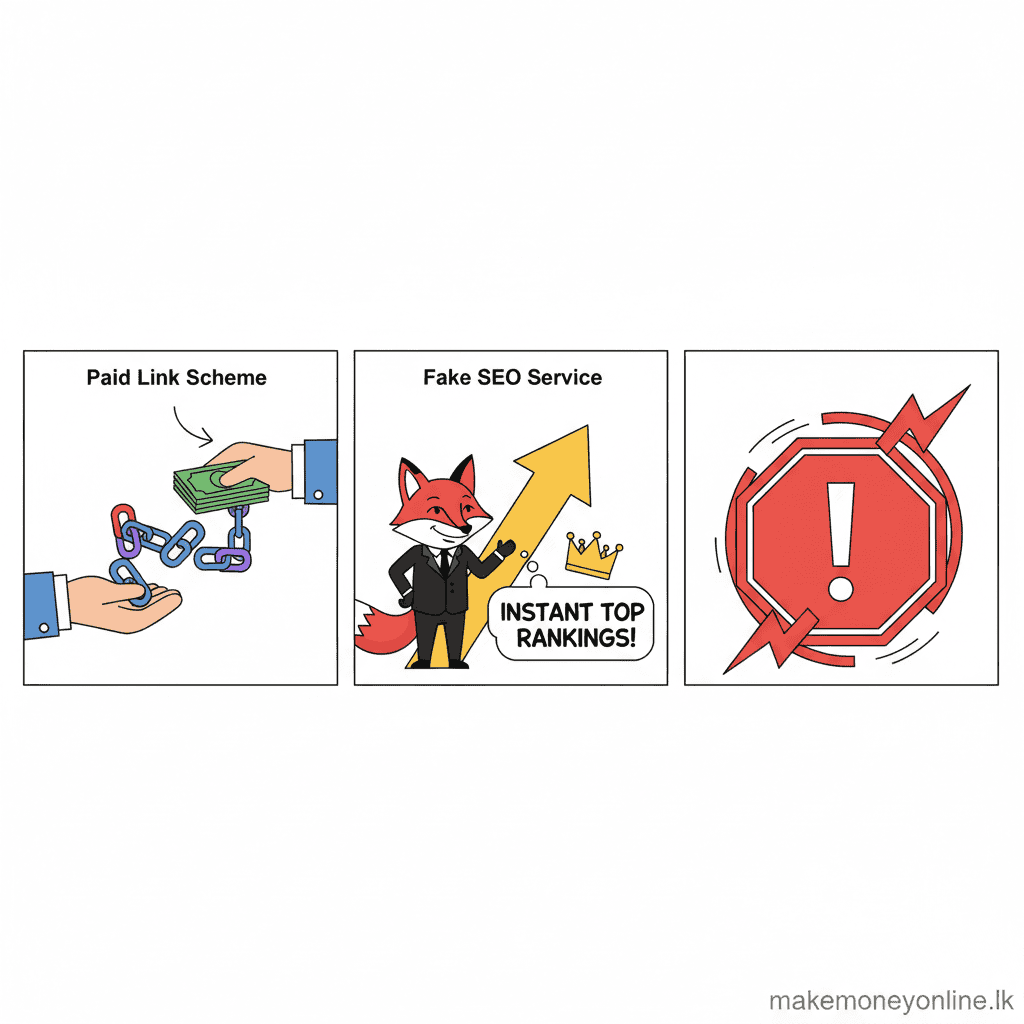
Paid Link Schemes
Buying or selling backlinks is against Google’s guidelines. Services offering to “buy links” to your blog for LKR 5,000 to LKR 20,000 per link, or to sell guest post placements on your blog for cash, create risk of Google manual penalties. Build links organically through genuinely useful content.
“Rank on Page 1 in 30 Days” SEO Services
Legitimate SEO is a 6 to 12 month process. Agencies or freelancers guaranteeing page 1 rankings within 30 days are either targeting keywords with no meaningful search volume or using black-hat techniques that produce short-term gains followed by Google penalties. Research any SEO service provider thoroughly before engaging.
Blog Monetization Courses Promising Quick Income
High-priced courses (LKR 100,000 to LKR 500,000) claiming their system generates LKR 200,000 per month from blogging within 90 days are misrepresenting the timeline. Blogging income is real but slow. Any course making these claims is selling hope, not a realistic system.
Auto-Generated Content Tools
Services offering to generate 100 SEO-optimized articles for LKR 5,000 using AI produce low-quality content that Google has become adept at identifying and downranking. Original, experience-based writing consistently outperforms bulk AI content for long-term search ranking.
Final Verdict: Is Blogging Worth It for Sri Lankans?
Blogging is one of the highest long-term potential income methods in this guide, and one of the slowest to produce initial results. The combination of compound traffic growth, multiple income streams, and asset appreciation potential makes it genuinely worth the investment for Sri Lankans who are willing to commit to a 12 to 24 month building phase.
The honest reality: most bloggers fail because they treat blogging as a short-term income method. Those who approach it as a multi-year asset-building project, stay consistent through the initial low-traffic period, and maintain content quality over quantity, are the ones who reach LKR 100,000+ per month.
This method suits you well if:
- You have genuine knowledge or interest in a specific niche with search demand
- You are willing to publish consistently for 12 to 18 months before expecting meaningful income
- You want to build a long-term digital asset, not just short-term income
- You have or are willing to learn basic SEO and WordPress management
This method may not suit you if:
- You need income within 30 to 60 days
- You are not willing to learn keyword research and basic SEO
- You want a method with immediate income feedback
For those building an online content business, see the guide on creating online courses and the overview of email marketing for complementary income streams that pair well with a blog audience.