Sri Lanka receives over 1.5 million international tourists annually, and the majority need accommodation. Hotels dominate the main tourist circuits, but a growing number of travelers, particularly those from Europe, North America, and Australia, specifically seek private homes, unique stays, and local experiences that hotels cannot provide. Airbnb connects these travelers directly with Sri Lankan property owners who have space to offer.
A spare bedroom in Colombo 7 listed at $40 per night generates LKR 12,200 per night at current exchange rates. At 60% occupancy (18 nights per month), that is LKR 219,600 per month from a room that otherwise sits empty. A dedicated villa in Weligama listed at $120 per night at 50% occupancy generates LKR 1,098,000 per month.
Airbnb hosting in Sri Lanka is not a passive income source. It requires active management, guest communication, and property maintenance. But for property owners with space to offer and the willingness to manage guests, it is one of the highest-return uses of existing assets available.
This guide covers how Airbnb income works in Sri Lanka, what types of properties perform best, how to set up and optimize a listing, and the legal and practical considerations specific to Sri Lanka hosts.
What Is Airbnb Hosting?
Airbnb hosting means listing a property or room on the Airbnb platform and accepting bookings from travelers who pay a nightly rate for short-term accommodation. The host provides the space, manages check-in and check-out, handles communication with guests, and maintains the property to the standard that justifies the listed price.
Airbnb operates as a marketplace. The platform handles payment processing, provides insurance coverage (AirCover for Hosts), and manages dispute resolution. Airbnb charges hosts a service fee of 3% on most bookings (split from the 14.2% charged to guests), making it significantly cheaper to list than traditional travel agencies.
The property types on Airbnb range from a single private room in a family home to entire villas, treehouses, glamping tents, and heritage properties. In Sri Lanka, the following categories perform consistently well:
Private rooms in Colombo: Business travelers, solo tourists, and budget travelers book private rooms in residential areas. Well-located rooms in Colombo 3, 6, 7, and 15 (Negombo area) are consistently in demand.
Entire apartments and houses: Families, couples, and groups prefer entire property rentals. Self-catered accommodation with kitchen access appeals to longer-stay travelers. Galle, Kandy, Ella, Mirissa, and Colombo have strong demand for entire-property rentals.
Unique stays: Treehouses near wildlife parks, colonial bungalows, converted tea estate buildings, and boutique heritage properties command significantly higher nightly rates than standard accommodation. Unique aesthetics drive higher prices and better occupancy through organic Airbnb algorithm promotion.
Nature and eco-stays: Accommodation near Yala, Udawalawe, Sinharaja, and other wildlife and nature destinations attracts premium rates during peak wildlife season.
How Much Can You Earn from Airbnb in Sri Lanka?
Airbnb Income Benchmarks
| Property Type | Location | Nightly Rate (USD) | Occupancy | Monthly Income (USD) | LKR Equivalent |
|---|---|---|---|---|---|
| Private room | Colombo | $25 to $50 | 60% | $450 to $900 | LKR 137,250 to LKR 274,500 |
| Entire apartment | Colombo/Galle | $60 to $120 | 55% | $990 to $1,980 | LKR 301,950 to LKR 603,900 |
| Beach villa | Mirissa/Weligama | $80 to $200 | 50% | $1,200 to $3,000 | LKR 366,000 to LKR 915,000 |
| Unique/heritage stay | Anywhere | $100 to $300 | 60% | $1,800 to $5,400 | LKR 549,000 to LKR 1,647,000 |
USD → LKR conversion notice. USD-to-LKR figures on this page use a reference rate of approximately LKR 305 per USD, last reviewed 2026-09-01. Actual conversion depends on your provider’s spread and the current market rate. See our methodology. These figures are before Airbnb’s host service fee (3%), cleaning costs, utilities, and property maintenance. Net income is typically 65 to 80% of gross booking income after costs.
How Does Airbnb Income Work?
Step 1: You create an Airbnb host account at airbnb.com and list your property. The listing includes photographs, a property description, house rules, check-in instructions, amenities, and your cancellation policy.
Step 2: You set a nightly rate. Airbnb’s Smart Pricing tool adjusts your rate automatically based on local demand, seasonality, and competing listings. Many experienced hosts use dynamic pricing tools (Pricelabs, Wheelhouse) for more precise control.
Step 3: Travelers search Airbnb for accommodation in your area. They book your listing and pay Airbnb directly. You accept or decline the booking (or use Instant Book to allow automatic acceptances).
Step 4: Before and during guest stays, you communicate through Airbnb’s messaging system. Providing local recommendations, check-in guidance, and responsive communication generates 5-star reviews.
Step 5: After checkout, guests leave a review and you leave a review for the guest. Positive reviews improve your listing’s ranking in Airbnb search results and increase future bookings.
Step 6: Airbnb releases payment 24 hours after guest check-in. Payment goes to your registered bank account. Airbnb supports direct transfers to Sri Lankan commercial banks.
Step 7: Airbnb sends payment to your Commercial Bank, Sampath, BOC, HNB, or People’s Bank account in LKR (converted from USD at Airbnb’s exchange rate, which is typically close to market rate).
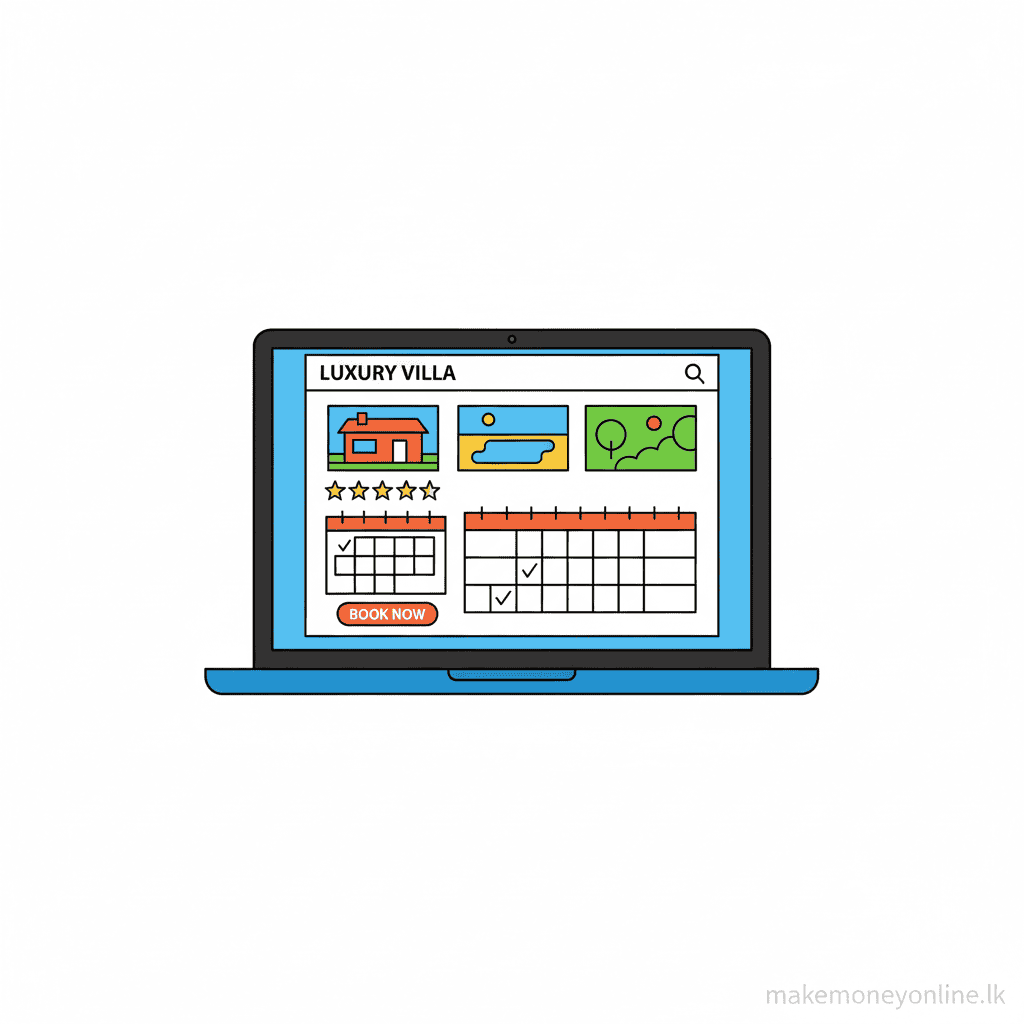
What Do You Need to Start Airbnb Hosting in Sri Lanka?
A property or room to list: This is the primary requirement. You can list a spare bedroom in your home, an entire apartment or house, or a dedicated investment property. You do not need to own the property, some hosts operate with the landlord’s permission on a longer-term rental agreement, but this arrangement requires explicit written permission from the property owner.
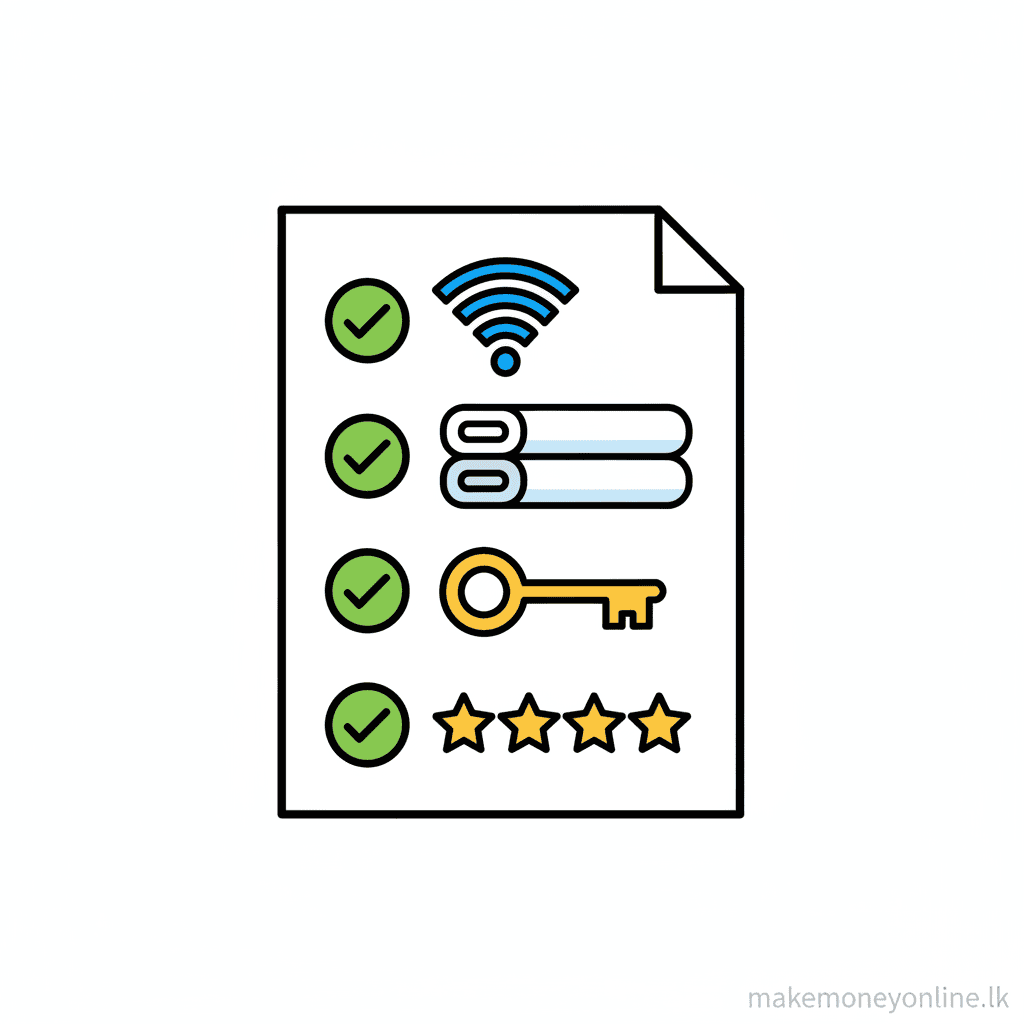
Airbnb-standard amenities: International travelers expect reliable WiFi, clean linens, functioning hot water, a private bathroom (strongly preferred), air conditioning (essential in coastal and lowland areas), and basic kitchen access for longer stays. Properties without these amenities compete poorly against hotels at equivalent price points.
High-quality photography: Airbnb’s own data shows that listings with professional photography receive 40% more bookings than listings with amateur photos. This is the single highest-return investment a new host can make. A professional photographer for an Airbnb listing typically charges LKR 10,000 to LKR 25,000 in Sri Lanka. Airbnb also occasionally offers free professional photography to new hosts.
Bank account: Airbnb pays hosts via bank transfer. Sri Lankan commercial bank accounts are supported. The payout currency can be set to LKR or USD. USD payouts with subsequent manual conversion at better rates is an option worth exploring.
Government compliance: See the legal section below. Tourist board registration is required for properties hosting foreign guests in Sri Lanka.
How to Optimize Your Airbnb Listing
Write a clear, specific title. “Private Room in Colombo” competes with hundreds of similar listings. “Quiet Garden Room in Colombo 7, 5 Min Walk to Viharamahadevi Park” tells a specific story. Specificity in the title helps both search ranking and click-through rate.
Focus the description on experience, not features. “The room has a bed and WiFi” is a feature list. “Wake up to garden views, have breakfast on the terrace, and walk to Viharamahadevi Park in five minutes” sells an experience. Describe what the guest’s stay will feel like.
Set competitive pricing initially, then raise after reviews. New listings without reviews need to price 15 to 25% below comparable established listings to attract first bookings. After 10 positive reviews, raise pricing to market rate. The Airbnb New Listing Promotion also gives temporary search ranking boosts to new listings.
Enable Instant Book. Listings with Instant Book receive significantly more bookings than those requiring host approval, because travelers booking spontaneously will not wait for approval. Set screening requirements (verified ID, positive reviews) within Instant Book settings to filter unreliable guests.
Respond to inquiries within one hour. Airbnb’s algorithm favors hosts with high response rates and fast response times. Slow responses reduce your listing’s search ranking and allow potential guests to book elsewhere.
Legal and Regulatory Considerations for Sri Lanka Hosts
Sri Lanka Tourism Development Authority (SLTDA) Registration: Properties hosting foreign tourists in Sri Lanka are legally required to register with the SLTDA. Registration involves an application, an inspection of the property, and an annual fee. Unregistered properties risk fines and forced closure. Contact the SLTDA (sltda.gov.lk) for current registration requirements and fees for your property type and location.
Income tax: Rental income from Airbnb is taxable income in Sri Lanka. The Inland Revenue Department requires declaration of rental income in your annual tax return. Income from short-term rentals is taxed as personal income. Keeping accurate records of all Airbnb income and related expenses (cleaning, maintenance, utilities) is essential for accurate tax filing.
Landlord and condominium restrictions: If you rent your property, check your lease agreement for short-term subletting restrictions. Many Colombo condominium bylaws explicitly prohibit Airbnb-style short-term rentals. Operating in violation of these rules risks eviction and legal liability.
Guest screening: Airbnb provides ID verification and review history for guests. Sri Lankan immigration law requires hosts to record the nationality and passport details of foreign guests. Keeping a guest register is both a legal requirement and a practical safety measure.
How to Learn Airbnb Hosting
Free resources:
- Airbnb Resource Centre (airbnb.com/resources): Guides, tutorials, and webinars from Airbnb specifically for hosts. Covers listing optimization, pricing, guest communication, and safety. Updated regularly with new platform features.
- Airbnb Community Centre (community.withairbnb.com): Forum where experienced hosts share advice, troubleshoot problems, and discuss market trends. Searching for “Sri Lanka” or specific locations finds local host experiences.
Paid learning:
- Superhost Academy courses (from USD 49 or LKR 14,945): Online courses specifically for Airbnb hosts covering listing optimization, pricing strategy, and scaling from one property to multiple. Taught by Superhosts with documented track records.
Pros of Airbnb Hosting in Sri Lanka
Leverages an asset you already own. Unlike most income methods that require building new skills or purchasing new equipment, Airbnb hosting monetizes property you already have. A spare bedroom generating LKR 150,000 per month requires no new capital beyond initial setup.
International tourist demand is strong. Sri Lanka’s growing tourism infrastructure supports consistent demand for quality private accommodation. Travelers from Europe, North America, and Australia actively prefer Airbnb-style accommodation over hotels for longer stays and cultural immersion.
AirCover provides host protection. Airbnb’s AirCover for Hosts program provides up to USD 3,000,000 in property damage protection and USD 1,000,000 in liability coverage. This significantly reduces the financial risk of hosting strangers in your property.
Dynamic pricing captures seasonal premiums. Sri Lanka’s tourist seasons (west coast: November to April, east coast: May to September) create significant occupancy and pricing surges. Hosts who adjust pricing for peak season can earn 2 to 3 times their low-season monthly income during peak months.
Superhost status compounds income. Airbnb’s Superhost designation (achieved through high ratings, consistent bookings, and low cancellation rates) increases listing visibility in search results. Superhosts typically earn 20 to 30% more than equivalent non-Superhost listings.
Cons of Airbnb Hosting in Sri Lanka
Not truly passive income. Guest communication, check-in management, cleaning coordination, and maintenance are ongoing requirements. Hosting 15 nights per month requires significant active management. Hiring a property manager (typically 15 to 25% of booking revenue) reduces personal workload but also reduces net income.
Property wear and damage is inevitable. Guests cause wear on furniture, linens, and fixtures at a rate higher than personal use. Budget for ongoing replacement costs: linens every 6 to 12 months, furniture every 2 to 4 years depending on occupancy. The security deposit system helps recover costs for damage beyond normal wear, but the process requires documented evidence.
Regulatory and taxation exposure. SLTDA registration, income tax declaration, and potential condominium restrictions create legal and administrative obligations that many casual hosts underestimate. Non-compliance creates financial and legal risk.
Income is seasonal and variable. Sri Lanka’s tourism is strongly seasonal. Coastal properties face significant occupancy drops during monsoon months. Planning finances around months with 70 to 80% occupancy being followed by months with 20 to 30% occupancy requires income smoothing and financial reserves.
Guest quality is variable. Most guests are excellent. Some guests cause damage, violate house rules, or generate noise complaints. The Airbnb review system and guest screening tools reduce but do not eliminate this risk. Having clear house rules, documented in your listing and communicated at booking, provides the basis for resolving disputes.
Best Locations for Airbnb Hosting in Sri Lanka
Colombo: Year-round demand from business travelers, transit visitors, and independent tourists. Strong demand in Colombo 3, 5, 6, 7, 8, and 15. Urban properties with good connectivity (near Galle Road, near Beira Lake) perform best.
Galle and the South Coast: Strong demand November to April (European high season). Heritage properties in Galle Fort command premium rates. Beach villas in Unawatuna, Mirissa, Tangalle, and Hiriketiya perform strongly during peak season.
Kandy: Year-round demand from cultural tourists. Properties with views of the Kandy Lake and within walking distance of the Temple of the Tooth perform best. October to November Perahera period drives significant premium pricing.
Ella: Popular with backpacker and young traveler demographic. Lower nightly rates but consistent occupancy. Unique properties (treehouse, farm stays, mountain view rooms) perform above average.
Arugam Bay: Strong May to September surfing season. East coast properties face very low occupancy October to April. Seasonal income planning is essential.
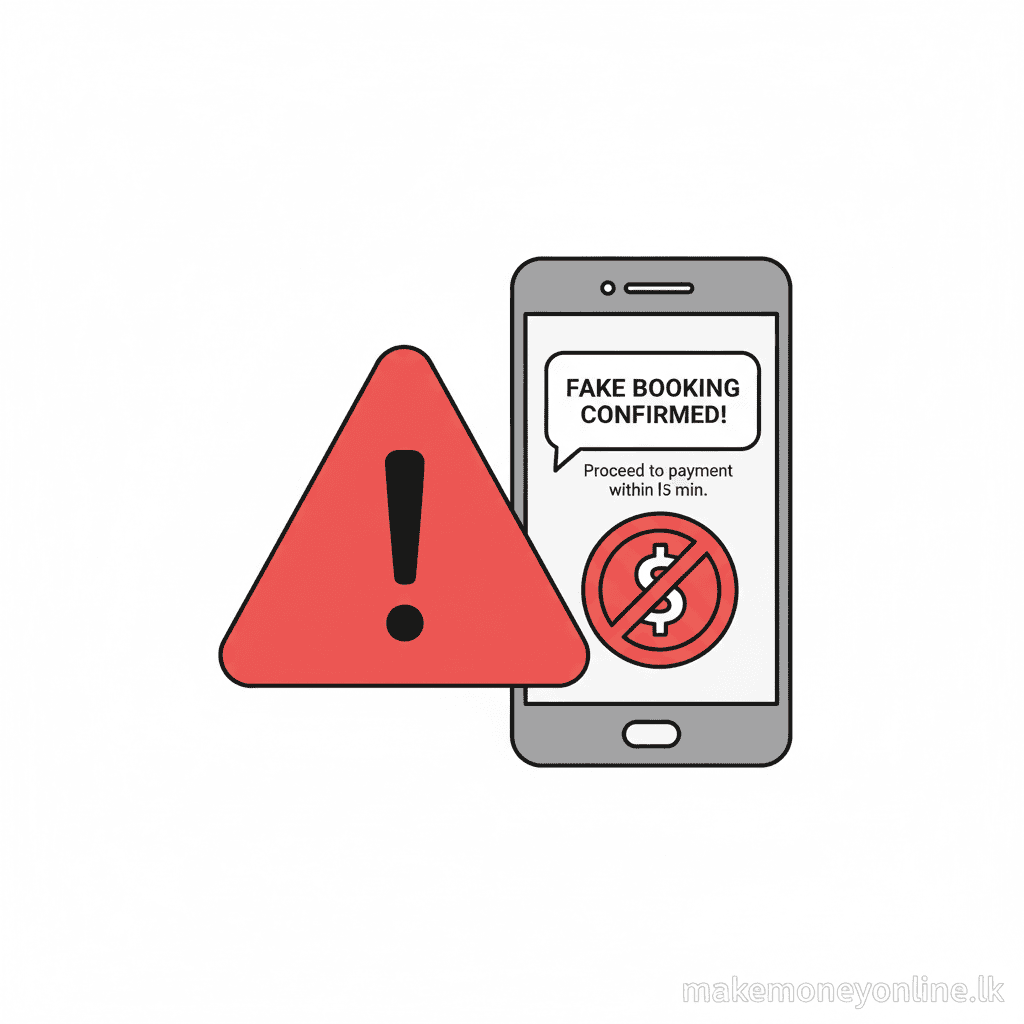
Scam Alerts: Airbnb Hosting Red Flags
Off-Platform Booking Requests
A “guest” sends a message asking to book directly outside Airbnb to save fees. They offer to pay via bank transfer, Western Union, or WhatsApp Pay. Direct bookings eliminate Airbnb’s guest screening, payment security, and host insurance. If payment issues arise or the guest causes damage, you have no recourse. Always require all bookings to be made through the Airbnb platform.
Fake Airbnb Support Emails
Phishing emails impersonating Airbnb notify hosts of “verification required,” “payment holds,” or “account suspension” with urgent links to fake Airbnb login pages. Airbnb support never asks for passwords via email. All legitimate Airbnb communications are accessible through your account dashboard at airbnb.com. Never click links in suspicious emails claiming to be from Airbnb.
“Property Manager” Takeover Scams
Unsolicited messages from “professional property management companies” offering to manage your Airbnb listing in exchange for access to your account are a common fraud vector. Legitimate property managers do not require your Airbnb login credentials. They co-host using Airbnb’s official co-host system that does not share login details.
Inflated Damage Claims from Guests
Rare but documented: a guest files a false damage claim after their stay to receive a refund via Airbnb’s resolution center. This is mitigated by thorough pre-check-in property documentation (timestamped photos of every room, all furnishings, and all surfaces before each guest checks in). A photo record makes false damage claims extremely difficult to substantiate.
Final Verdict: Is Airbnb Hosting Worth It for Sri Lankans?
Airbnb hosting is an excellent income method for Sri Lankan property owners who have space to offer, are willing to actively manage the guest experience, and comply with the legal requirements for hosting foreign tourists. The income potential relative to the initial setup investment is very high compared to most other income methods.
The primary barriers are regulatory (SLTDA registration, tax compliance) and operational (ongoing guest management). These barriers are manageable with a systematic approach but require upfront effort and ongoing administration.
This method suits you well if:
- You own or legally control a property with space to list
- The property is in a location with consistent tourist demand
- You are willing to manage guest communication and property maintenance actively
- You are prepared to comply with SLTDA registration and income tax requirements
This method may not suit you if:
- You rent your property and your lease prohibits subletting
- You live in a condominium with bylaws prohibiting short-term rentals
- You cannot manage the ongoing guest communication and property maintenance workload
- Your property is not in a location that attracts tourists or business travelers
For related property-based income methods, see the guide on renting space in Sri Lanka and the overview of vehicle rentals in Sri Lanka for complementary approaches to monetizing physical assets.
Related Ways to Earn Money Online in Sri Lanka
- Online Travel Advising — Offer travel advice to Airbnb guests
- Travel Vlogging — Create content about hosting and Sri Lankan tourism
- Renting Space Online — Rent other property types alongside Airbnb
- Virtual Tours — Create virtual tours to attract Airbnb bookings
Looking for more ways to earn? Browse our complete guide to making money online in Sri Lanka with 63 online income methods reviewed for legitimacy, skill and time requirements, and payment access from Sri Lanka. See our methodology for how each method is assessed.