Proofreading is the last line of defence between a written document and its audience. Authors, businesses, students, and publishers all need someone with sharp eyes and strong English skills to review their content before it goes out into the world. Sri Lankan proofreaders with excellent English command are well-positioned to serve this demand from clients in the US, UK, and Australia.
The barrier to entry is relatively low compared to most freelance skills: a strong command of English grammar and punctuation, the ability to spot inconsistencies and errors that the original writer cannot see, and basic familiarity with proofreading tools and style guides. No technical software installation is required. No portfolio of visual work is needed. A well-written proofreading proposal demonstrating your language skills is itself your portfolio.
This guide covers realistic proofreading income for Sri Lankans, what types of work generate the best rates, where to find consistent work, and how to avoid the scams targeting aspiring proofreaders.
What Is Freelance Proofreading?
Proofreading means reviewing a final draft of written text to identify and correct errors in spelling, grammar, punctuation, and formatting. The proofreader is the last check before publication, not the developmental editor who restructures content.
It is worth distinguishing proofreading from related but higher-level services:
Proofreading: Corrects surface-level errors: spelling mistakes, punctuation errors, grammatical mistakes, inconsistent capitalisation, and formatting irregularities. Does not restructure sentences or change the author’s intended meaning.
Copy editing: A deeper level of editing that also addresses sentence clarity, word choice, consistency of style, and logical flow. Commands higher rates than proofreading.
Substantive/developmental editing: The highest level, addressing structure, argument, pacing, and content gaps. Requires deep expertise in the subject matter. Commands the highest rates.
New freelancers typically start with proofreading, which has lower expectations and a lower skill threshold, and progress toward copy editing as their skills and portfolio develop.
The document types with consistent proofreading demand include:
Academic documents: Dissertations, theses, research papers, and essays. Strong demand from non-native English speakers submitting to UK, US, and Australian universities.
Business documents: Reports, proposals, presentations, emails, and marketing materials. Regular, ongoing demand from businesses with content production needs.
Books and manuscripts: Authors preparing for self-publishing or traditional submission. Niche but consistent market.
Website and blog content: Businesses outsourcing their content proofreading alongside or separately from writing.
Legal and medical documents: Require specialized terminology knowledge. Commands premium rates.
How Much Can You Earn from Proofreading in Sri Lanka?
Proofreading Income Benchmarks
| Work Type | Rate | Monthly Income Estimate | LKR Equivalent |
|---|---|---|---|
| General proofreading (per word) | $0.01 to $0.02 | $500 to $1,000 (50,000 words) | LKR 152,500 to LKR 305,000 |
| Academic proofreading | $0.02 to $0.04 | $1,000 to $2,000 (50,000 words) | LKR 305,000 to LKR 610,000 |
| Business document proofreading | $25 to $50 per hour | $1,000 to $2,000 (40 hrs) | LKR 305,000 to LKR 610,000 |
| Book proofreading | $0.015 to $0.03 per word | $750 to $1,500 (50,000 words) | LKR 228,750 to LKR 457,500 |
USD → LKR conversion notice. USD-to-LKR figures on this page use a reference rate of approximately LKR 305 per USD, last reviewed 2026-09-01. Actual conversion depends on your provider’s spread and the current market rate. See our methodology. 50,000 words per month is achievable for a full-time proofreader. Part-time work at 20,000 to 30,000 words per month generates LKR 60,000 to LKR 180,000 depending on the work type and rate.
How Does Freelance Proofreading Work?
Step 1: A client sends you a document (Word file, Google Doc, or PDF) with a brief: what type of document it is, what style guide to follow (AP, Chicago, APA, or house style), and the deadline.
Step 2: You review the document, correcting errors using Track Changes in Microsoft Word or Suggesting mode in Google Docs. Every correction is visible to the client, who can accept or reject each change.
Step 3: You also note any inconsistencies, unclear references, or repeated errors in comments, flagging items for the author’s attention without changing them directly.
Step 4: You deliver the corrected document before the deadline.
Step 5: The client reviews your corrections and accepts the file.
Step 6: Payment via Upwork escrow, Payoneer direct transfer, or bank transfer. Most proofreading clients pay per word or per hour.
Step 7: Transfer to your Sri Lankan Commercial Bank, Sampath, BOC, or HNB account.

What Skills Do You Need for Proofreading?
Excellent English grammar and punctuation knowledge: You must reliably identify errors in comma usage, apostrophes, subject-verb agreement, parallel construction, and sentence fragments, among many other error types. This is not conversational English fluency. It is grammatical precision at a professional standard.
Eye for detail and consistency: Spotting that a company name is spelled two different ways on page 3 and page 17, or that the author switches between British and American spellings mid-document. Consistency errors are as important as outright grammatical mistakes.
Knowledge of style guides: Different clients use different style guides. AP Style is standard for journalism and many US businesses. Chicago Manual of Style is used for academic and book publishing. APA is used for academic research papers. Familiarity with at least one major style guide is expected.
Proficiency with Track Changes: All professional proofreading is delivered with tracked changes in Microsoft Word or suggesting mode in Google Docs. This is a non-negotiable technical requirement for professional work.
Familiarity with Grammarly and PerfectIt (optional): Tools that assist in identifying common errors. Proofreaders use them as a first pass to catch obvious issues, then apply their own judgment for the detailed review. These tools do not replace human proofreading but make it more efficient.
Speed: Professional proofreaders aim for 1,000 to 1,500 words per hour for standard text. Slower speeds reduce your effective hourly rate at per-word pricing.
How to Get Started with Proofreading in Sri Lanka
Step 1: Assess your English at a professional standard. Completing a proofreading test from The Chartered Institute of Editing and Proofreading (CIEP) or the American Copy Editors Society (ACES) self-assessment resources gives you honest feedback on where your English grammar stands relative to professional standards.
Step 2: Study the Chicago Manual of Style or AP Stylebook. Both have free online resources. Understanding one major style guide before seeking clients prevents you from making style errors that undermine your credibility.
Step 3: Build a portfolio with test documents. Take a publicly available document with known errors, proofread it, and document your corrections. This demonstrates your process to potential clients. Alternatively, offer free or heavily discounted proofreading to one or two friends or community members to generate real samples.
Step 4: Create an Upwork profile. Describe your proofreading specialization (academic, business, creative writing), mention your style guide knowledge, and list any relevant qualifications (English degree, journalism background, TEFL certificate). Apply to proofreading jobs with proposals that demonstrate your language skills directly in the proposal writing.
Step 5: Create a Fiverr gig. Package your proofreading service as a clear, defined deliverable: “Proofread up to 1,000 words for grammar, spelling, and punctuation” with tiered pricing for longer documents.
Step 6: Specialize in academic proofreading. Academic proofreading for non-native English speakers (particularly from China, South Korea, and the Middle East submitting to English-language universities) pays premium rates. Platforms like Scribbr and Enago specifically serve this market.
How to Learn Proofreading
Free resources:
- CIEP online resources (ciep.uk): The Chartered Institute of Editing and Proofreading has free guides on proofreading standards, style guides, and professional development.
- Merriam-Webster and Chicago Manual of Style online: Free reference resources for grammar and style questions.
- Grammarly free tier: Useful for understanding common grammar errors and their corrections.
Paid learning:
- Proofread Anywhere course (from USD 497 or LKR 151,565): The most recognized online proofreading course. Covers grammar, proofreading technique, and building a proofreading business. Includes a test specifically for court reporter transcript proofreading, which is a specialized niche.
- Udemy grammar and editing courses (USD 15 to USD 30 or LKR 4,575 to LKR 9,150 on sale): More accessible entry-level courses covering grammar review and basic proofreading technique.
Pros of Proofreading
Low barrier to entry. No specialized software installation, no portfolio of visual work, and no technical tool learning curve. Strong English skills and a professional approach are the primary requirements. This makes proofreading one of the most accessible freelance skills for English-fluent Sri Lankans.
Works at any hours. Proofreading work is delivered asynchronously. You receive a document, work on it at your own pace within the deadline, and return it. There are no client calls, no time zone scheduling challenges, and no need for a specific setup beyond a computer.
Niche specialization increases income. Academic proofreading, legal proofreading, and medical proofreading all command significantly higher per-word rates than general content proofreading. A proofreader who specializes in dissertations for non-native English speakers builds a referral network within university communities.
Demand is consistent. People will always produce written content that needs a second set of eyes. Academic submissions, business proposals, and creative manuscripts do not disappear. The demand is not trend-dependent.
Builds toward higher-value editing services. Proofreading experience naturally progresses toward copy editing and substantive editing, which command significantly higher rates. The skills compound.
Cons of Proofreading
Per-word rates are competitive for general work. General proofreading at $0.01 to $0.02 per word on platforms with many providers is competitive. Building to the academic or legal specializations that command $0.03 to $0.05 per word requires time and credential building.
Eye fatigue limits daily output. Proofreading requires sustained, close attention to text. Most proofreaders work effectively for 4 to 6 hours per day before accuracy declines. This limits total daily word count.
Platform competition is genuine. Upwork and Fiverr have many proofreaders from countries with lower costs of living competing for the same jobs. Building reviews and specialization is the path to standing out.
Inconsistency in client document quality. Some clients submit documents that are so poorly written that proofreading becomes copy editing by necessity. This scope creep requires clear communication upfront about what is included.
Rate negotiation is common. Many clients expect to negotiate per-word rates downward. Having a clear minimum rate and being willing to decline below-floor offers prevents the income erosion that comes from accepting every job at any price.
Best Platforms for Proofreading Work
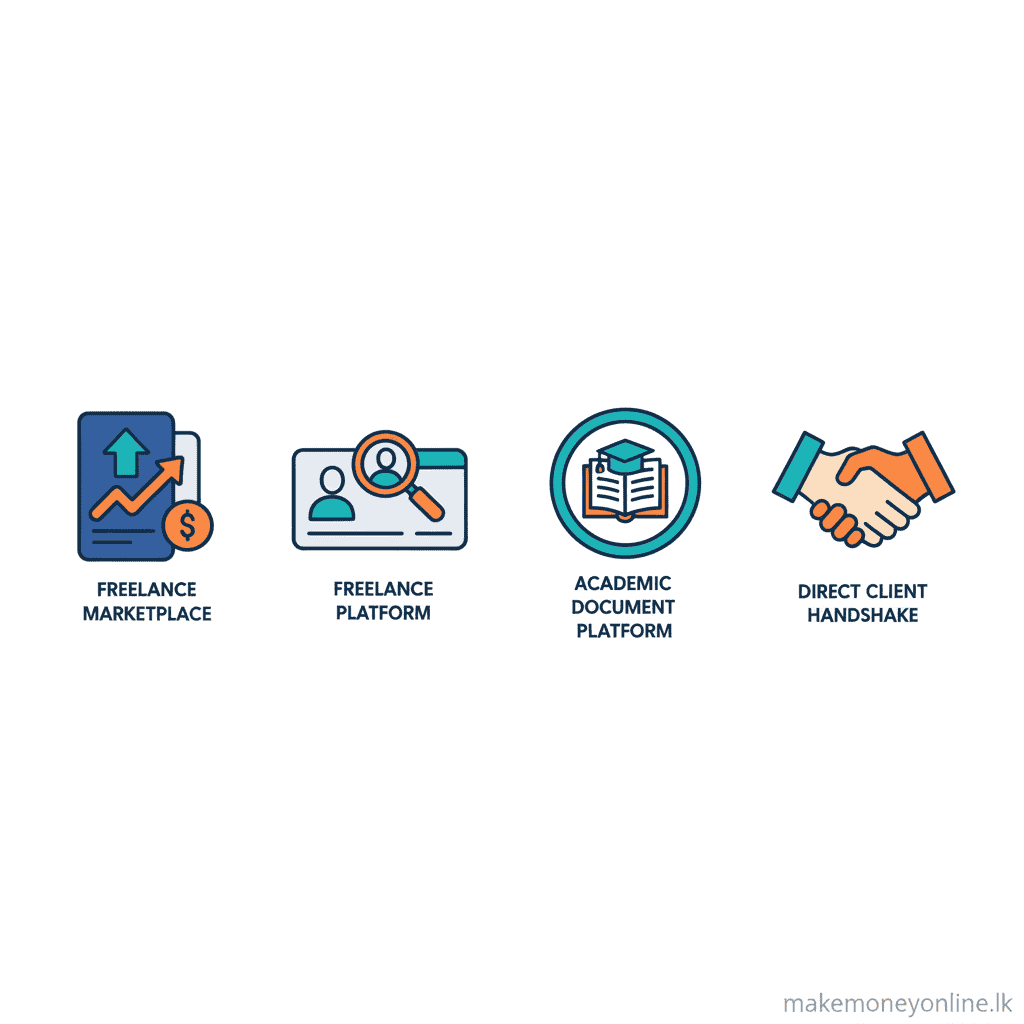
Upwork
Strong market for academic and business proofreading. Clients post recurring proofreading contracts and one-time document projects. Building a profile with specific niche keywords (academic proofreading, dissertation editing, AP Style) attracts relevant clients.
- Freelancer service fee (verified 2026-09-02): variable 0-15% per contract since 1 May 2025 (effective average ~11-13.5% for most freelancers), replacing the previous flat 10% (May 2023 → April 2025) and the pre-2023 tiered model. Model your take-home against the current per-contract rate.
- Payment for Sri Lanka: Payoneer or bank transfer
- Best for: Academic proofreading, business documents, longer-term contracts
Fiverr
Gig-based model works well for defined deliverables. “Proofread your document up to X words” packages convert well. Low-cost entry but builds review history quickly.
- Commission: 20% flat
- Payment for Sri Lanka: Payoneer
- Best for: Building initial reviews, short-document proofreading gigs
Scribbr
Academic proofreading platform specifically serving students and researchers. Rates are lower than direct client work but volume is consistent. Application involves a grammar test.
- Commission: Platform sets rates
- Payment: PayPal or bank transfer
- Best for: Academic proofreading, consistent volume, building experience

Scam Alerts: Proofreading Red Flags
“Get Paid to Proofread from Home” Recruitment Ads
Social media advertisements and job boards frequently promote “get paid to proofread from home” opportunities that require an upfront fee to access their job database or training materials. These are not legitimate proofreading jobs. Legitimate proofreading work is found on Upwork, Fiverr, Scribbr, and directly through clients, none of which require upfront fees to apply. Any proofreading opportunity requiring payment before you begin working is not a legitimate job.
Fake Proofreading Agencies Requesting Free Test Documents
Scam “agencies” post proofreading job listings requiring a test proofreading of an entire real document (5,000+ words) as part of the “application process.” This is not a test. They are getting free proofreading work by framing it as an audition. Legitimate test tasks for proofreading roles are 200 to 500 words at most. A full-length document “test” is unpaid work extraction.
Overpayment Cheque Scams
A “client” contacts you via email or social media, agrees to a proofreading job, sends a cheque for substantially more than the agreed amount, and asks you to forward the difference. Standard overpayment scam. The cheque is fraudulent. Never issue refunds before payments fully clear, and be suspicious of any new client paying more than your quoted rate.
Premium Grammar Tool Upsells
Some proofreaders are approached by software companies claiming that purchasing their premium grammar checker tool is required to work with their clients. Legitimate proofreading clients do not require you to purchase specific software. Grammarly’s free tier, Microsoft Word, and Google Docs are all any proofreader needs to begin professional work.
Final Verdict: Is Proofreading Worth It for Sri Lankans?
Proofreading is a genuine income method for Sri Lankans with strong English grammar skills and the patience to build a platform presence. It is not the highest-income freelance skill available, but it is one of the most accessible. The combination of no technical learning curve, asynchronous work flexibility, and the path toward higher-value editing services makes it a practical starting point.
The income ceiling from pure proofreading at general rates is modest. The income from specialized academic or legal proofreading, or from transitioning into copy editing, is significantly higher. The best proofreaders treat the initial phase as a foundation for developing higher-value editing skills.
This method suits you well if:
- You have strong English grammar skills at a professional standard
- You are detail-oriented and find error-spotting satisfying rather than tedious
- You want flexible, asynchronous work that fits around other commitments
- You are willing to build toward higher-value editing services over time
This method may not suit you if:
- Your English grammar is conversational rather than professionally precise
- You need high income within 60 days without profile building
- You dislike extended periods of close textual attention
For related language-based income methods, see the guide on freelance writing in Sri Lanka and the overview of transcription services for complementary writing and language work.
Related Ways to Earn Money Online in Sri Lanka
- Freelance Writing — Combine proofreading with writing for more client work
- Transcription Services — Apply attention to detail in transcription work
- Translation Services — Add translation for bilingual Sri Lankan proofreaders
- Resume Writing — Offer resume editing and writing as a premium service
Looking for more ways to earn? Browse our complete guide to making money online in Sri Lanka with 63 online income methods reviewed for legitimacy, skill and time requirements, and payment access from Sri Lanka. See our methodology for how each method is assessed.