Sri Lanka has a growing fitness culture. Gyms in Colombo, Kandy, and Galle are expanding. Young professionals are increasingly health-conscious. And the global online fitness coaching market has grown significantly, with clients worldwide paying $100 to $300 per month for remote personal trainers who design programs and check in weekly via video call.
A Sri Lankan certified personal trainer or fitness coach who transitions from in-person clients to online clients immediately multiplies their income potential. In-person training in Sri Lanka pays LKR 1,500 to LKR 5,000 per session. Online training for international clients at $50 to $150 per month per client, with 30 to 50 clients, generates LKR 457,500 to LKR 2,287,500 per month from the same expertise.
This guide covers how online fitness coaching income works, what certifications matter, how to build a client base, and what separates the coaches who build successful online practices from those who do not.
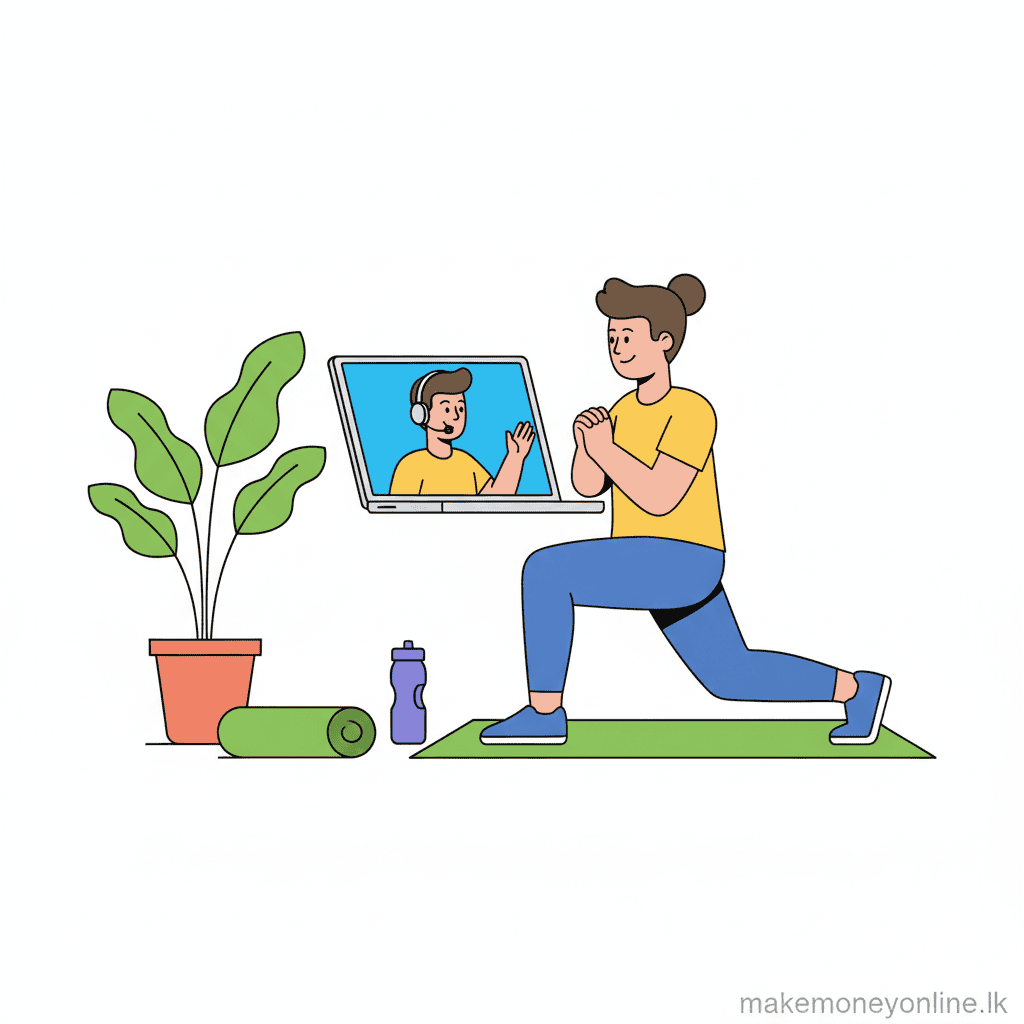
What Is Online Fitness Coaching?
Online fitness coaching means designing and delivering personalized fitness and health programs to clients remotely. The coach communicates with clients via video call, messaging apps, and coaching platforms rather than face-to-face in a gym.
An online fitness coach typically provides:
Custom training programs: Weekly workout plans designed for the client’s goals (weight loss, muscle building, improved fitness, sport performance), available equipment, and time availability. Programs are updated based on client progress.
Nutrition guidance: Caloric targets, macronutrient recommendations, and meal planning support. Note: detailed clinical nutrition advice (medical diets, eating disorder support) requires a qualified dietitian. Fitness coaches provide general wellness nutrition guidance within their scope of practice.
Progress tracking and accountability: Regular check-ins (weekly or bi-weekly video calls or voice notes) to review progress, adjust the program, and maintain client motivation. Accountability is one of the primary reasons clients pay for coaching rather than using free workout apps.
Form review: Clients film their exercises and send videos for the coach to review technique and prevent injury. This is a key differentiator between online coaching and simply selling workout plans.
Mindset and habit coaching: Supporting clients through the psychological challenges of behavior change: building consistency, managing setbacks, and sustaining motivation over months.
Online fitness coaching differs from simply creating workout plans (which is a lower-value digital product). The coaching relationship, accountability structure, and ongoing communication create the premium value that justifies monthly subscription fees.
How Much Can You Earn from Online Fitness Coaching?
Online Fitness Coaching Income Benchmarks
| Client Base | Monthly Rate per Client (USD) | Monthly Income (USD) | LKR Equivalent |
|---|---|---|---|
| 10 clients | $50 to $100 | $500 to $1,000 | LKR 152,500 to LKR 305,000 |
| 25 clients | $75 to $150 | $1,875 to $3,750 | LKR 571,875 to LKR 1,143,750 |
| 50 clients | $50 to $100 | $2,500 to $5,000 | LKR 762,500 to LKR 1,525,000 |
| Premium 1:1 (5 clients) | $200 to $400 | $1,000 to $2,000 | LKR 305,000 to LKR 610,000 |
USD → LKR conversion notice. USD-to-LKR figures on this page use a reference rate of approximately LKR 305 per USD, last reviewed 2026-09-01. Actual conversion depends on your provider’s spread and the current market rate. See our methodology. Most online coaches operate a tiered model: lower-cost group or basic plans for higher volume, higher-cost premium plans for intensive 1:1 attention. A 25-client base at an average of $100 per month generates $2,500 per month (LKR 762,500) and is a realistic 12 to 18 month target for a focused, active coach.
How Does Online Fitness Coaching Work?
Step 1: A potential client finds you through Instagram, YouTube, LinkedIn, referrals, or coaching marketplaces. They express interest in working with you.
Step 2: You conduct a free 20 to 30 minute discovery call to understand their goals, current fitness level, schedule, equipment access, and any health considerations. You assess whether you can genuinely help them.
Step 3: You present your coaching options (program tiers, pricing, duration). Clients commit to a minimum duration (typically 3 months) via a coaching agreement. Payment is collected upfront for the first month.
Step 4: You design a customized training program and deliver it via a coaching app (Trainerize, TrueCoach, or Google Docs). Clients access their programs, log workouts, and communicate with you through the app.
Step 5: You conduct weekly or bi-weekly check-in calls (15 to 30 minutes) to review progress, answer questions, and adjust the program. You review form videos clients send between calls.
Step 6: At the end of each month, you invoice the client for the following month (or payment is auto-collected via Stripe). Clients who see results stay for 3 to 12 months.
Step 7: Payment via Stripe (to Wise or a US-compatible bank account), PayPal, or direct bank transfer. Transfer to your Commercial Bank, Sampath, BOC, HNB, or People’s Bank account.
What Qualifications Do You Need for Online Fitness Coaching?
Certification from a recognized body: A personal training certification from a globally recognized organization is the foundation of credibility for online fitness coaching. The recognized international certifications are:
- NASM (National Academy of Sports Medicine): The most recognized PT certification globally. The NASM-CPT is widely respected by international clients and coaching marketplaces.
- ACE (American Council on Exercise): Another globally recognized certification with strong brand recognition among US clients.
- ISSA (International Sports Sciences Association): Online-focused certification recognized internationally. Frequently offered at discounts making it accessible for initial certification.
- NSCA (National Strength and Conditioning Association): Advanced certification respected for strength and performance coaching.
Sri Lankan fitness coaches can study for and complete these certifications online. Exam costs range from USD 400 to USD 800 (LKR 122,000 to LKR 244,000) including study materials.
Fitness experience and genuine results: Certifications establish credibility. Personal transformation, documented client results, and genuine knowledge of training and nutrition are what build a coaching reputation. A certified coach who has not personally committed to fitness training lacks the authentic authority that clients recognize.
Nutrition knowledge: Clients ask about nutrition. A basic nutrition certification (Precision Nutrition, NASM Certified Nutrition Coach) supplements PT certification and allows more comprehensive client support.
Coaching and communication skills: The ability to motivate, empathize, set realistic expectations, and communicate clearly separates effective coaches from knowledgeable trainers who cannot hold client attention. These skills develop with practice.
How to Get Started with Online Fitness Coaching
Step 1: Get certified. Choose a recognized certification (NASM-CPT or ACE-CPT are the strongest international options) and complete the study and exam. ISSA offers frequent discounts that make it an accessible starting certification.
Step 2: Build your own transformation or results story. Document your own fitness journey or a client you train for free initially. Before-and-after data, training logs, and genuine results are the most persuasive marketing content for fitness coaches.
Step 3: Create a content presence on Instagram and YouTube. Exercise technique videos, nutrition tips, client transformations, and educational content build an audience of potential clients. Fitness coaching is a relationship-based purchase, and content builds trust before any sales conversation.
Step 4: Define your niche. “Fitness coaching” is too broad. “Weight loss coaching for busy Sri Lankan professionals,” “strength training for women in their 30s,” or “body recomposition coaching for remote workers” is a defined audience. Niche specificity makes marketing more effective and allows premium pricing.
Step 5: Set up a coaching platform. Trainerize (USD 35/month for up to 5 clients, USD 70/month for up to 30 clients) or TrueCoach (USD 19/month for 5 clients) provide program delivery, client communication, and workout logging in one tool. Starting with Google Docs and WhatsApp is free but less scalable.
Step 6: Set pricing from month one. Do not coach for free for extended periods. Offer one or two free discovery calls, but charge from the first coaching engagement. Underpricing establishes a perception of low value. Pricing at USD 50 to USD 100 per month for your first clients is appropriate.
How to Learn Fitness Coaching
Free resources:
- NASM blog and resources (nasm.org): Free educational content on training principles, nutrition, and fitness science from one of the most respected PT certification bodies.
- PubMed (pubmed.ncbi.nlm.nih.gov): Free access to peer-reviewed exercise science research. Reading the actual evidence behind training and nutrition claims builds genuine expertise.
Paid learning:
- NASM-CPT certification (USD 599 to USD 999 or LKR 182,695 to LKR 304,695): The primary certification investment. Study materials included. Online exam. Pass rate is high with adequate preparation (typically 3 to 6 months of study).
- Precision Nutrition Level 1 (USD 129/month or LKR 39,345/month): Recognized nutrition coaching certification. Highly practical and applicable to client coaching conversations about food and habits.
Pros of Online Fitness Coaching
Scale beyond the hours in a day. An in-person trainer can coach 8 to 10 clients per day. An online coach with a program delivery system can manage 30 to 50 clients with check-ins structured over the week. Scaling income does not require proportionally more time once systems are established.
Sri Lanka’s growing fitness culture creates local client opportunities. Beyond international clients, Sri Lanka’s domestic fitness market is expanding. Young professionals in Colombo paying LKR 15,000 to LKR 25,000 per month for online coaching from a recognized certified coach represents a growing local market segment.
Recurring monthly income from retained clients. A client who loses 5 kilograms in their first two months and continues to train for performance or maintenance stays for 6 to 12 months. Recurring client income is more financially stable than project-based income.
Content marketing builds passive client pipeline. Instagram videos and YouTube workouts attract potential clients continuously without active sales outreach. A library of 100 training videos generates enquiries from people discovering the content months or years after publication.
Low overhead costs. Online fitness coaching requires a camera (smartphone is sufficient), internet, coaching platform subscription (LKR 10,000 to LKR 20,000 per month), and payment processing. There is no gym rental, equipment purchase, or commute cost.
Cons of Online Fitness Coaching
Certification requires genuine investment. A recognized PT certification costs USD 400 to USD 800 (LKR 122,000 to LKR 244,000) and requires 3 to 6 months of study. This investment must be recouped before the business is profitable. Cheaper uncertified routes produce coaches who cannot demonstrate credible qualifications to international clients.
Client acquisition requires consistent content creation. Online fitness clients find coaches primarily through social media and content. Building an audience that generates consistent client enquiries takes 6 to 18 months of regular content publishing. Without content, coaches rely entirely on referrals.
Client results depend on client compliance. A coach can design a perfect program and provide excellent accountability. If the client does not follow the program, results do not materialize. Managing expectations and designing programs that clients will actually follow (not theoretically perfect programs they abandon) is a skill that takes time to develop.
Liability considerations. Fitness coaches working with clients who have health conditions must understand the limits of their scope of practice. Any exercise program for clients with cardiovascular conditions, musculoskeletal injuries, or other medical conditions should involve medical clearance. Liability waivers and clear scope-of-practice boundaries protect coaches from legal exposure.
Best Platforms for Online Fitness Coaching
Instagram and YouTube (Client Acquisition)
Content platforms rather than coaching marketplaces. Instagram Reels and YouTube videos demonstrating exercise technique, transformation content, and coaching philosophy attract potential clients and warm them toward a coaching enquiry. These platforms are essential for organic client acquisition.
Trainerize
Coaching platform that handles program delivery, client communication, workout logging, progress photos, and check-ins. Integrates with Stripe for payment processing. Industry standard for small-to-medium coaching practices.
- Cost: From USD 35/month (5 clients) to USD 70/month (30 clients)
- Best for: Structured program delivery, professional client experience
Fiverr (Entry-Level Work)
Fitness coaches list specific services (custom workout plan, 30-day fitness program) as fixed-price gigs. Lower rates than direct coaching but provides early testimonials and portfolio material.
- Commission: 20% flat
- Best for: Building initial reviews and portfolio
Scam Alerts: Online Fitness Coaching Red Flags
Fake Certification Schemes
Hundreds of online “fitness certification” providers sell certificates that are not recognized by clients or the fitness industry. A certificate from an unrecognized body does not establish credibility with international clients. The recognized certifications are NASM, ACE, ISSA, NSCA, and the UK’s Level 3 Personal Training qualification. Any other paid “certification” should be verified against these recognized organizations before investing.
“Fitness Business Opportunity” MLM Schemes
Recruitment messages promoting a “fitness coaching business opportunity” where your income comes primarily from recruiting other coaches rather than from coaching clients are multi-level marketing structures. Legitimate fitness coaching income comes entirely from clients paying for coaching services. Any fitness business model that primarily incentivizes recruitment is not a coaching business.
Supplement Company “Brand Ambassador” Exploitation
Companies offering to make you a “brand ambassador” for free supplement products in exchange for promoting their products to your audience without disclosure are not legitimate brand partnerships. Legitimate supplement sponsorships pay cash per post or per campaign. Free products in exchange for promotion, without disclosure of the commercial relationship, also violates advertising standards in most markets.
Fake Online Coaching Certifications Promising Overnight Success
Social media advertisements promoting “become a certified online fitness coach in 7 days” courses that promise immediate client acquisition and high income are selling false expectations. Professional fitness coaching requires genuine study, real certification, and months of client-building work before meaningful income arrives.
Final Verdict: Is Online Fitness Coaching Worth It for Sri Lankans?
Online fitness coaching is an excellent income method for Sri Lankans who are genuinely committed to fitness, willing to invest in recognized certification, and prepared to build an audience through consistent content creation. The combination of scalable client capacity, recurring monthly income, and low overhead makes it one of the better freelance income models available.
The path requires patience. Building the content presence that generates consistent client enquiries takes 12 to 18 months. The certification investment is real. But coaches who persist through the early building phase create a business that generates compounding income from a sustainable, scalable practice.
This method suits you well if:
- You are genuinely committed to fitness and can demonstrate real results
- You are willing to invest in a recognized PT certification
- You are comfortable creating regular social media and video content
- You want scalable recurring income from a skills-based service
This method may not suit you if:
- You need income within 3 months without significant upfront investment
- You are not willing to create consistent social media content for audience building
- You prefer project-based over ongoing client relationship work
For related health and service-based income methods, see the guide on online tutoring in Sri Lanka and the overview of career coaching in Sri Lanka for related coaching income approaches.
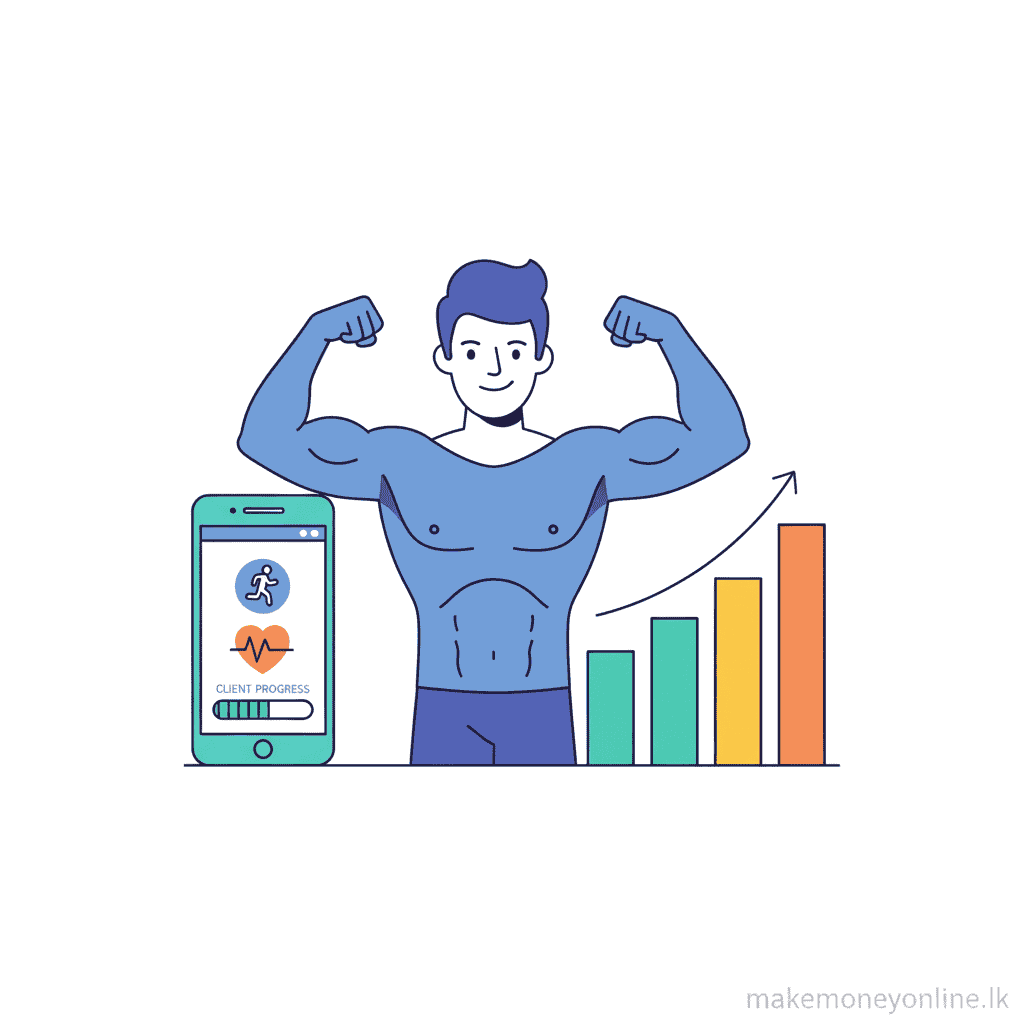
Related Ways to Earn Money Online in Sri Lanka
- Creating Online Courses — Create fitness courses for passive income
- YouTube Channel — Build a fitness YouTube channel for ad revenue
- Social Media Influencing — Grow fitness influence on Instagram and TikTok
- Selling Digital Products — Sell workout plans and nutrition guides
Looking for more ways to earn? Browse our complete guide to making money online in Sri Lanka with 63 online income methods reviewed for legitimacy, skill and time requirements, and payment access from Sri Lanka. See our methodology for how each method is assessed.